Who is the father of Miss Fan from Shanghai Jiao Tong University?
Read, share, and explore related stories through curated categories and tags.
Previously, I wrote two articles about Miss Fan from SJTU: “The Scandal of a Shanghai Jiao Tong University Female Student Embezzling Her Teammate’s Bonus” and “SJTU’s Fan, Another ‘Miss Dong’?”
As things have unfolded, I think Miss Fan must be full of regret now.
It was just a matter of 5,000 yuan in bonus money, and Shanghai Jiao Tong University has already given her a “serious warning” penalty, but the gossip-hungry public won’t let it go, relentlessly digging and digging…
What netizens have dug up is a mix of truth and falsehoods, but the legitimate media that actually does news has remained silent.
Let’s start with the latest developments.
This morning (the 21st), the Central Research Institute of the State Power Investment Corporation issued a solemn statement in response to recent online rumors like “Fan Sirui has a family relationship with a hospital leader.” The statement clearly says: After verification, Fan Sirui has no familial relationship with the institute’s chairman, Fan Sheng. The online content is malicious association and false information, and the institute reserves the right to hold those responsible accountable.
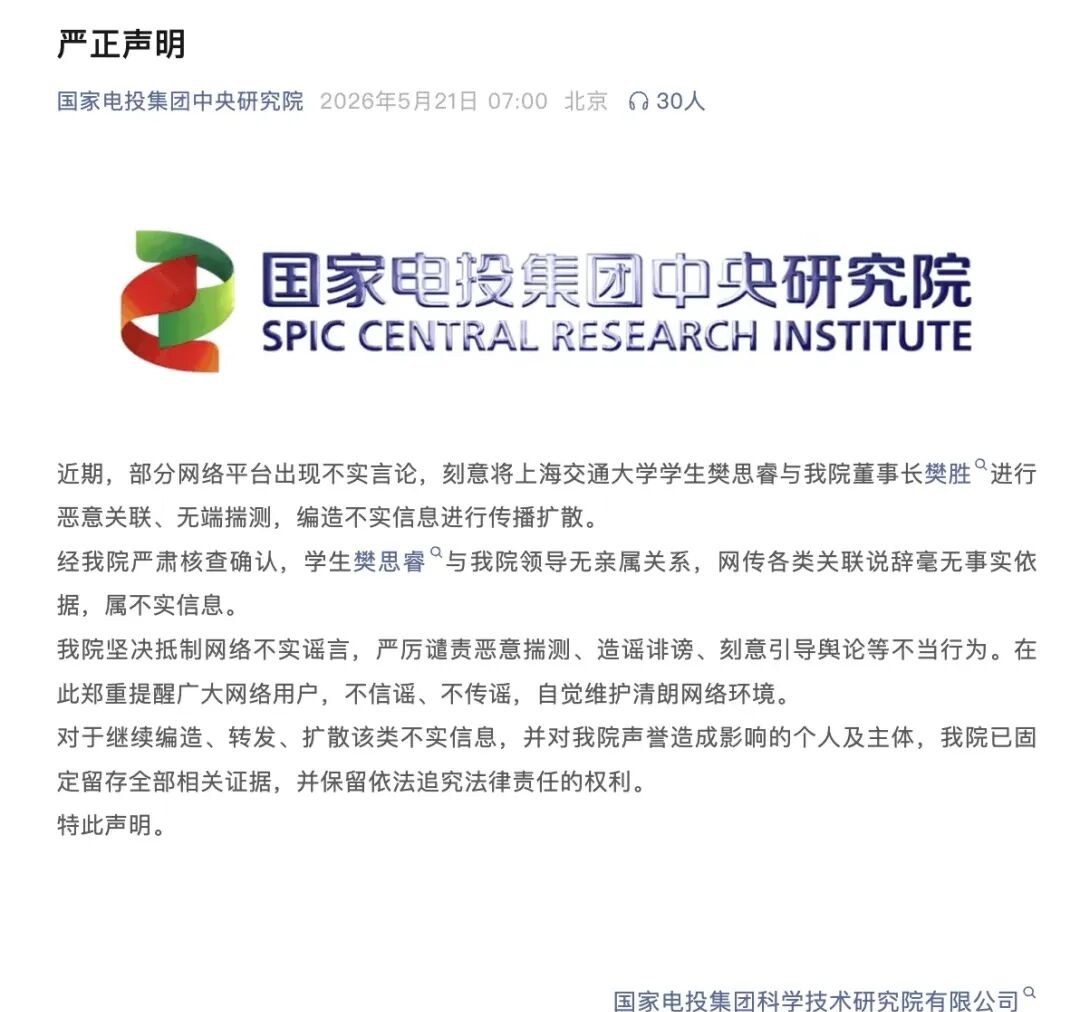
Although State Power Investment Corporation has issued a denial, the development of Miss Fan’s case in the court of public opinion is increasingly resembling that of “Miss Dong” earlier.
What netizens are currently discussing is whether she has any connections, and how someone with so many issues could navigate smoothly through a fair and transparent elite training system. Shanghai Jiao Tong University is once again “in an awkward position.”
At the end of the day, what ignited public outrage over Miss Fan’s case isn’t the 5,000 yuan itself. What truly stings the public is the sense of “constant accumulation of resources and continuous tilting of opportunities” that she embodies.
Let’s take another look at Fan Sirui’s resume:
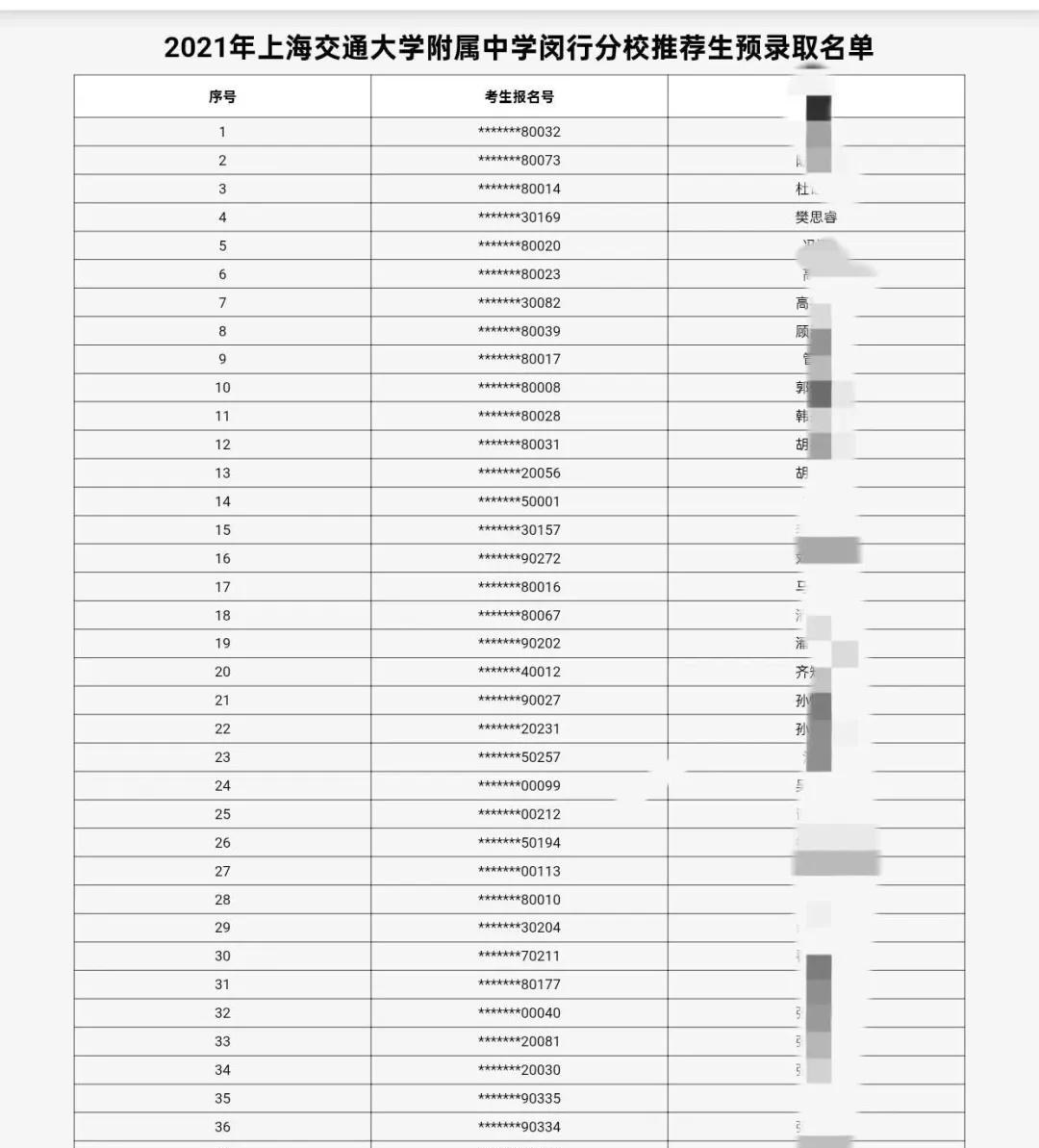
High school years. In 2021, Fan Sirui was pre-admitted to the Minhang campus of High School Affiliated to Shanghai Jiao Tong University as a “recommended student.” In Shanghai’s education system, “recommended pre-admission” means you don’t have to take the high school entrance exam, or it’s just a formality. This meant she bypassed the toughest round of selection that her peers faced, securing a spot at a prestigious high school early.
Then she appeared at the opening ceremony of the Minhang campus of High School Affiliated to Shanghai Jiao Tong University—as the host.
What a glory! But the question is, how did a recommended student get that position? Was it grades? Ability? Or something else? We don’t know, but we can reasonably doubt.
In the 2024 college entrance exam, Fan Sirui entered the Medical Technology program at Shanghai Jiao Tong University School of Medicine. Note: it’s not clinical medicine, not stomatology—it’s medical technology.
According to local Shanghai students and parents, the School of Medicine at Shanghai Jiao Tong University has its own admission system in Shanghai. The medical technology program has a relatively lower admission score threshold, roughly on par with the regular programs at East China University of Science and Technology. In other words, she didn’t get into one of the high-score programs at the university but used a low-score program to sneak through the door of Shanghai Jiao Tong University.
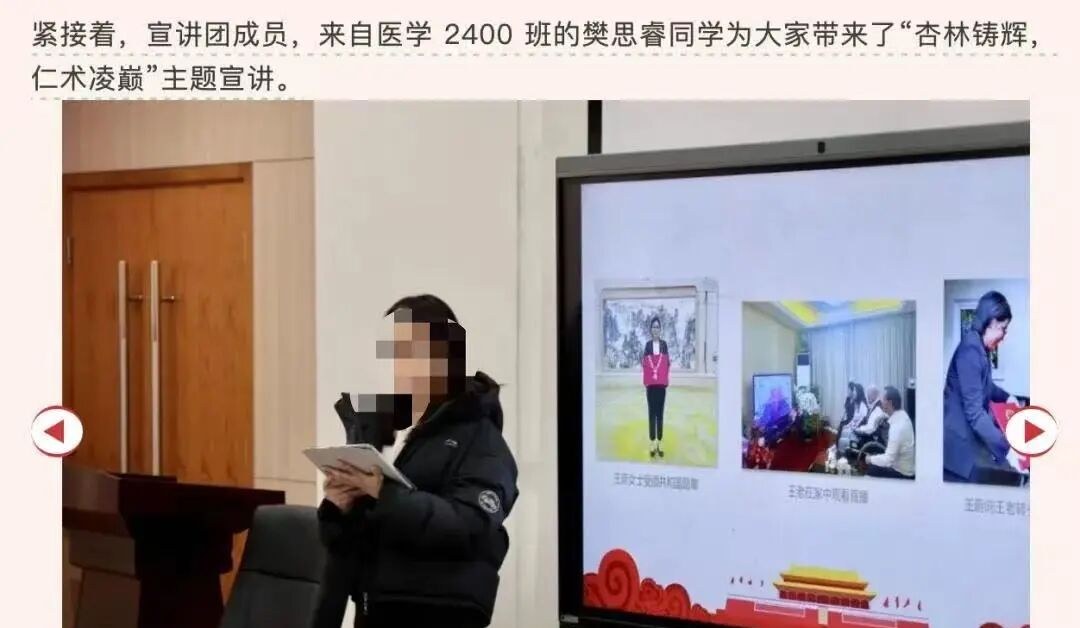
After starting college, she became the deputy head of the Wang Zhenyi Academician Publicity Group. This title sounds impressive, but it’s essentially a student leadership role in promoting the academician. It’s not research, not academics—it’s publicity.
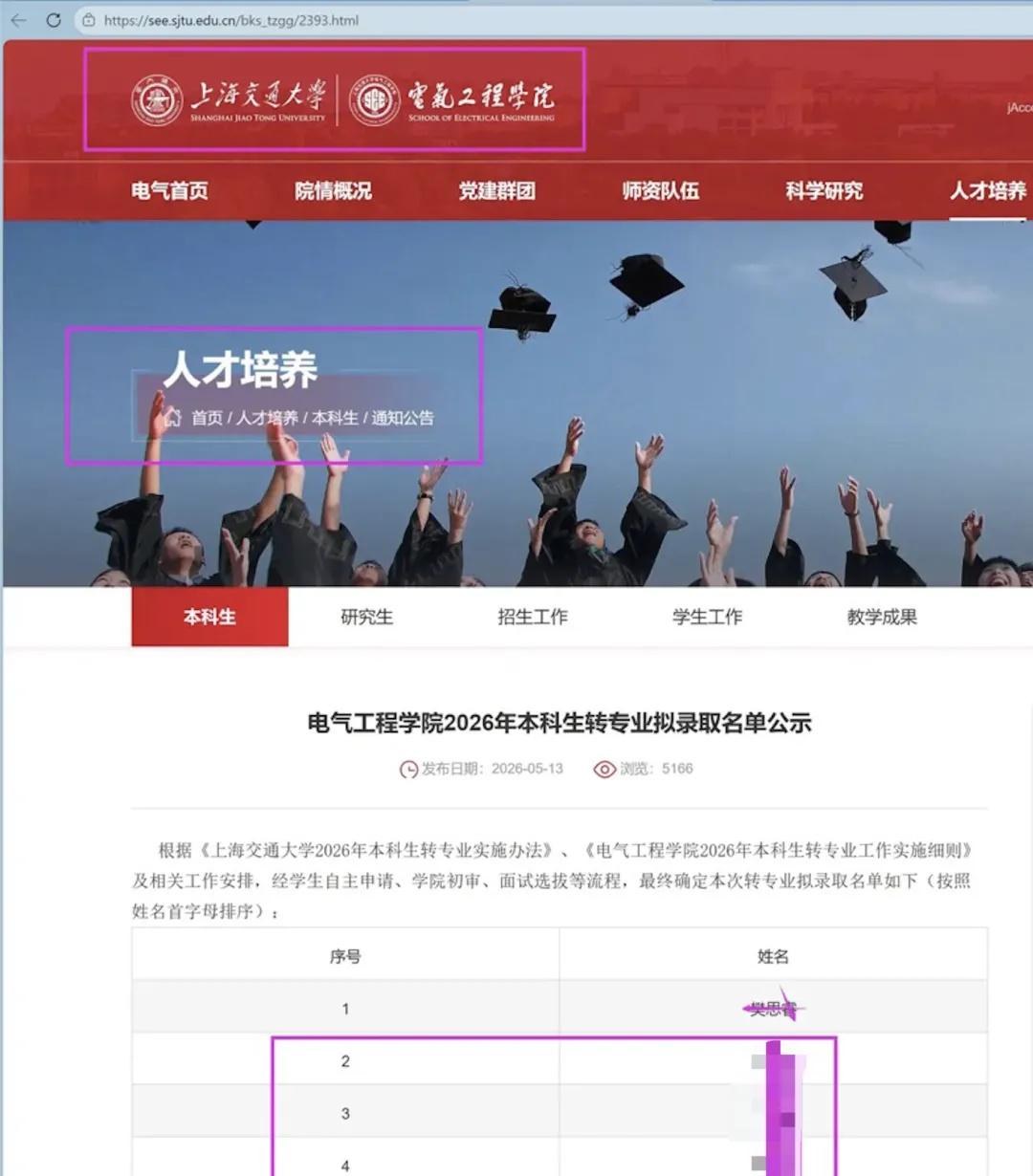
In 2025, she switched majors for the first time, moving from the School of Medicine to the College of Smart Energy Innovation at State Power Investment Corporation.
In 2026, she switched majors for the second time, moving from the College of Smart Energy to the School of Electrical Engineering.
What does it mean to be admitted to the School of Electrical Engineering? Electrical engineering at Shanghai Jiao Tong University has long been a flagship program, with admission分数线 consistently ranking among the top in the university. For a student who initially could only get into a low-score major like medical technology, to transfer from a low-score major to a high-score major within two years—without retaking the college entrance exam or going through any public, transparent, or supervised selection process—that’s no ordinary feat.
This isn’t one person’s comeback; it’s a systemic victory. Because only a system can give you so many green lights.
She also got into the “Rongchang Chu Cai Plan.” This program selects 50 freshmen from the entire university each year, with the goal of cultivating future leaders. The Chu Cai participants are almost exclusively active in the university’s Communist Youth League committees and student unions at all levels—they’re the elite reserve of the school.
She also appeared on the admission list for the 2026 Fudan University C9 Summer School. The bar for C9 Summer School is sky-high, and those in the know understand. Students who get in basically have one foot in the door for postgraduate recommendation.
She also appeared on the member list of a second-prize project in the 19th “Challenge Cup” competition. The project title sounds impressive: “Dual-Model Drive, Virtual-Real Closed Loop: Development and Validation of an Intelligent Trading and Regulation Decision Support Platform for Flow Batteries.”
This is what sparked the current controversy. Miss Fan was primarily responsible for the PPT and the defense in the project. In other words, she wasn’t the one doing the real work, but she still got her share of the award’s glory.
It’s on the strength of these experiences that Miss Fan got her ticket into the Chu Cai Plan, her stepping stone for changing majors, and her invitation to the C9 Summer School. But here’s the question: if one of these experiences has already been proven fake, how many of the others can still be true?
Many people know the book “Zhongxian Cadres.”
In one county, 161 families, layers of interwoven connections. The most disheartening part of the book isn’t how bad some individuals are, but that almost everyone is “in compliance with procedures.” Every step seems reasonable, every procedure hard to fault. It’s hard to find a clear violation, yet resources, positions, and opportunities always end up flowing precisely to certain people.
That’s why, fifteen years after this doctoral thesis was published, many look back and realize that “Zhongxian is still Zhongxian.”
The rules are there, the procedures are there, but not much has truly changed.
Of course, it wouldn’t be fair to say there’s been no change at all these years.
In many fields today, things are indeed becoming stricter, more standardized, and more transparent. Many of the barefaced maneuvers of the past can no longer be carried out so blatantly. Various exams, selections, assessments, and evaluations are also far more complex and detailed than before.
But the problem is that these ever-stricter rules often end up primarily restraining ordinary people—those without deep roots or wide connections.
For those with truly strong backgrounds, abundant resources, and far-reaching influence, rules have never been an obstacle, just speed bumps to bypass.
Some people go through procedures because they have no choice; others go through procedures just to make the outcome look procedural.
That’s why netizens keep bringing up certain names. Like the resume of Anyuan County Mayor Li Qiuping; like the “Peppa Pig” combination from Wannian County that once sparked heated debate; or the earlier sensation, the “Peking Union 4+4 Miss Dong” incident.
These issues keep sparking public discussion not just because of the individual controversies themselves, but because more and more people are starting to realize: some people’s lives seem to have been on rails from the very beginning.
Look at all the exams in society—which one is fairer than the college entrance exam? And the college entrance exam is truly the best chance for ordinary kids to change their fate. At the very least, “they” still have to set score lines; they can’t just let someone in with a zero.
Precisely because ordinary people don’t have many opportunities, they need to cherish those relatively fair channels all the more.
And that’s exactly why the public reacts so strongly when they see certain obviously “irregular” paths to advancement.
Because what people fear isn’t just the moral failure of one individual. What they fear even more is that rules are gradually becoming something that only constrain ordinary people.
And the reason the Shanghai Jiao Tong University Miss Fan incident has blown up to this extent is that the public is no longer satisfied with just a “disciplinary sanction.”
In short, we can’t stop some things from happening. But at the very least, at this point in Miss Fan’s case, the relevant parties should come out with a statement: What exactly is Miss Fan’s family background? What do her parents do?
Author: King of European Wars

↓*↓↓*Welcome to follow the official service account of the community membership↓↓↓********
Tag navigation
Explore articles that share the same tag and jump to tag pages.
Category navigation
Jump to the article’s category or explore nearby topics.
23 Tage überlange Blütezeit, morgen geht's los! Der ultimative Guide zur Shanghai International Flower Festival 2026 →
Jump to the more recent article in this topic series.
Chinesische Gartenbau · Brancheninformationen | 2024 Bildungsministeriumskonferenz des Ausschusses für Landschaftsarchitektur und 9. Forum für nachhaltige Landschaftswissenschaften erfolgreich in Nanjing abgehalten
Continue to the previous article in this series.
Related stories
More articles from the same category and nearby topics.