Where can you go for the booming domestic ice and snow tourism?
Read, share, and explore related stories through curated categories and tags.
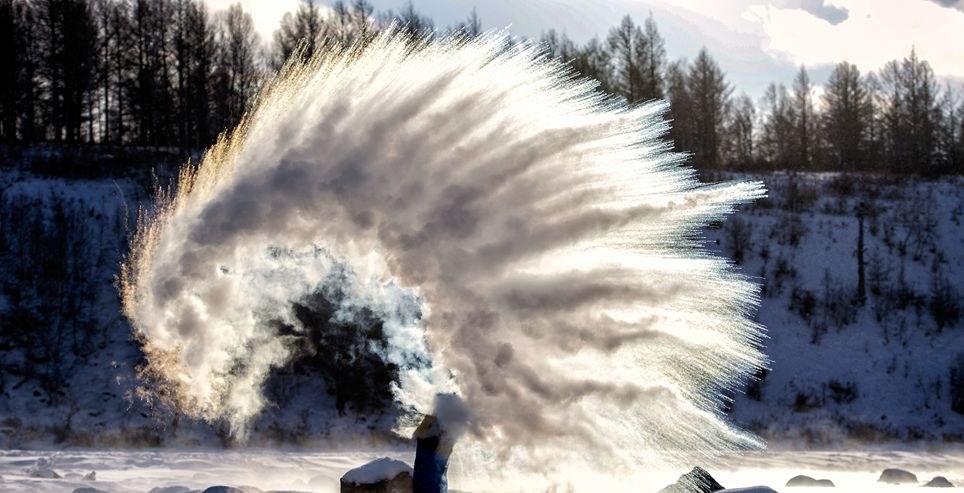
Ice and snow tourism has a long history of development in China. According to data, during the “China Friendly Tourism Year” held in 1992, the National Tourism Administration launched the first batch of 14 specialized tourism routes, with ice and snow scenery tours being one of them. Today, ice and snow tourism has evolved into a comprehensive tourism project encompassing ice and snow scenery, ice and snow sports, ice and snow culture, and other fields. The hosting of the 2022 Beijing Winter Olympics has propelled ice and snow tourism to a new peak of development.
In 2019, the government successively issued documents such as the “Opinions on Vigorously Developing Ice and Snow Sports with the 2022 Beijing Winter Olympics as an Opportunity” and the “Action Plan for the Development of Ice and Snow Equipment and Facilities Industry (2019-2022),” which clearly mentioned actively promoting the construction of integrated ice and snow leisure tourism complexes and building a number of multi-functional ice and snow tourism bases. With support from policies, enterprises, and consumers, ice and snow tourism has already entered the fast lane of development.
However, due to the high dependence of ice and snow tourism on ice and snow resources, domestic ice and snow tourism is currently concentrated mainly in regions such as Northeast China (represented by the three northeastern provinces), the Beijing-Tianjin-Hebei area, Xinjiang, and Inner Mongolia. Meanwhile, southern China is rapidly rising by leveraging ice and snow tourism facilities like indoor ski resorts.
Analysis suggests that ice and snow tourism in Northeast China is a typical resource-oriented tourism destination, with early development, large scale, and significant market influence. In addition to popular activities like skiing, local attractions such as ice sculptures, rime frost, winter fishing, and ethnic culture offer rich tourism resources for the region’s snow tourism. Compared to other areas, the Northeast has a higher number of branded snow tourism projects, such as Harbin Ice and Snow World, Vanke Songhua Lake Resort, and Changbaishan International Resort.
The Beijing-Tianjin-Hebei region boasts numerous ski resorts, including well-known ones like Wanlong Ski Resort and Thaiwoo Ski Town. Unlike the Northeast or Xinjiang, snow tourism in Beijing-Tianjin-Hebei benefits from its geographic location, enjoying a favorable market environment and consumer base. The 2022 Beijing Winter Olympics further boosted its development. Currently, the source of snow tourism visitors in Beijing-Tianjin-Hebei is expanding, and local efforts are actively exploring synergies between different projects to amplify the economic benefits of snow tourism.
Enthusiasts of backcountry skiing have given Xinjiang’s snow tourism a “hardcore” label. However, due to factors like long distances from core markets, insufficient transportation infrastructure, and limited facilities, Xinjiang’s snow tourism remains somewhat niche. Currently, Xinjiang is actively working to “go global,” gradually achieving a balanced development pattern that reduces the off-season lull.
According to the “China Ski Industry White Paper (2018 Annual Report),” Zhejiang Province had 19 ski resorts in 2018, Jiangsu Province had 17, and Chongqing had 16. Han Yuanjun, an associate researcher at the China Tourism Academy, believes that the southern region’s development of snow tourism mainly stems from its proximity to key source markets, offering sufficient purchasing power. He notes that most southern snow tourism venues are indoor ski resorts near major cities, transforming seasonal snow tourism into regular consumption, making the snow experience in the south more leisure-oriented. In recent years, more investment has flowed into snow tourism in the south. On December 18, Sunac China Holdings announced an additional investment of over 30 billion yuan to build a world-class cultural tourism project in Bao’an, featuring the world’s largest indoor snow world, a snow-themed hotel, and a snow-themed commercial street. On December 22, Kunming Sunac Cultural Tourism City, including the Sunac Snow World, opened to the public.
Reporter: Zheng Yijia, Beijing News
Editor: Qu Tingyi, Li Zheng
Proofreader: Zhao Lin
Image: Provided by the Culture and Tourism Department of Inner Mongolia Autonomous Region

Tag navigation
Explore articles that share the same tag and jump to tag pages.
Eine neue Ära des chinesischen Wintertourismus eröffnen – Analyse der Entwicklungstrends des Wintertourismus

Bericht zur Entwicklung des chinesischen Eis- und Schneetourismus 2020
Das inländische Eis- und Schneetourismus boomt, wohin kann man reisen?
Category navigation
Jump to the article’s category or explore nearby topics.
Bericht zur Entwicklung des chinesischen Eis- und Schneetourismus 2020
Jump to the more recent article in this topic series.
Kernaussagen des Berichts zur Entwicklung des chinesischen Wintertourismus (2023)
Continue to the previous article in this series.
Related stories
More articles from the same category and nearby topics.