Let every cup of tea be close to the world of mortals
Read, share, and explore related stories through curated categories and tags.
We often unintentionally make tea seem far too profound.
When it comes to tea tasting, we immediately think of terroir, craftsmanship, aging, and obscure terminology, as if drinking tea is an elegant ritual that requires sitting upright with high barriers to entry. But the most touching essence of Chinese tea should not be this distant refinement, but the warmth hidden in the everyday meals of life.
With the exclusive tea flavor wheel developed by China National Geography·Guocha Geography, let tea return to the warmth of daily life.
The “Tea Flavor Wheel” presented by China National Geography·Guocha Geography brings the complex and professional process of tea tasting back to the most familiar tastes of everyday life, building a gentle bridge between tea and people.
We firmly believe that the myriad flavors in a cup of tea are inherently connected to the warmth of human life.
Tea flavors are never profound
They are naturally found in the warmth of daily life.
The core of the flavor wheel is to awaken perception.
We don’t need to memorize professional terms or understand tea leaves and liquor colors. By simply using flavors we’ve eaten, smelled, and remembered in our lives, we can understand the true nature of a cup of tea.
Using the most common and universal memories in life to connect with tea.
The fresh, sweet, bitter, sour, salty, spicy, fermented, and wok-hei flavors in tea are all ordinary tastes ingrained in the Chinese dietary DNA.
What the flavor wheel does is simply bring the distant flavors of tea back to our side, back to the dining table, back to the most authentic palate, allowing the act of drinking tea to completely shed its burden and become simple and intimate.
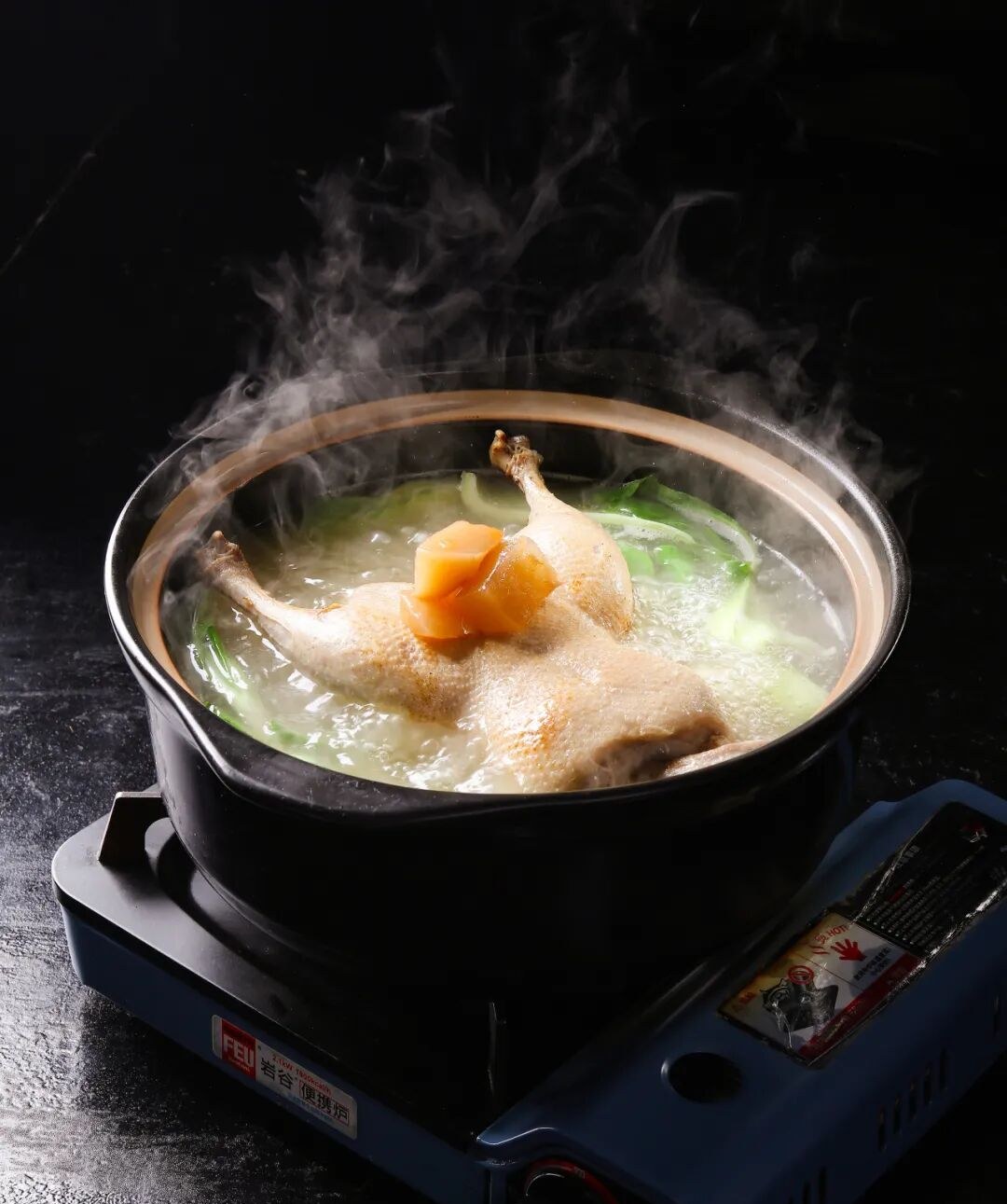
The freshness we taste in tea is like the rich, clear flavor of a bowl of chicken soup at dawn, clean and bright, reaching straight to the throat. The sweetness in tea is like freshly picked fruit or slowly simmered rice soup, refreshing and not cloying, with a natural sweetness. The mellow bitterness in tea is just like the rich, deep taste of dark chocolate or slow-cooked broth, bitter but not astringent, growing more steady the longer you savor it.
The freshness of chicken soup and the richness of chocolate can all be found in tea.
The sour notes in tea are like the refreshing, gentle acidity of green plums and fruit vinegar, awakening the appetite. The saltiness in tea is not the direct taste of table salt, but like the subtle mineral notes of natural spring water, quietly supporting the body and layers of the tea liquor. The spicy intensity in tea is like the fragrant heat of cinnamon, ginger flowers, or wok-fried dishes, lively but not harsh, with a unique tension.
Even closer to daily life is the fermented aroma in tea, corresponding to the fermented scents of steamed buns, fermented tofu, and stinky tofu—a richness created by time and microorganisms, a “strange fragrance” that old tea enthusiasts pursue for a lifetime. The wok-hei in tea directly replicates the smoky scent of pan-frying, stir-frying in an iron wok, and charcoal grilling, with chestnut, roasted, and charcoal aromas intertwined. One sip, and your mouth is filled with the warmth of life.
The warmth of daily life is not limited to life itself, and tea is not limited to refinement.
It turns out that tea has never been an exception at the dining table, but a continuation of the flavors of everyday food. If you understand the taste of home-cooked food, you already understand most of the flavors of tea.
The Way is in daily life
Let drinking tea return to life itself.
The emergence of the flavor wheel also quietly reconstructs the popular logic of tea tasting.
In traditional tasting systems, people are used to judging tea by its origin, grade, and age, as if drinking tea must involve chasing famous names and following standards. The flavor wheel offers a more sincere and heart-centered perspective—based on taste, treasuring what suits the palate.
While bookish theories are profound and professional, they build a high wall between tea and people.
It no longer labels tea as superior or inferior, but lets people return to their own taste buds: if you like clean and soft flavors, choose fresh, sweet, and smooth teas; if you prefer rich and full flavors, seek out teas with distinct bitterness and fermented notes; if you are fascinated by layered changes, try teas with lively sour notes and a mix of salty and fragrant flavors.
It brings tea out of complicated rituals and into a cup within easy reach, placed on the dining table, integrated into a busy daily life, making drinking tea simple, relaxed, and comfortable, as natural as eating and drinking water.
There’s no need for elaborate brewing ceremonies; even throwing some tea leaves into a glass is still drinking tea.
It makes “understanding tea” no longer about memorizing a bunch of professional terms, but about being able to clearly perceive, honestly describe, and find the cup that truly suits you.
Whether you are a beginner just getting into tea or an old enthusiast who has been immersed for years, you can use the flavor wheel to establish your own tea-tasting standards, transforming tea appreciation from a niche pursuit into a life aesthetic that everyone can participate in and enjoy.
Let tea return to its all-encompassing nature.
Flavor has no hierarchy
The true heart of tea hidden in the flavor wheel.
Thinking deeper, the flavor wheel may seem to be about flavor, but it is actually conveying an inclusive philosophy of drinking tea. Chinese tea has never been simply summed up by the single word “mellow”; it is a complete universe of flavor encompassing fresh, sweet, bitter, sour, salty, spicy, fermented, and wok-hei.
These eight flavors have no hierarchy, just like the myriad facets of life, each with its own beauty. They correspond to different terroirs, tea-making techniques, and the sedimentation of time, and they also match each person’s different temperaments and tastes.
This is the most simple philosophy of Chinese tea—treasure what suits your palate, follow the way of nature. The meaning of drinking tea is not to show off skill or compare, not to pretend to be refined, but to please oneself with flavor, to see life and to see oneself in the taste of a cup of tea.
Since the tea flavor wheel was exhibited offline, it has received unanimous praise.
Using flavor as the wheel, it can enter both the daily warmth of life and the realm of refined tea. The best tea is the one that your palate truly loves; the most beautiful tea flavor is found in the meals and the breath of daily life.
May we all let go of our reverence and unfamiliarity with tea, and use our most authentic sense of taste to savor a cup of tea and to love a slice of life.
Exclusive Flavor: Which flavor in tea does your palate prefer? Is it fresh and sweet, mellow and bitter, or smoky wok-hei, or rich fermented aroma? What taste in your daily tea-drinking excites you the most, and which tea is your favorite? Feel free to share your tea-tasting experience and your exclusive flavor list in the comments section!
[References] [1]Zhang Xinran. Research progress on tea sensory evaluation techniques[J]. Chinese Wild Plant Resources, 2020, 39(12): 46-51. [2]Liu Lin, Yang Ying, Huang Bingfeng, et al. Analysis and application of tea tasting terminology[J]. Agricultural Technology and Equipment, 2021, (08): 107-108. [3]Wang Xiaogu, Dai Qianying, Tang Zhijin, et al. Application of tea sensory evaluation in the export trade of eyebrow tea[J]. China Tea Processing, 2021, (02): 62-66. DOI: 10.15905/j.cnki.33-1157/ts.2021.02.014. [4]Yin Zhi, Hu Dong. Analysis of some problems in tea sensory evaluation methods[J]. Tea, 2015, 41(01): 15-18. [5]Xiao Lengling, Chen Limin. Practice of tea sensory flavor wheel in tea evaluation teaching—Taking black tea flavor evaluation as an example[J]. Guangdong Tea Industry, 2024, (05): 55-59. [6]Zhang Xiaoju, Xu Baoli, Li Haiyan, et al. Evolution and comparative study of sensory evaluation of tea, wine, and coffee[J]. Guangdong Tea Industry, 2024, (05): 47-54. [7]Zhang Yingbin, Liu Xu, Lu Chengyin. Research on primitive morphemes of Chinese tea sensory terminology and construction of flavor wheel[J]. Journal of Tea Science, 2019, 39(04): 474-483. DOI: 10.13305/j.cnki.jts.20190530.001. [8]Zhang Lan. Research on the construction of new methods for tea sensory tasting[D]. South China Agricultural University, 2021. DOI: 10.27152/d.cnki.ghanu.2021.000090.
| Previous Highlights
Writer | Zheng Honglong Layout | Zheng Honglong Design | Tang Yutao Reviewer | Gao Yuan
[Statement] This article is original content by [Guocha Geography] Reproduction without account authorization is strictly prohibited.
Tag navigation
Explore articles that share the same tag and jump to tag pages.
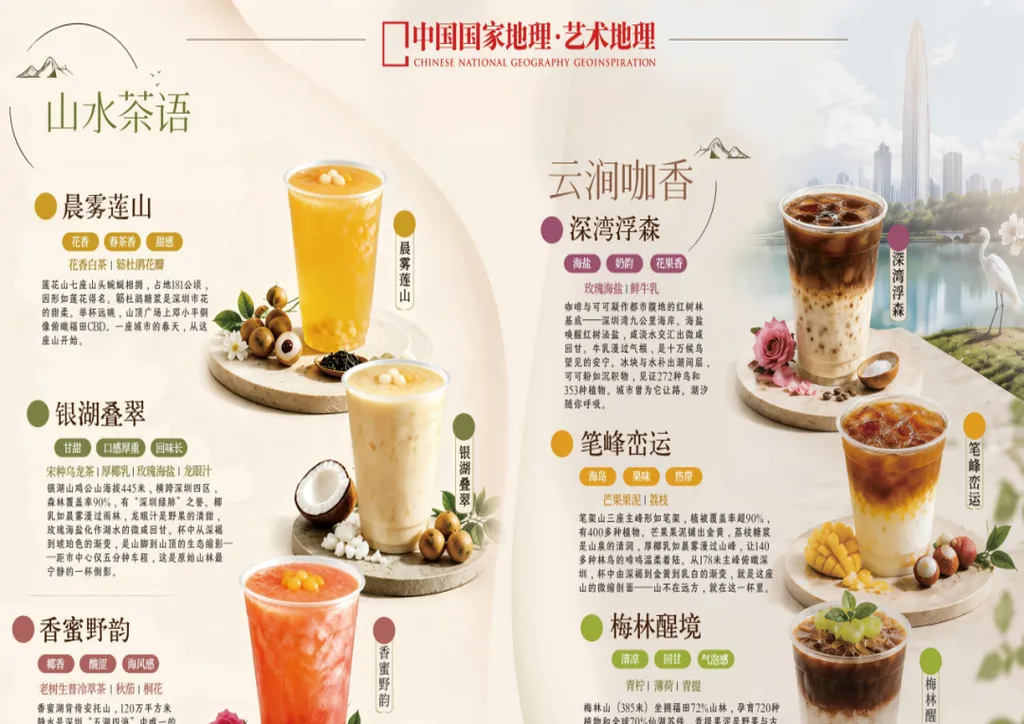
Geografie zum Genießen: Wenn Chinas Landschaften als Tee und Kaffee im Glas landen
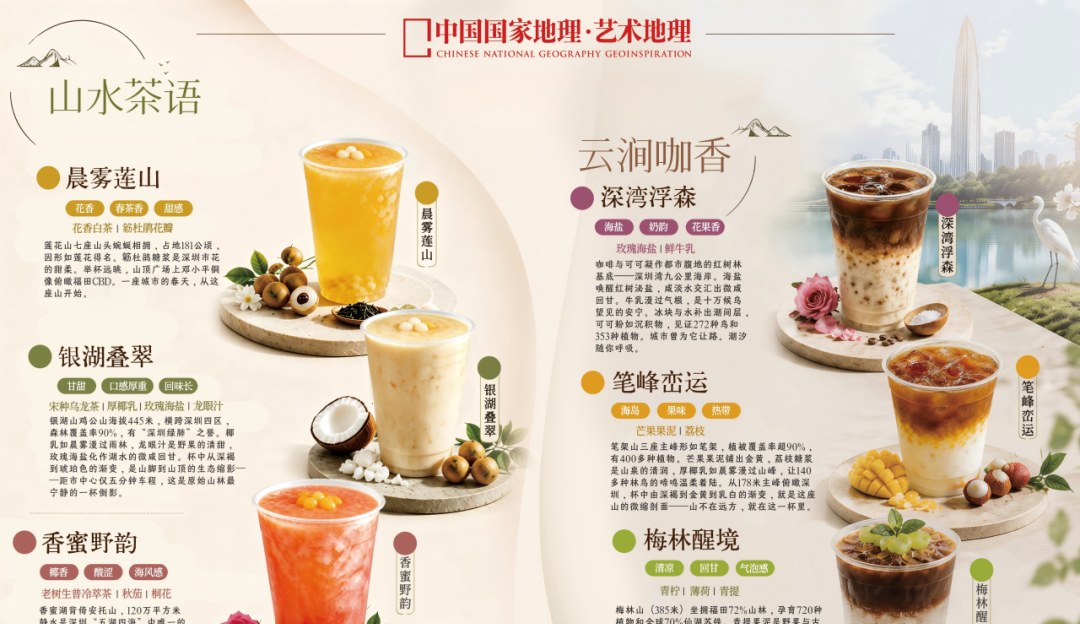
Geographieunterricht für die Geschmacksknospen | Wie lässt der „Berg-und-Fluss-Genuss-Mikroraum“ Berge und Flüsse schmecken?

Achtseitige Sonderbeilage der China Tourism News! Wenn die Schätze Shandongs zu einer langen Rolle der Qi- und Lu-Kultur werden
Category navigation
Jump to the article’s category or explore nearby topics.
Im Bild reisen, bis die Nudeln süchtig machen, unbeschreiblich schön! Diese versteckte kleine Stadt hat mich wirklich überrascht.
Jump to the more recent article in this topic series.
Landschaft, Erlebnisse, kein Stress, sehr entspannt! Im Sommer will ich hier hin
Continue to the previous article in this series.
Related stories
More articles from the same category and nearby topics.