Among the numerous mango varieties in Sanya, which one is your No.1?
Read, share, and explore related stories through curated categories and tags.
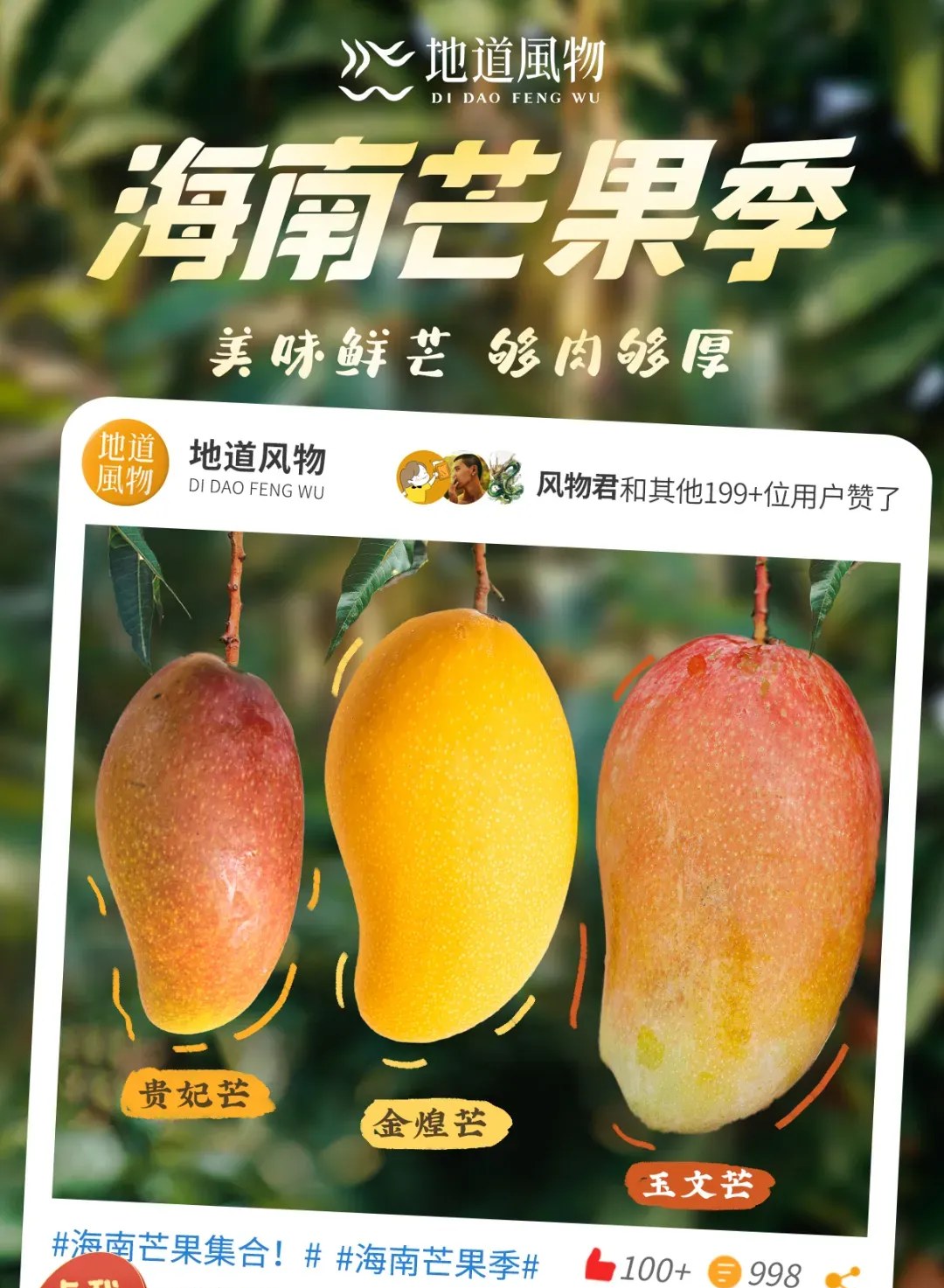
Sanya, a city known as the “Oriental Hawaii,” is a popular tourist destination but flies under the radar as a “tropical fruit paradise”—it produces fruit year-round, and the variety is richer than you can imagine.
Sanya, historically called Yazhou, was first recorded in the Jin Dynasty’s Nanfang Caomu Zhuang (Plants and Trees of the South) for its native tropical fruits like lychee and longan. Later, the Southern Song Tongzhi (Comprehensive Records) notes the introduction of jackfruit. By the Qing Dynasty, the Yazhou Zhi (Gazetteer of Yazhou) mentions mangoes. In short, Sanya has a long history of growing and introducing tropical fruits.
Different types of mangoes are planted in a staggered pattern among the hills of Sanya.
Located at 18 degrees north latitude, Sanya enjoys an average of 2,534 hours of sunshine per year, about 6.9 hours daily, with an average annual temperature of 25.5°C—perfect for tropical fruit cultivation. With techniques like bagging, the mangoes grown here today are more resilient to harsh conditions than native varieties and can thrive across seasons. This also reduces pesticide use and improves mango quality.
Bagged Yuwen mangoes—their quality deserves this layered protection.
Sanya’s fruit stalls are almost always filled with a strong mango aroma year-round, making “mango freedom” a real possibility here. So now, Sanya offers a diverse range of mango varieties with top-notch quality—after all, “Sanya mango” is already a product with national geographical indication protection.
Sanya Yuwen Mango
A high-sweetness “giant” with intense fruit aroma.
The Yuwen mango combines the large size of the Kent mango (“big-face mango”) with the sweet, delicate flavor of the Guifei (Concubine) mango.
An average single fruit weighs about half a kilogram, and calling it palm-sized is an understatement. How big is it? Almost too big to hold with both hands.
If you hadn’t seen it for yourself, who would believe this hefty fruit hides such a small, thin pit inside? Our product manager sliced it open on the spot, cutting “shua-shua” along the top and bottom of the pit, resulting in two thick slabs of “pure mango flesh”—silencing any colleagues who doubted the pit size.
What’s annoying about eating mangoes is fibers getting stuck in your teeth, but Yuwen mangoes don’t have that problem. With one bite, the smooth flesh melts between your lips, and juicy goodness flows freely in your mouth. You can totally grab a spoon and enjoy this silky mango like a cheese pudding.
We also measured the sugar content of the Yuwen mango—over 20 degrees, making it a true “sweetheart” without a doubt.
This Yuwen mango, boosting the mango experience to a new level, is all flesh in every bite. Buying it to cut up and share with family and friends is perfect.
Sanya Guifei Mango
A silky, sweet mango “pudding.”
The Guifei mango, with its rich floral aroma, is one of the most beloved mangoes among fans. The tree-ripened Guifei mangoes from Hainan’s Sanya are at their best in May!
How good are they?
The sweetness climbs further, and the sweet-tart balance becomes even better. As Sanya’s temperatures rise and the day-night temperature difference widens, compared to earlier Guifei mangoes with around 14 degrees of sweetness, these can be 3–5 degrees sweeter.
We measured the sugar content at over 17 degrees.
The aroma peaks—when you open the delivery box, the unique rose-like scent of Guifei mangoes hits you. With longer hang time on the tree, each Guifei mango accumulates more flavor compounds, making both the rose smell and the mango taste richer.
And, on top of being sweeter and more aromatic, Guifei mangoes still have a thin pit as slim as a coin, a smooth, pudding-like texture, and a stunning rainbow-like appearance featuring red, orange, yellow, green, blue, and purple.
Beautiful-looking, sweet-fleshed, with small, thin pits—that’s the Guifei mango.
Venture into the orchard, and you’ll see trees loaded with multicolored Guifei mangoes. They don’t have a uniform color; if there’s one word to describe them, “rainbow” fits best. The color depends on how much direct sunlight they get—fruit on the outer edges of the tree tends to be redder, even purplish, while those inside, lacking sun exposure, may be greenish or yellowish, but the flavor is almost the same.
A Guifei mango tree covered in fruit.
Red, orange, yellow, green, blue, purple—you can find all these colors on a single mango tree. Beautiful, stunning, tempting—just looking at the Guifei mango fruit is enjoyment enough.
Sanya Jinhuang Mango
An edible rate of over 95%.
How irresistible is a Jinhuang mango to eat? A colleague of ours, a tall Northeastern guy, took one bite of a Jinhuang mango and his eyes lit up. Without looking up, he marveled at how sweet and juicy it was, then gobbled up a big Jinhuang mango like a hamster hoarding food, immediately ordering two boxes afterward.
A super-sized Jinhuang mango with sweet, juicy flesh.
Big size: First, the Jinhuang mango is huge—some can weigh up to half a kilogram, with a plump feel that makes you want to peel it right away.
Thin pit: For mangoes, a thin pit is a prized quality. Since Jinhuang mangoes are already large, their ultra-thin pit gives them an edible rate of over 95%.
A super-sized Jinhuang mango with a pit so thin it’s called a “leaf pit.”
Soft, smooth flesh: When you cut a Jinhuang mango with a crosshatch pattern, you get cute little cubes. With minimal fibers, it hardly ever gets stuck in your teeth, and big chunks of flesh go down as smoothly as mango jelly.
Two easy steps to enjoy a delicious Jinhuang mango.
Plus, thanks to its high sweetness, the Jinhuang mango has almost no tartness and is packed with juice. When you bite into it, sweet mango juice drips from your hand to your arm, making you feel all sweet.
Hainan Jinhuang mangoes are on a limited-time deal—join us and indulge in mango freedom!
Tip: A ripe Jinhuang mango is fully golden-yellow. If the fruit you receive has a lot of green on it, it’s not fully ripe. Leave it in a ventilated spot for 1–2 days until ripe. Never put unripe mangoes in the fridge! Don’t refrigerate! Don’t refrigerate!
All golden-yellow means it’s time to feast on the Jinhuang mango.
Author | Fengwu Xiaoguan Author Team
Photography | Zhu Mengfei
Some images in this article are provided by suppliers and are for reference only.
Tag navigation
Explore articles that share the same tag and jump to tag pages.
Geografie zum Genießen: Wenn Chinas Landschaften als Tee und Kaffee im Glas landen
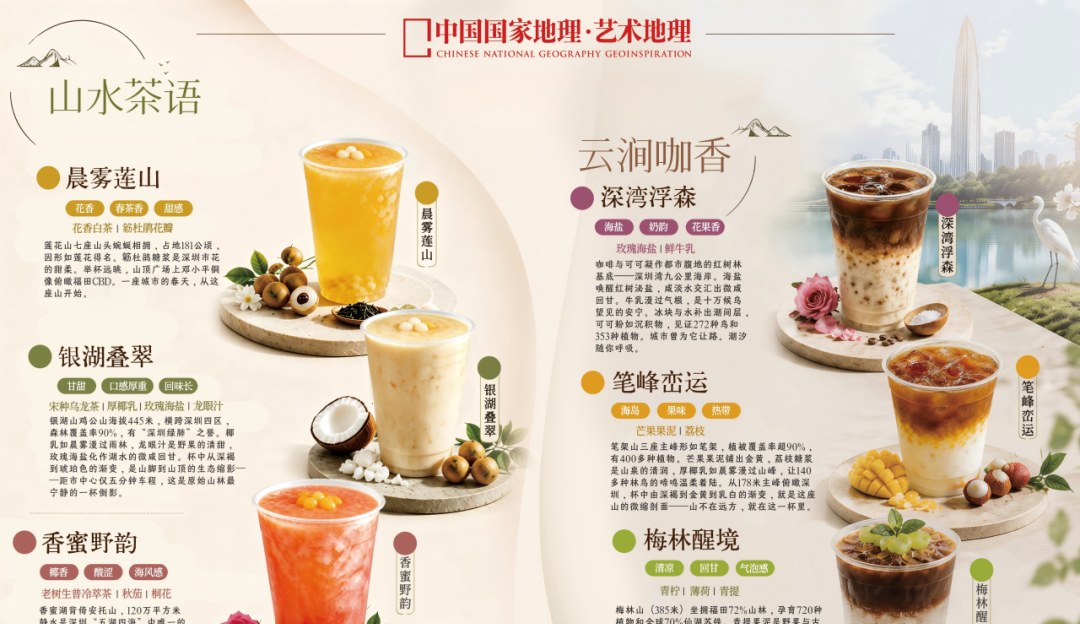
Geographieunterricht für die Geschmacksknospen | Wie lässt der „Berg-und-Fluss-Genuss-Mikroraum“ Berge und Flüsse schmecken?

Achtseitige Sonderbeilage der China Tourism News! Wenn die Schätze Shandongs zu einer langen Rolle der Qi- und Lu-Kultur werden
Category navigation
Jump to the article’s category or explore nearby topics.
【Beschäftigung】500+ Unternehmen, 10.000+ Stellen, Jobmesse für Hochschulabsolventen im Jangtse-Delta an diesem Freitag!
Jump to the more recent article in this topic series.
In der zweiten Nachthälfte bis morgen Regen in Peking! Anschließend nächste Woche erneut Regen! Voraussichtlicher Zeitpunkt -
Continue to the previous article in this series.
Related stories
More articles from the same category and nearby topics.