"Jiaxing, Home to China's Ancient Towns," Shines!
Read, share, and explore related stories through curated categories and tags.
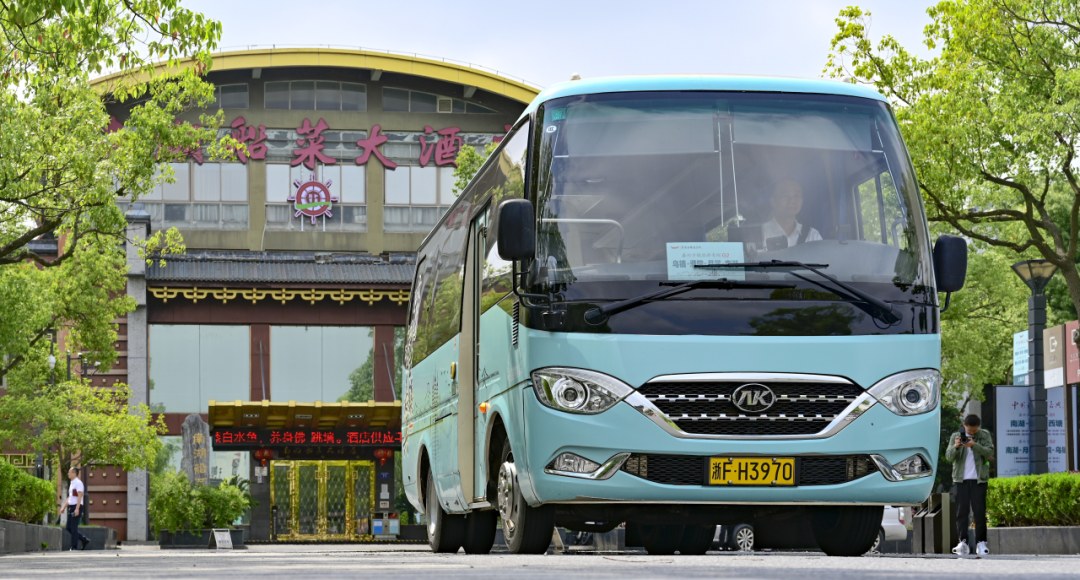

What’s it like to tour an ancient town by bus? As the wheels roll, you catch glimpses of poetic imagery—“green bricks, black tiles, whitewashed walls, small bridges, flowing water, and homes.” Through the moving window, you sense a spiritual and cultural haven of “peace, harmony, and poetic living.”
Jiaxing has long been a scenic, prosperous water town known for its beauty and wealth, with its ancient towns being the city’s most iconic symbols. To strengthen transport links between these towns and promote the brand “See China’s Ancient Towns in Jiaxing,” on May 1st this year, the city launched its first three ancient town tourist bus routes. Using a “customized bus” service model starting from Nanhu in the city center, these routes connect scenic spots like Xitang, Puyuan, Wuzhen, and Yanguan, linking them into a chain. This creates a bus service network centered on the downtown core, spreading out to major ancient towns, achieving direct, interconnected bus travel between “one core and four towns.”
On the afternoon of May 15th, as our city’s People’s Congress representatives and CPPCC members took the Jiaxing Ancient Town Tourist Bus G2 route to leisurely tour Puyuan, a grand picture of cultural and tourism integration slowly unfolded before their eyes…
Blending Transport and Tourism Creativity
Leading a New Trend in Ancient Town Sightseeing
“This special route feels great—it drops you right at the tourist center of the ancient town, super convenient.”
“It even exceeds the regular bus speed limit of 60 km/h and can use the highway, making it more efficient.”
“I’m really looking forward to the upcoming Nanhu-to-Yanguan route.”
On the way to Puyuan via the Jiaxing Ancient Town Tourist Bus G2, the representatives and members chatted away, one after another, taking in the scenery whizzing by outside the window while sharing their experiences on the route.
“This dedicated line can be described as ‘high quality and low price.’ The ‘high quality’ lies in the convenience it provides—the line connects ancient towns ‘like beads on a string’ with ‘seamless transfers,’ stopping at each town’s tourist service center for easy access. The ‘low price’ comes from its affordable fares; visitors only need to spend 5 to 15 yuan on transportation to enjoy several famous towns in a single day…” He Xiaomin, head of the Bus Management Section at the Jiaxing Transportation Bureau’s Highway and Transport Management Center, introduced the line’s features and operations to everyone.
According to statistics, during the May Day holiday, the Jiaxing Ancient Town Tourist Line was very popular among the public, running a total of 137 trips and carrying 926 passengers. On May 2, passenger flow reached 289, setting a single-day peak.
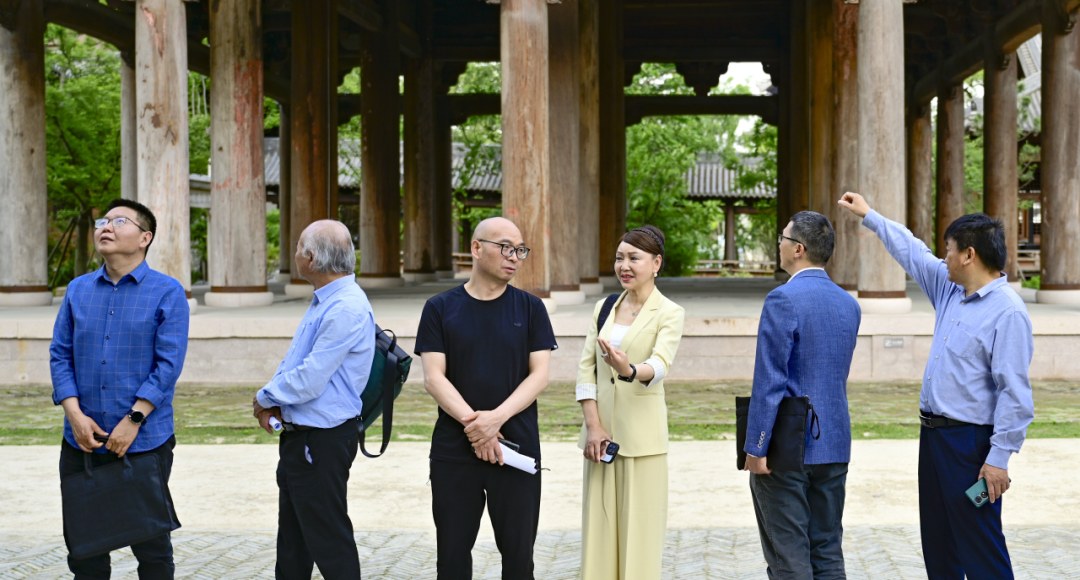
As the dedicated bus came to a steady stop at the entrance of Puyuan Ancient Town, a picturesque scene of a Jiangnan water town unfolded before everyone’s eyes. The delegates and committee members strolled through the narrow alleys and ancient lanes of Puyuan, immersing themselves in the timeless charm of small bridges and flowing water, captivated by the poetic beauty of the scenery. Currently, Puyuan Ancient Town is positioning itself as the “China Fashion Ancient Town,” aiming to become a resort that integrates tourism, leisure, business exhibitions, and fashion culture.
Culture and Innovation Hand in Hand
Painting a New Blueprint for Ancient Town Development
Puyuan Ancient Town is just a microcosm of Jiaxing’s ancient town landscape. Across the country, Jiaxing stands out for its numerous high-quality ancient towns, each with distinct characteristics and high visibility, firmly ranking among the top tier. Its unique canal culture and architectural styles attract many tourists. Meanwhile, intangible cultural heritage such as sericulture and weaving, Xiashi lanterns, literature, and opera are also being preserved and passed down.
Indeed, these elements represent the essence of Jiaxing’s history, culture, and scenic spots. But is Jiaxing’s beauty and the needs of tourists limited to this? How can the many ancient towns “each shine in their own way” and carve out differentiated paths? At the seminar held that day, delegates and committee members offered valuable insights and brainstormed new approaches to integrate culture and tourism development.
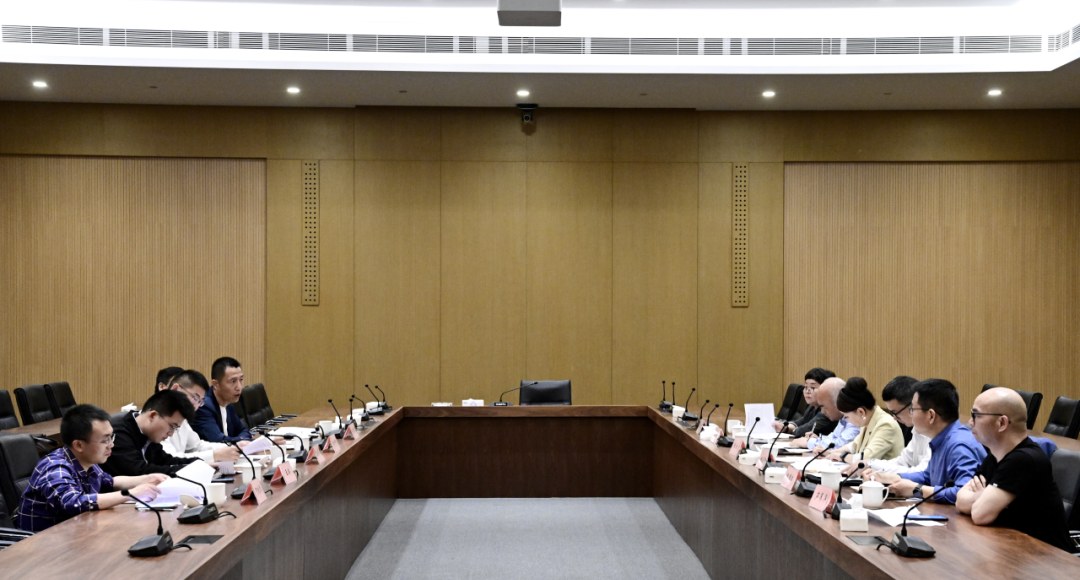
After riding the ancient town tourist shuttle, Gu Mingyue, a municipal People’s Congress representative and director of the Economic Development Department at the Haining Yanguan Tourism Resort Management Service Center, shared her thoughts on how to improve the vehicle’s visibility: “For instance, London has its red double-decker buses, Japan has its pink cherry blossom trains, and Jiaxing’s customized ancient town tourist shuttles could also incorporate cultural elements in their exterior design and interior decor, turning the shuttle into a standout product.”
Yao Jianxin, a member of the municipal Political Consultative Conference, Party Committee Secretary and Chair of the Municipal Federation of Literary and Art Circles, believes that culture is a distinctive marker of cultural tourism integration. “Building on cultural foundations, we can create unique brands for ancient towns. Moreover, Jiaxing is a Jiangnan water town with many rivers and lakes—could we launch water shuttle routes to offer a new form of Jiaxing ancient town tours?”
Zhang Hong, a municipal People’s Congress representative and Chair of Zhejiang Yunlanwan Tourism Development Co., Ltd., suggested that in the future development of ancient town tourist shuttles, diversified routes should be opened, connecting more scenic spots along the way to create premium travel itineraries and boost the tourism economy.
Lu Weian, a senior editor of the editorial department of the Journal of Jiaxing Nanhu University and member of the municipal Political Consultative Conference, recommended focusing on natural, facility, humanistic, and innovative dimensions to creatively establish a “Keep Guests in Jiaxing” mechanism, driving cultural tourism to stimulate local economic growth.
During the symposium, representatives and committee members actively contributed their ideas. Fang Fang, chief physician of the Cardiology Department at Pinghu First People’s Hospital, and Xiong Guohong, full-time deputy chair of the Jiaxing Committee of the China Democratic Promotion Association, among others, offered suggestions on how to highlight the unique features of Jiaxing’s various ancient towns, launch nighttime shuttle services, improve vehicle comfort, and strengthen promotion of cultural tourism activities like “Daily Drama in Ancient Towns.” Departments such as the Municipal Bureau of Culture, Radio, Television and Tourism and the Municipal Bureau of Transportation actively responded to the representatives’ and committee members’ concerns.
Brand and Quality Both Elevated
“China’s Ancient Towns: See Jiaxing” Makes a Strong Impression
Jiaxing is famous and thrives because of its waterways. The millennium-old Grand Canal cuts through the city, and the ancient towns scattered along it form a natural layout of streets by the water, painting a lasting picture of Jiaxing’s ancient towns across the region. This creates a unique cultural tourism advantage.
As early as 2022, Jiaxing included “enhancing the protection and development of ancient towns and promoting the ‘China’s Ancient Towns: See Jiaxing’ brand” in its government work report. From a city-wide perspective, it constructed a top-level system, focusing on preserving the historical features of ancient towns, revitalizing their cultural DNA, and standardizing and systematically building and promoting the “China’s Ancient Towns: See Jiaxing” brand.
Innovation must be grounded in tradition. In recent years, under the leadership of the municipal Party committee and government, Jiaxing has actively explored the protection and inheritance of ancient towns’ excellent traditional culture. A series of actions have accelerated: the World Canal Ancient Towns Cooperation Mechanism Conference was held in Jiaxing for the first time outside Yangzhou, bringing together experts and scholars from around the world to discuss innovative development of canal ancient towns; the collaborative mechanism of the Grand Canal Ancient Towns Development Alliance was continuously improved, with the release of the “China’s Ancient Towns: See Jiaxing” ancient town map and the promotion of a batch of cultural tourism projects to be rolled out and operated; starting from the core of the main city and four towns—Wuzhen, Xitang, Yanguan, and Puyuan—along with ancient towns along the canal, modern and beautiful town construction has been gradually promoted; the “China’s Ancient Towns: See Jiaxing” theme has been showcased at the Yangtze River Delta Cultural Expo and the China (Shenzhen) International Cultural Industry Fair…
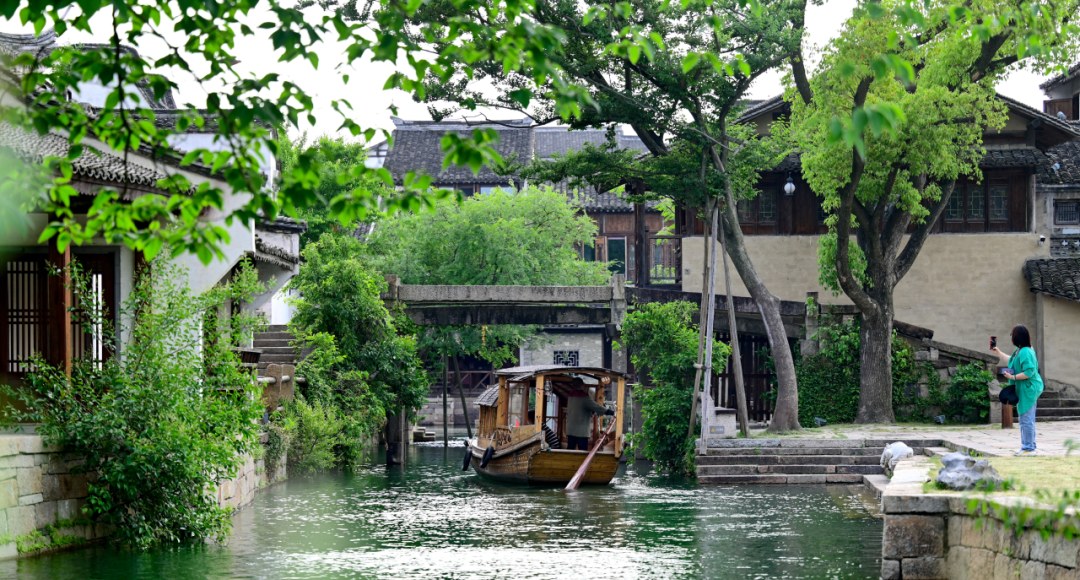
From “a thousand towns, one face” to “a thousand towns, a thousand faces,” as tourism deeply interweaves with local development, ancient towns can strike a balance between modern commerce and historical culture. Chang’an Ancient Town, where “a thousand grain boats press against green waves,” focuses on reviving canal culture; Meili Ancient Town, thriving on plums, guides people to rediscover the poetry of nostalgia; Xincheng Ancient Town, with its ultimate flavors, holds the food dreams of Jiaxing locals; and Zhapu Ancient Town, historically blessed by trade, delves into a millennium of maritime culture… Now, a new-era “picture of ancient town styles,” where each town shines in its own way and all beauty is shared, is slowly unfolding across the land of Jiahe.
A city government official stated that ancient towns are key cultural tourism resources for the city. Making good use of this asset not only brings in tourism revenue and meets visitors’ vacation needs but also provides financial support for preserving the towns’ history and culture—a win-win approach. “Moving forward, we will continue to trace the threads of historical and cultural development, highlight regional cultural characteristics, and pursue sound commercial development, allowing each ancient town to display its unique brilliance while also combining freely to share collective beauty. We believe Jiaxing’s ancient towns will enable local residents to live poetically and allow visitors from afar to experience the beauty of ‘poetry and distance.’”
Reporter from Jiaxing News and Media Center: Zhu Jiawei, Zhang Qifan
Editor: Jin Yan
Supervising Editor: Yang Fengwei
Welcome to repost, please credit: Jiaxing Release
Tag navigation
Explore articles that share the same tag and jump to tag pages.



Category navigation
Jump to the article’s category or explore nearby topics.
Chinesische Gartenbau · Brancheninformationen | 2024 Bildungsministeriumskonferenz des Ausschusses für Landschaftsarchitektur und 9. Forum für nachhaltige Landschaftswissenschaften erfolgreich in Nanjing abgehalten
Jump to the more recent article in this topic series.
Umwerfende chinesische Landschaften, wie viele kennen Sie?
Continue to the previous article in this series.
Related stories
More articles from the same category and nearby topics.