Across China: Which city has the best integration of natural scenery and cultural history?
Read, share, and explore related stories through curated categories and tags.
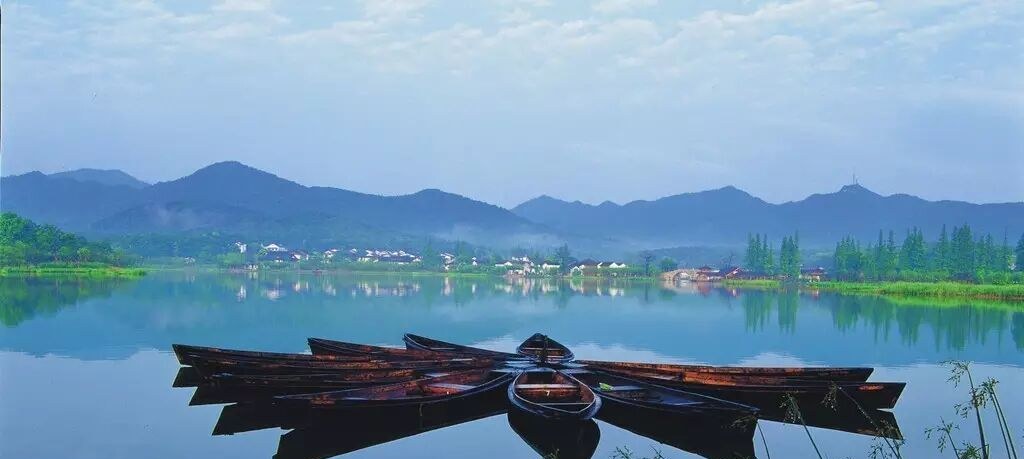
Did you travel during the National Day holiday?
Which city in China receives the most tourists?
Which city has the most overnight visitors?
Which city earns the most from tourism revenue?
The data probably hasn’t been released yet.
Today, let’s discuss,
Which Chinese tourist city has the strongest “comprehensive strength”?
**In this article, “comprehensive strength” has three meanings:
-
It’s not about a city having more AAAAA-rated attractions that makes it strong, but whether it’s perceived as a powerful tourist city in the minds of visitors. A good product doesn’t always mean a good brand.
-
Many cities have excellent tourism resources but poor management, resulting in low brand awareness and weak brand associations. Examples of poor city brand management include the price-gouging incidents in Sanya and the “Qingdao prawn” scandal.
-
Here, “comprehensive strength” only includes two dimensions: natural scenery and cultural history. It does not cover economy, science and education, transportation, livability index, vegetation coverage, or hospitality like hotels and dining.
There are various ways to categorize tourism resources. For convenience, let’s roughly divide them into four types.
Coastal resource cities: led by Dalian, Qingdao, Xiamen, and Sanya, they stand out and dominate with their blue seas and skies, often boasting long “golden coastlines” as famous Chinese resort destinations.
Natural scenery cities: Guilin, Kunming, Lijiang, and Fenghuang lead the pack. They are natural beauties, relying on their mountain and water landscapes to rule the world. From middle school language textbooks, we learned about “Guilin’s scenery is the best under heaven,” “Spring City,” “Shangri-La,” and the “Border Town” of western Hunan.
Modern architecture cities: led by Shanghai and Shenzhen, they create “attractions” with strong economic power, surprisingly outperforming traditional tourist powerhouses in visitor numbers and foreign exchange earnings. Their experience tells us: the economy dominates everything—money rules.
Cultural and historical cities: Beijing, Xi’an, Nanjing, Chengdu, and Suzhou reign supreme in the tourism world, each a top-tier player in its own right.
Some experts also group the first three types into natural landscape cities. However, looking at the above, natural landscape cities generally lack cultural depth. Even with a “bit of culture,” it’s not enough to hold their own; they lack substance. Meanwhile, cultural and historical cities are rich in heritage, either solemn or leisurely, but they fall short in natural landscapes, lacking vitality. In the minds of tourists, Suzhou is more about “gardens” and “small bridges over flowing water,” without real mountains or expansive waters. In other words, it doesn’t excel in blending natural scenery with cultural history.
Is there a city in China that “transcends the three realms and exists beyond the five elements”? One with both natural landscapes and cultural history?
The answer is obvious.
It’s not only stunningly beautiful, with a face that could topple cities—like a cluster of peach blossoms, every smile reminiscent of Xi Shi—but also has a steady temperament, refined by ancient masters, excelling in music, chess, calligraphy, painting, myths, and legends. Every step reveals a story, every tree and blade becomes poetry.
That city is Hangzhou.
Hangzhou’s city song: “Dream Paradise”
(Please ignore the three-cent special effects)
Hangzhou’s natural scenery: exquisite, as if crafted by nature
Hangzhou is a city of paradise.
Hangzhou is surrounded by mountains on three sides and a city on one side. In fact, the mountains around West Lake aren’t particularly striking—no towering peaks, no sheer cliffs—but they perfectly complement the lake. Standing on the eastern shore of West Lake, just raise your gaze by ten degrees, and the entire view of the lake unfolds. Don’t underestimate that “ten degrees.” If you look too high, the lake seems too low, and you feel small; if you look too low, the scenery feels flat, and without contrast, there’s no beauty.
Hangzhou’s mountains aren’t especially famous: Yuhuang Mountain, Baoshi Mountain, Phoenix Mountain, Nanping Mountain, Banshan Mountain. But their peaks are well-known. One of the Ten Scenes of West Lake, “Twin Peaks Piercing Clouds,” refers to the South Peak and North Peak, with Feilai Peak nearby.
Hangzhou boasts the Qiantang River, the Beijing-Hangzhou Grand Canal, West Lake, Xiang Lake, and Qiandao Lake, as well as being close to the East Sea and having Xixi Wetland—each of these water bodies holds a strong appeal in the hearts of tourists. Having so many famous waterways converge in a single city is a rarity worldwide. Deng Xiaoping once said, “Scenic tourist cities like Hangzhou are rare in the world. We must develop Hangzhou’s tourism industry well.”
In the sunny March days, grass grows and birds flutter; along the Su and Bai causeways, peach trees and willows line the banks. Paired with boats gliding across the lake and the Gem Hill in the background, the scene is nothing short of a traditional Chinese painting. Every season offers its own charm, every season becomes a picturesque sight:
Spring brings the “Spring Dawn at Su Causeway”▼Summer has the Breeze-ruffled Lotus at Quyuan Garden▼
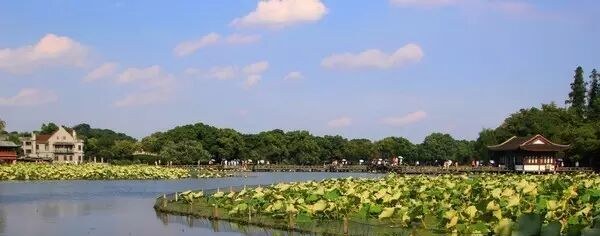
In autumn, there is the “Autumn Moon over the Calm Lake”▼
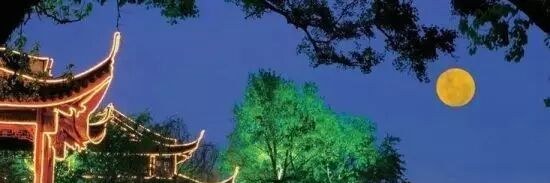
In winter, there’s the Broken Bridge with lingering snow▼Beauty doesn’t end here.
Compared to the renowned West Lake, there are also Xianghu Lake and Qiandao Lake. Xianghu Lake, located in Xiaoshan District of Hangzhou, is the “sister lake” of West Lake. Nestled in the dark green mountains, its water is as clear as a mirror. Compared to West Lake, Xianghu Lake has a much wider surface and far fewer crowds, making it a truly peaceful retreat. Qiandao Lake, located in Chun’an County under Hangzhou’s jurisdiction, consists of 1,078 islands and is 108 times the size of West Lake. It ranks first in water quality among China’s major rivers and lakes, so pure that it can be drunk directly without treatment, earning it the title of “the finest water under heaven.”
Everyone has a paradise in their heart. Suzhou is the delicate beauty, while Hangzhou is the elegant lady.
The closest to paradise is the land of abundance. But Chengdu is a bit too laid-back, even lazy, lacking refinement and spirituality, with more of a dense historical and human touch.
The cultural scenery of Hangzhou is rich, like a galaxy of stars.
The West Lake song “West Lake on Earth”
The famous Italian traveler Marco Polo praised Hangzhou as “the most beautiful and splendid city in the world.” It’s unclear whether he understood its culture or merely admired its natural scenery.
Hangzhou is the most respectful city toward women in China. A white snake demon was elevated to a deity by the people of Hangzhou, and even today, they still enjoy the tourism dividends brought by this white snake woman. It’s hard to imagine how much the city would lose without Lady White Snake. Hangzhou is heavy with demonic aura, yet people take pride in it, and tourists come drawn by this very charm.
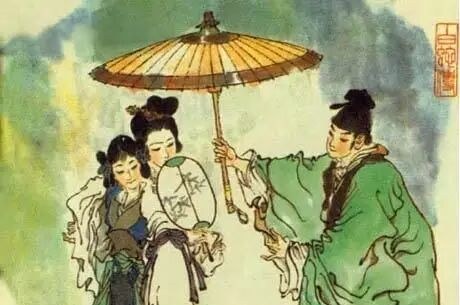
It’s not just the Legend of the White Snake—the story of Liang Shanbo and Zhu Yingtai, one of China’s four great folktales, also takes place in Hangzhou. The Wansong Academy where Liang Shanbo studied still stands, and the Long Bridge where Zhu Yingtai saw him off for eighteen miles remains.
“Long Bridge isn’t long, Broken Bridge isn’t broken, and Solitary Hill isn’t solitary” are the three wonders of Hangzhou.
True respect for women is embodied not only by the White Snake but also by Su Xiaoxiao, the top courtesan and greatest talented woman of Qiantang. In a Confucian-dominated country, having a monument erected for a courtesan by West Lake, enjoying such an honor, and later attracting countless visitors eager to take photos—Su Xiaoxiao herself must never have imagined it. Yu Qiuyu once said that Su Xiaoxiao’s significance lies in “forming a peculiar confrontation with the orthodox personality structure. No matter how upright a scholar or highbrow may be, socially irreproachable, they often suppress their own and others’ natural flow of life.”
The people of Hangzhou built the “Talent Admiring Pavilion” for Su Xiaoxiao’s tomb, and later scholars and highbrows like Bai Juyi once paid their respects.
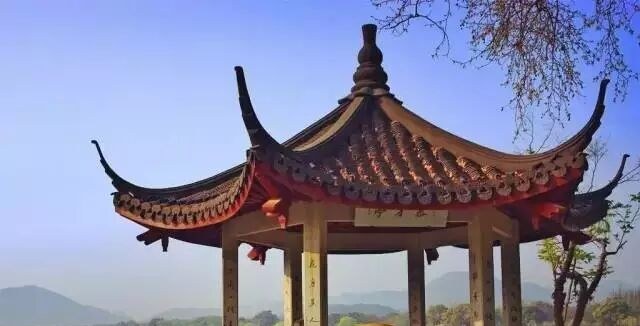
The poetic culture of West Lake is incredibly brilliant. Both Bai Juyi and Su Dongpo served in Hangzhou as officials, reaching the rank of prefect (mayor), and left behind timeless masterpieces. “I cannot bear to leave Hangzhou, half the reason is this lake,” and “Comparing West Lake to Xi Shi, she looks beautiful whether lightly or heavily made up.”
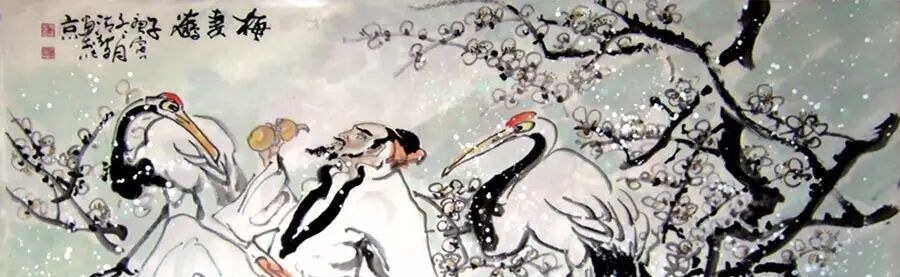
West Lake is the epitome of classical Chinese traditional aesthetics. It not only boasts famous poetry but also tea culture: West Lake Longjing tea ranks first among the top ten famous teas in China, with Longjing Village and Meijiawu being its original producing areas. It has Buddhist culture: Hangzhou is also known as the “Buddhist Kingdom of the Southeast,” with over 700 temples at its peak. Today, Lingyin Temple, Yongfu Temple, and Jingci Temple are built by the lake. It has a culture of loyalty and righteousness: the tombs of the Three Heroes of West Lake—Yue Fei, Yu Qian, and Zhang Cangshui—as well as the tomb of Wu Song, the tiger-hunting hero, and the tomb of Qiu Jin, China’s first women’s rights activist, all rest by West Lake. The green hills and clear waters of West Lake are fortunate to have buried so many heroes and martyrs. It also has a culture of seclusion: Lin Bu of the Song Dynasty once lived in seclusion on Solitary Hill by West Lake, planting plum blossoms and raising cranes, taking the plum as his wife and the crane as his son, never marrying. “Plum wife and crane son” became a common theme in traditional Chinese painting.
West Lake can evoke a sense of “finding solace in nature.”
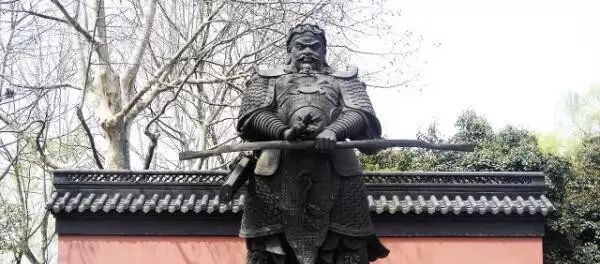
Nanjing locals say: We’re not convinced by Hangzhou—Hangzhou is just a land of refined scholars and poets, with too much sentimental and decadent tunes, lacking the imperial majesty of Nanjing. That’s nonsense—Hangzhou had its own emperors too: the Five Dynasties’ Wuyue Kingdom and the Southern Song Dynasty, spanning 210 years in total. If you don’t believe it, go check out Qian Liu by the King Qian Temple—that unyielding, iron-willed figure—if that’s not a ruler, not a man, then what is?!
Compared to history, Hangzhou is not as profound as Xi’an, Beijing, Luoyang, or Kaifeng; compared to natural scenery, Hangzhou is not as beautiful as Dalian, Xiamen, Lijiang, or Kunming. However, Hangzhou is the best city in China for combining humanities, history, and natural scenery.
Wuhan was once quite proud. Because Grand Marshal Zhu De once said to the people of Wuhan, “East Lake may be inferior to West Lake for now, but it will surpass West Lake in the future.” Anyone with clear eyes could see that was just a comforting remark. Could they compete for the cultural history of Bai Juyi, Su Dongpo, and Lady White?
PS: Compared to some tourist cities, Hangzhou’s economy is much more developed, with higher incomes and more bosses. No matter how poor we are, we have to squeeze into the crowd of the wealthy. Those who agree, please tip.
Click here to view Teacher Li’s award-winning work from 2007, “New Ideas for Tourism City Development – Building Characteristic Tourism Cities”
Li / Lao / Shi
Advocating the beauty of business, organizing systems and methods
Marketing, branding, media, regional economy

Tag navigation
Explore articles that share the same tag and jump to tag pages.


Category navigation
Jump to the article’s category or explore nearby topics.
Der chinesische Verband der Landschafts- und Sehenswürdigkeitsgebiete lobt die wunderschöne Raufrostlandschaft des Berges Tai
Jump to the more recent article in this topic series.
Eine neue Ära des Schnee- und Eistourismus in China einleiten – Analyse der Entwicklungstrends des Schnee- und Eistourismus
Continue to the previous article in this series.
Related stories
More articles from the same category and nearby topics.