Plum Blossom Award Winner! 'The Protagonist' Hides the Strongest 'Sweeping Monk Squad'!
Read, share, and explore related stories through curated categories and tags.
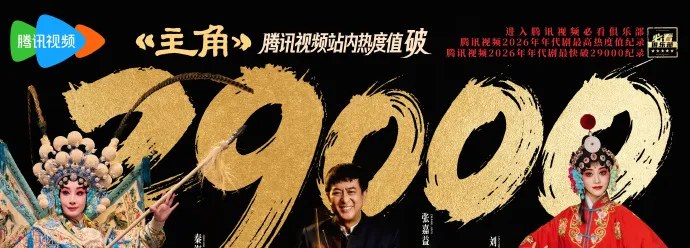
The TV drama “Protagonist” has reached its climax. Aside from well-known Shaanxi actors like Zhang Jiayi, Dou Xiao, Sun Hao, and Miao Fu, there are actually plenty of “fellow townsmen” in this big production—from the master team of “loyalty, filial piety, righteousness, and benevolence” who possess incredible skills to the youthful new faces of Qinqiang opera. These Shaanxi actors use their professional expertise to vividly bring out the earthy vitality and true essence of the Qinqiang stage.
Image/Weibo As Zhang Jiayi said in an interview: “Shaanxi actors grew up on this land, so they’re naturally familiar with the tone, expressions, pace of life, and social nuances here. They don’t have to force imitation or try to fit in; just sitting or standing, they’ve got that vibe.” Over the past few days, reporters interviewed several Shaanxi locals both on and off the set, bringing you closer to the equally dazzling “golden supporting roles” in and out of the drama.
“The Sweeping Monk”
To capture the soul of Qinqiang in a drama, relying solely on the lead actors isn’t enough. In “Protagonist,” the “cafeteria cook” is a winner of the Plum Blossom Award for Chinese Opera, the “gatekeeper” is a top-tier actor, and the “business section chief” is a child of an opera family. These “golden supporting roles” seem unremarkable at first glance, but once they open their mouths or make an appearance, they reveal the real skills honed from decades immersed in opera. They’re not just acting as “Qinqiang people”—they are Qinqiang people themselves.
The “Plum Blossom Award” Hidden in the Cafeteria
In “Protagonist,” the plump woman in the troupe’s kitchen, delivering a Northwestern-flavored “What do you want?” left a lasting impression on many viewers. This role is played by Ren Xiaolei, winner of the 23rd Chinese Opera Plum Blossom Award and a professor at Xi’an Drama Academy. Joining “Protagonist,” Ren Xiaolei took on a dual role—bringing to life the straightforward, spicy plump woman in the county troupe’s cafeteria while also serving as the drama’s opera consultant.
How heavy is the burden of being an opera consultant? Ren Xiaolei frankly stated at the premiere press conference: “For me, it’s like walking on thin ice. I firmly told myself I must preserve tradition while innovating, delivering the most authentic opera elements without letting anyone say ‘that’s wrong.’ So sometimes I can be a bit stubborn.”
△Ren Xiaolei with the drama’s producer, director Zhang Yimou
From early discussions to outline opera presentation plans, to deeply participating in the drama’s music design, and then meticulously overseeing opera segments, stage direction, and music tempo during filming, Ren Xiaolei infused this drama with an irreplaceable professional foundation. And the plump woman she plays, guarding a kitchen’s smoky hearth, mirrors the initial growth backdrop of a generation of Qinqiang artists with her vivid portrayal of “Yi Qin’e’s family from home.”
Four “Sweeping Monks,” All with Real Skills
Image/Weibo Yi Qin’e’s journey from a kitchen girl to a Qinqiang star wouldn’t have been possible without the full guidance of several veteran artists. In the drama, the four masters—Loyalty, Filial Piety, Righteousness, and Benevolence—Gou Cunzhong, Gu Cunxiao, Zhou Cunren, and Qiu Cunyi, are all true hidden masters in the troupe. Interestingly, these four veteran artists are all played by Shaanxi actors.
Image/Weibo Among them, Sun Hao, the multi-talented “Master Gou” in film, TV, and music, goes without saying. Shi Wenzhong, who plays Gu Cunxiao, is also a familiar veteran Shaanxi actor, having played roles like Li Haifeng in “Lurking” and Director Gu in “I Am a Criminal Police Officer.”
As for Zhou Cunren and Qiu Cunyi, they’re genuine Qinqiang heavyweights.
Tian Bo (right), Tong Chao (left), and fellow actor Wang Xingyuan (center) from the Xi’an Youth Troupe pose for a photo during a break (courtesy of the interviewee)
Among them, the role of theater janitor Zhou Cunren is played by Tong Chao, a top-tier actor from the former Xi’an May First Troupe, specializing in the declining old male role type in Qinqiang. In the drama, he seems just a ordinary janitor but actually possesses masterful Qinqiang martial arts skills. Tong Chao recalled his audition: “During the test, the director team gave me a scene. I performed it, and they passed me in the first round. Then they sent the video to Teacher Zhang Jiayi, who gave the final review and said, ‘Sign the contract with Teacher Tong right away, excellent!’ That settled it—I got the role.”
Image/Qin Zhisheng
The role of kitchen chef Qiu Cunyi is played by He Lin, former deputy director of the Meiwan Troupe of the Shaanxi Opera Research Institute and a top-tier director. With years of expertise in opera directing, He Lin has directed works spanning Qinqiang, Meihu, opera, and string-drama genres. Famous Qinqiang plays like “The Love of the Proud Poplar,” “Stories of Xijing,” and “Du Fu” all bear his directing imprint.
In “Protagonist,” “Follow Master Qiu for good eats” is Hu Sanyuan’s advice to Yi Qin’e, and He Lin also showcases his acting talent and opera skills beyond directing, portraying a bold yet endearing “bald old man” to perfection.
In and Out of the Drama, It’s the True Nature of Qinqiang People
In the troupe’s group portrait in “Protagonist,” there’s another familiar face to Qinqiang fans—top-tier actor and Qinqiang martial clown Tian Bo. He plays the county troupe’s business section chief, always present in scenes involving troupe business research, student recruitment auditions, and play rehearsals.
Image/Qin Zhisheng
As a child of an opera family, Tian Bo grew up in the troupe’s compound. After graduation, he joined the century-old Yisushe Qinqiang Troupe, later serving as deputy director of Xi’an Yisushe, deputy director of Zhouzhi Troupe, and head of the Qinqiang Art Inheritance and Development Department of Xi’an Qinqiang Theater.
Perhaps due to his long-term dedication to Qinqiang art inheritance and promotion, Tian Bo was also entrusted with the “inheritance” mission on set—beyond acting, he tutored young actors and directed some opera play rehearsals.
After “Protagonist” aired, Tian Bo posted numerous video records on his video channel of him teaching young actors practice routines. Every move and gesture is meticulous, embodying the true style of the Qin people.
Young Actors, the New Force of Qinqiang
If the four veteran masters in the drama represent the roots of Qinqiang inheritance, then the youthful faces on and off stage are the new branches carrying the torch—in “Protagonist,” there are also many young Shaanxi actors who grew up in the Qinqiang tradition. Some transition from opera to film and TV across boundaries, while others fully immerse themselves in their roles, telling viewers with sweat and passion that this ancient art of Qinqiang has worthy successors.
Zhang Yifan: Exploring Qinqiang’s New Life Through Crossovers
Zhang Yifan (right) plays Liu Ke in “Protagonist”
Zhang Yifan, the young actor playing Liu Ke (adult), Feng Xiaoxiao’s buddy in “Protagonist,” has a father who is a Qinqiang actor at the Shaanxi Opera Research Institute. Zhang is the third generation in his family to learn opera, but he didn’t start out of passion. He recalls with a smile that his Qinqiang initiation path was very similar to Liu Ke’s: “Both of us were forced to learn by our parents. I even ‘ran away’ midway, just like Liu Ke. But as I kept practicing, that restlessness gradually faded. Plus, my master’s patient guidance and constant encouragement—telling me ‘there’s gold under the rug’—urged me to settle down, train hard, and stay true to my heart. I slowly persevered.”
Later, Zhang Yifan was admitted to the trainee class at the Shaanxi Opera Research Institute, focusing on civil and martial young male roles. He then got into the Drama, Film, and TV Performance major at Shanghai Theatre Academy, completing his transition from opera to film and TV.
Zhang Yifan (right) with original author Chen Yan
Participating in “Protagonist” is especially significant for Zhang Yifan: the role closely matches his own growth experience, sparking strong emotional resonance, making his performance a genuine, heartfelt portrayal. During filming, he leveraged his opera expertise, blending traditional opera skills with film acting, earning unanimous praise from many Qinqiang veterans.
In Zhang Yifan’s view, the rebirth of ancient Qinqiang never relies solely on stage dedication but requires engaging with contemporary culture through diverse mediums. “I’ll continue crossing boundaries to broaden Qinqiang’s reach, so more people can see the power of Northwestern opera.”
Zhang Biyao: A Role Refined During the Dog Days
Zhang Biyao (second from right) and companions on set
If Zhang Yifan showcases a crossover path—from opera to film and TV, then back to enriching opera—then Zhang Biyao, an actor from the Xi’an Performing Arts Group Youth Troupe who plays Qinqiang actress Hui Fangling (adult), represents the new generation of Qinqiang artists taking root on stage.
Zhang Biyao told reporters she started systematically learning Qinqiang at Xi’an Art School in 2017 and has been in the industry for nine years. “I’m incredibly excited that a TV drama can promote my hometown and the Qinqiang profession I’m in,” she said. “My biggest hope is that more people will see Qinqiang, learn about it, and love it.”
Zhang Biyao (right) and other young actors pose for a photo on the set of “Protagonist”
Her character in the drama interacts frequently with young Yi Qin’e (played by Liu Haocun), and she noticed a detail: “Whenever Liu Haocun had free time, she would go to Teacher Ren Xiaolei for vocal guidance.” The lead’s serious attitude toward Qinqiang skills left a deep impression on her.
What Zhang Biyao remembers most is filming the “Women of the Yang Family” scene. “It was the dog days of summer, outdoor temperatures nearing 40°C, and the old theater was sweltering. But to get it right and complete it, we toiled in that theater for three straight days, from 9 AM wrapping our heads to 11 PM finishing. It was tough and exhausting, but when we saw the final footage on the monitor, everyone was overjoyed.”
Wang Xingyuan: Giving Her All for Every Move
Like Zhang Biyao, Wang Xingyuan is an actor from the Xi’an Performing Arts Group Youth Troupe, with plenty of Qinqiang technical scenes in the drama. She plays female roles in opera, starting training at 16, with six years of study and four years of work. When she got the news about participating in the shoot,
her first reaction was “particularly honored”!
In an interview, Wang Xingyuan said that in her eyes, giving a great performance means fully committing to every movement and every emotional expression on stage. But on the other hand, when talking about her role in The Protagonist, she spoke most about something other than herself—she emphasized the actors who, though not originally from the Qinqiang tradition, are dedicated to mastering it. “While performing, I often worked with Han Peiying, who plays Chu Jiahe. During filming, Han Peiying had to frequently wear the heavy ‘big armor’ costume in the scorching heat, and the seven-star headpiece on her forehead was squeezing her head to the point of pain.” Wang Xingyuan said that she had experienced this herself and knew exactly how uncomfortable it was, let alone for a newcomer. “But she kept going—learning the unfamiliar tunes, practicing the unfamiliar moves, repeating the same movement for days on end. Honestly, I was deeply moved by her perseverance.”
Wang Xingyuan (front) teaches opera movements to Han Peiying, who plays Chu Jiahe.
When discussing the significance of The Protagonist for Qinqiang, Wang Xingyuan said: “The core is to create a new window for Qinqiang in the digital age, allowing more young people to ‘see’ and ‘understand’ it.” She particularly noted that for an ancient art form to be reborn, it needs not only dedication on stage but also more modern cultural vehicles. “I hope that through the efforts of more of us, we can complete a truly equal and powerful dialogue between this ancient art and our era.”
From Zhang Biyao, who practices tirelessly in the rehearsal hall, to Wang Xingyuan, who masters challenging opera moves, to Zhang Yifan, who transitions from opera to film and then back to Qinqiang—these young people are using their own ways and understanding to help the intangible cultural heritage of Qinqiang find new appreciators in this new era.
As the drama conveys—“A protagonist is not chosen, but forged through hardship, practice, and perseverance.” They are the vibrant, young “protagonists” on the path of Qinqiang’s inheritance.
Compiled by Xi’an Culture and Tourism
Sources: Xi’an Evening News, Qianfang+ Client
Editor: Liu Jiameng | Visual: Liu Jiameng | Proofreader: Liu Yuewen
Reviewer: Yang Haoyu | Final approval: Yang Haixiong
Tag navigation
Explore articles that share the same tag and jump to tag pages.

Geografie zum Genießen: Wenn Chinas Landschaften als Tee und Kaffee im Glas landen
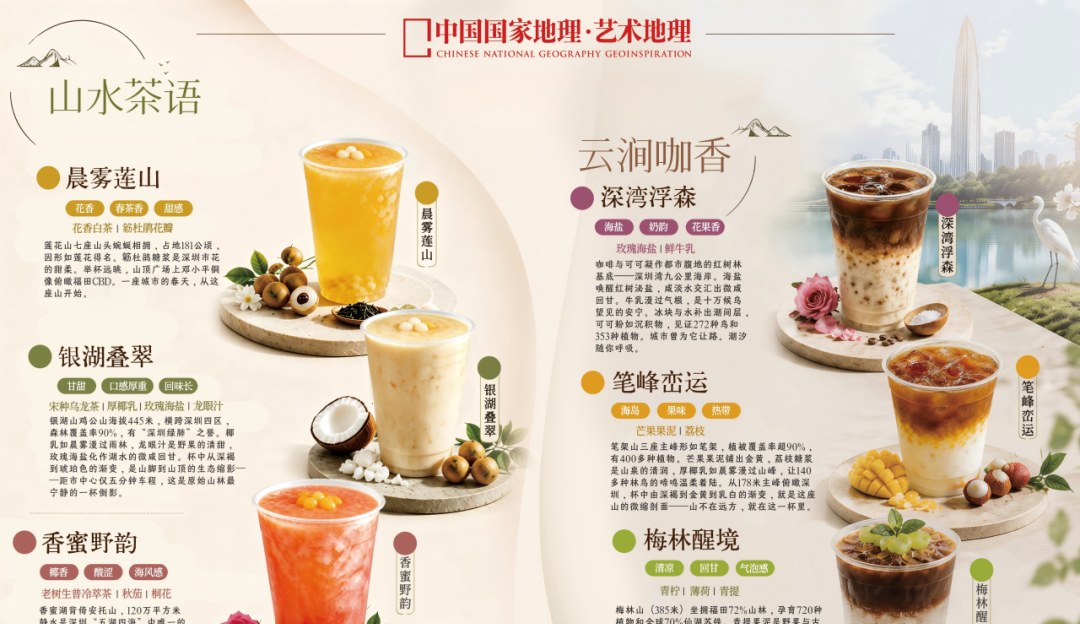
Geographieunterricht für die Geschmacksknospen | Wie lässt der „Berg-und-Fluss-Genuss-Mikroraum“ Berge und Flüsse schmecken?

Achtseitige Sonderbeilage der China Tourism News! Wenn die Schätze Shandongs zu einer langen Rolle der Qi- und Lu-Kultur werden
Category navigation
Jump to the article’s category or explore nearby topics.
32 Milliarden Yuan teures, in 10 Jahren erbautes Resort! Mit 4500 m² Aquapark & Wildwasserbahn, 799 Euro/2 Nächte, Drachenbootfest ohne Aufpreis!
Jump to the more recent article in this topic series.
【Beschäftigung】500+ Unternehmen, 10.000+ Stellen, Jobmesse für Hochschulabsolventen im Jangtse-Delta an diesem Freitag!
Continue to the previous article in this series.
Related stories
More articles from the same category and nearby topics.