This Year's First Lychee Must Be It
Read, share, and explore related stories through curated categories and tags.
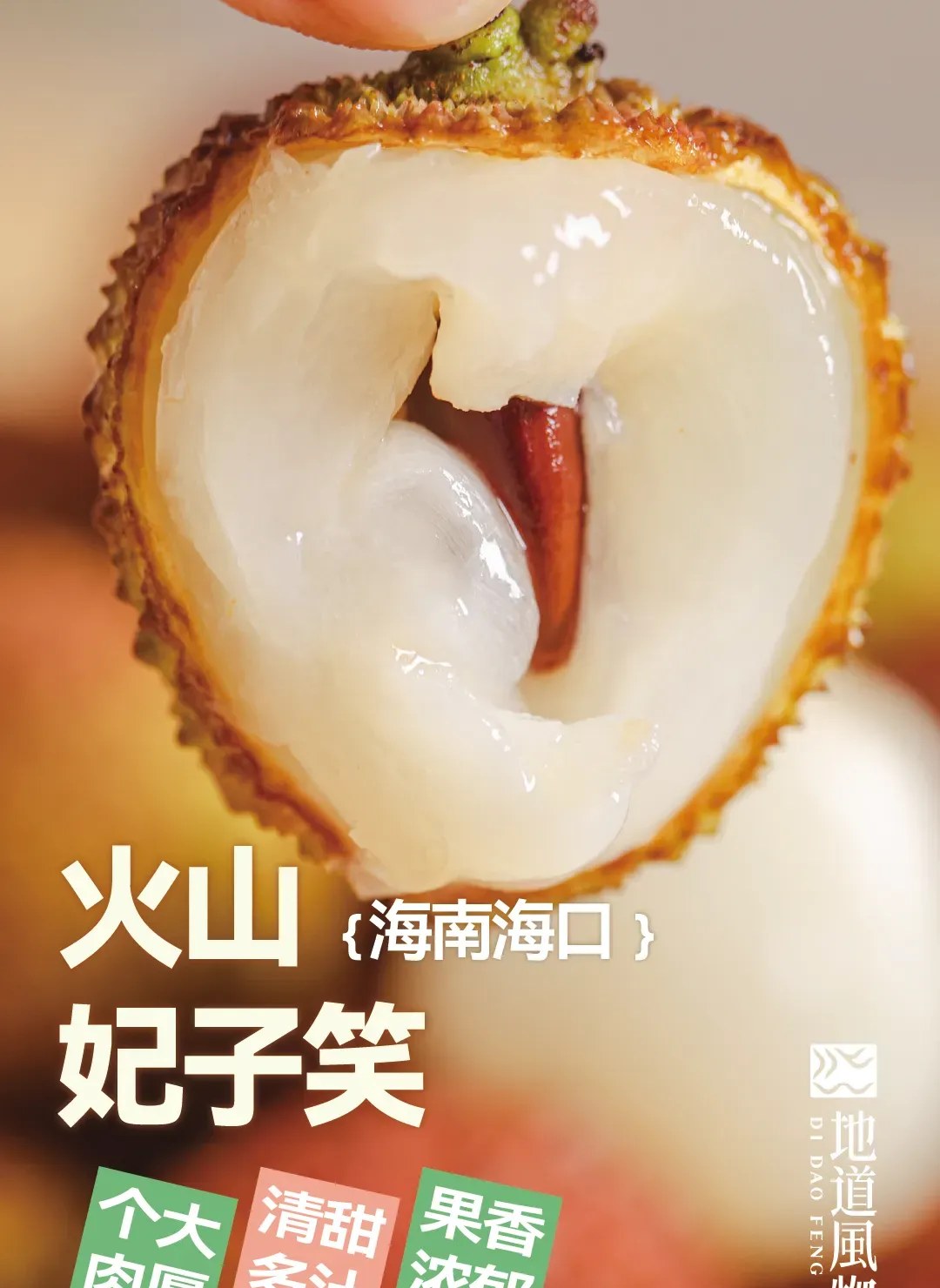
Hainan Feizixiao Lychee
Core Production Area of Haikou Volcanic Lychee
Large, thick-fleshed, sweet and juicy, with a rich fruity aroma
Recently, I ate a fruit that brought me an overwhelming sense of happiness—sweet and juicy like sugar-water buns, white and plump as jade, with a slight tanginess, especially refreshing when chilled.
It’s the Feizixiao lychee.
The answer “lychee” is easy to guess, but many might not believe it’s specifically the Feizixiao variety. Feizixiao, the first lychee variety to hit the market each year, is also the initial impression many northerners have of lychees due to its high yield. However, that first impression isn’t always great—Feizixiao sold for a few dozen yuan per jin at markets can be a bit sour and astringent compared to other lychees that cost hundreds online.
This difference led me to have a deep bias against Feizixiao, until this week’s product selection meeting, where I tasted a true, old-tree, tree-ripened, non-chemical-treated, Hainan volcanic rock Feizixiao.
Turns out, Feizixiao can be this delicious!
Turns out, Feizixiao can be this delicious!
Turns out, Feizixiao can be this delicious!
Freshness is the first thing you notice. The thorns on the skin are firm, and when peeling, you can feel the crispness of the fresh skin and the bouncy flesh. It’s bursting with juice, offering an intense sweetness on the first bite, with a slight acidity lingering in the aftertaste, adding layers of flavor.
And, such great quality comes without the high price of varieties like Guiwei or Nuomici. It’s shipped via SF Express cold chain, staying chilled throughout, and arrives fresh at your door within 48 to 72 hours.
How delicious is the misunderstood Feizixiao?
Many say Feizixiao is the lychee at the bottom of the pecking order.
Absolutely not!
Feizixiao’s cultivation records in China date back over 2,300 years. Its deliciousness has captivated countless people, earning endorsements from both Yang Guifei and Du Mu. As an early-season lychee variety, Feizixiao is often the first sweet taste for lychee lovers who’ve waited all year.
Feizixiao has a greenish-red exterior, a beautiful mix of red and green. Peel it open to reveal white, waxy flesh—thick meat, small pit, and a crisp, crunchy texture.
It’s overflowing with juice, like a sweet sugar-water bomb. The sweetness is high, with a slight tanginess and a hint of astringency in the aftertaste—this is Feizixiao’s unique charm.
You might ask, why wasn’t the Feizixiao I ate before any good?
That comes down to one of Feizixiao’s unique advantages. Lychees have loose skin and high water and sugar content, making them hard to preserve and requiring speedy transport. But Feizixiao has slightly thicker skin and pronounced thorns, making it suitable for long-distance transport and better for storage, lasting longer than other varieties. Plus, its high yield makes it the mainstream lychee variety shipped north.
However, to ensure better appearance and longer shelf life for northern shipments, many orchards pick the fruit at lower ripeness, leading to sourness and astringency. Some even soak it in chemicals before shipping, altering the flavor, which creates a bad impression. But Feizixiao is truly a delicious lychee variety!
How hard do Hainan people work to restore Feizixiao’s deliciousness?
Hainan, a treasure trove of fruits, is one of China’s earliest lychee-producing regions. Early-season varieties like Feizixiao and Baitangying grace Chinese mouths early each year.
Feizixiao, in particular, is the powerhouse of Hainan’s lychee yield. In 2022, Hainan produced 218,300 tons of lychees, with Feizixiao accounting for 117,500 tons.
Hainan’s land is indeed perfect for growing Feizixiao. Feizixiao is highly sensitive to weather—it needs plenty of light, warmth, and water during the vegetative growth stage, cooler and drier weather during flower bud differentiation, and clear skies during fruit development.
Located at China’s southernmost tip, Hainan has long summers and no winters, earning it the nickname “Natural Greenhouse.” With 1,755.2 to 2,416.4 hours of annual sunshine, ample light and temperature, and high photosynthetic potential, Hainan’s light, temperature, and water conditions meet Feizixiao’s growth needs.
For example, the Feizixiao orchard we’re partnering with is located in the core production area of Haikou volcanic lychee.
Let’s start with Haikou. Haikou itself is one of Hainan’s “suitable areas” for growing Feizixiao in terms of temperature (other suitable areas include Lingao, Chengmai, Wenchang, Ding’an, Haikou, Tunchang, and northern Danzhou). And the Haikou volcanic cluster offers an even more unique soil.
With millennia of continuous eruptions, Hainan’s volcanic cluster has formed a unique landscape. The mineral-rich volcanic soil gives lychees grown here trace elements like selenium, allowing them to accumulate more flavor compounds, resulting in richer layers and a stronger lychee taste when eaten.
Though lychees from volcanic soil are excellent, the soil itself is rare. Still using 2022 as an example, Hainan had about 320,000 mu of lychee plantation area, but only 110,000 mu met the volcanic lychee planting standard, yielding about 75,000 tons. If evenly distributed for a taste test nationwide, each person would only get about 100 grams, or two to three lychees.
Good production areas and soil also need good planting standards and quality control. The orchard we’re partnering with strictly follows natural farming methods, using plenty of organic fertilizer and manual weeding. They promise not to use growth promoters or ripeners, letting the fruit grow and mature naturally. Flowers bloom in March, bees pollinate naturally, fruit sets on branches in April, physical pest and disease control is used, and the fruit ripens in May, absorbing sunlight and rain to create deliciousness.
Feizixiao lychees are green early on. We select one-third ripe red fruits, ensuring each one meets ripeness and sweetness standards before shipping. The size must be less than 28 fruits per jin, sorted by machine to filter out small ones, guaranteeing big, plump fruits.
No chemical soaking is done. To ensure freshness, every minute after picking is precious. The fruit is sent to a cold storage within an hour of harvest and packed at low temperatures. Machines automatically use new, high-tech fresh-keeping bags for sealed pre-packaging, with an additional insulation bag in the box to maximize freshness preservation.
Good production areas, good soil, good picking standards, efficient packing processes, and cost-effective fresh-keeping transport methods ensure that every Feizixiao you receive is fresh and sweet, redefining your previous impressions of Feizixiao.
And, such great quality comes without the high price of Guiwei or Nuomici. Shipped via SF Express cold chain, it arrives from the tree to your doorstep within 48 to 72 hours.
Written by Xiaoqiuzao
Photography by Zhu Mengfei
Some images in this article are provided by the supplier and are for reference only.
Tag navigation
Explore articles that share the same tag and jump to tag pages.
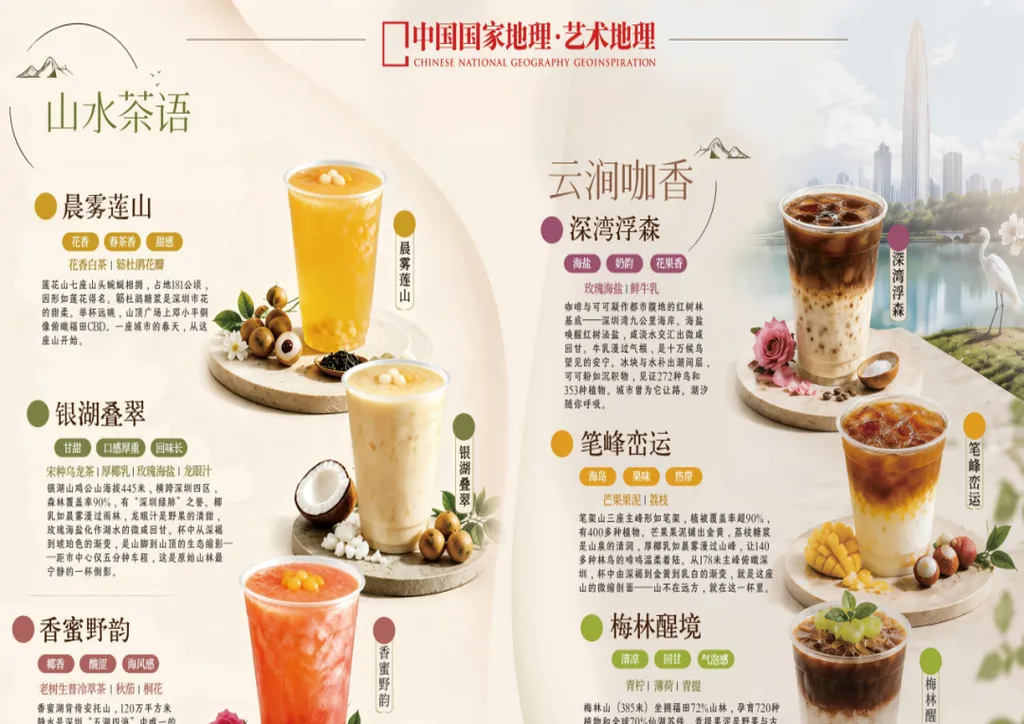
Geografie zum Genießen: Wenn Chinas Landschaften als Tee und Kaffee im Glas landen
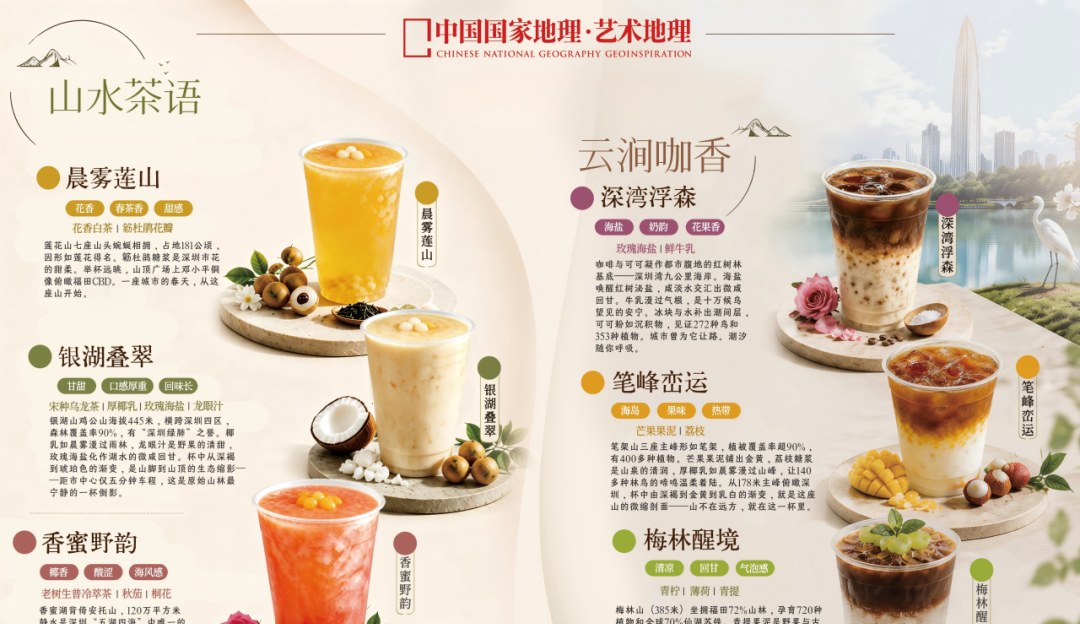
Geographieunterricht für die Geschmacksknospen | Wie lässt der „Berg-und-Fluss-Genuss-Mikroraum“ Berge und Flüsse schmecken?

Achtseitige Sonderbeilage der China Tourism News! Wenn die Schätze Shandongs zu einer langen Rolle der Qi- und Lu-Kultur werden
Category navigation
Jump to the article’s category or explore nearby topics.
Ich kann mit voller Verantwortung sagen, dass dieser Preis in den nächsten 3 Jahren nicht mehr vorkommen wird!
Jump to the more recent article in this topic series.
Als ich aus Genie heraustrat, wusste ich, wie schwer die Worte 'leben' wiegen
Continue to the previous article in this series.
Related stories
More articles from the same category and nearby topics.