Today, the most polarized day in China
Read, share, and explore related stories through curated categories and tags.
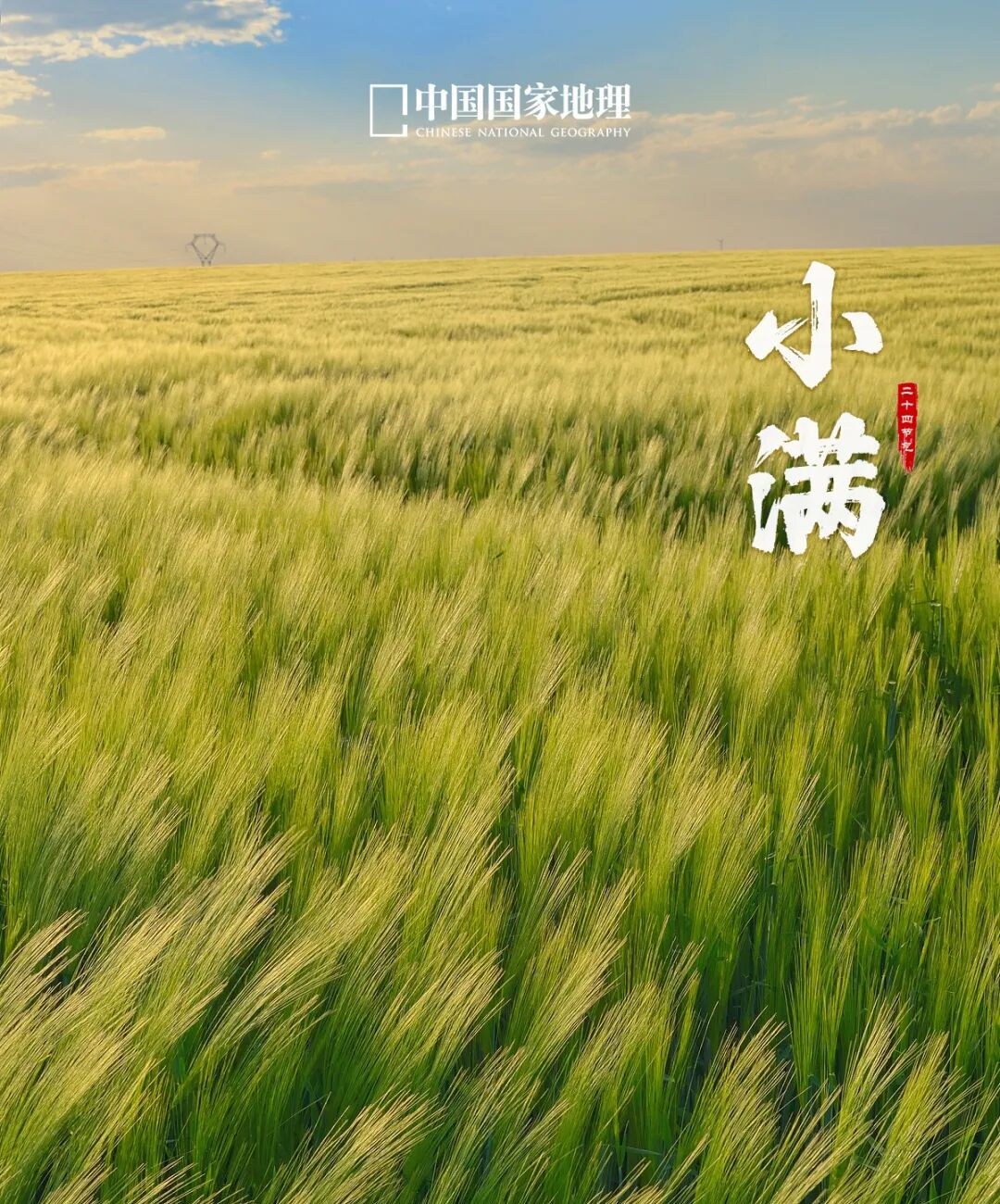
Today is Xiaoman (Grain Buds).
The ancients said:
“Xiaoman means things have grown a bit but aren’t fully ripe yet.”
Everything is gradually flourishing, yet not complete—
The wheat grains are almost ripe but not quite,
The rivers are swelling but haven’t overflowed,
Midsummer is on its way but hasn’t arrived.
This is one of the most subtle moments in China’s year.
The same Xiaoman,
In North China, wheat waves turn yellow; in the Northeast, spring planting is in full swing;
Some places see increasing rain,
While in others, the highlands are just turning green.
North China
Wheat waves gradually turn yellow, ushering in the most critical moment of the year
Xiaoman
Is first and foremost a solar term for wheat.
On the North China Plain,
Winter wheat in places like Hebei and Shanxi
Has entered the grain-filling stage,
The once green wheat fields begin to show hints of pale yellow,
The kernels gradually plump up,
But they aren’t truly ripe yet.
“Wheat turns yellow day by day until Xiaoman”
There’s a farming proverb in the middle and lower reaches of the Yellow River:
“If Xiaoman doesn’t fill up, the wheat faces a risk.”
That “risk” refers to hot, dry winds.
If high temperatures, low humidity, and strong winds occur together,
The wheat that’s filling could quickly lose water,
Leading to shriveled kernels and affecting the harvest.
So Xiaoman isn’t a time to celebrate the harvest;
It’s a time of final waiting before the harvest.
Northeast
Some are about to harvest, others have just planted
Heading further north,
Xiaoman takes on a different look.
On the black soil of the Northeast,
Spring planting is still ongoing.
In parts of Heilongjiang and Jilin,
Corn, soybeans, and rice have just been sown,
Farmers are busy catching up with the planting schedule,
Tractors shuttle across the freshly plowed land.
Farmers welcome the season for transplanting rice seedlings
East China
Paddy fields gradually fill, entering the “plum rain season”
Down in Jiangnan,
Xiaoman is hidden in the rice paddies.
As Xiaoman arrives, the middle and lower reaches of the Yangtze River
Begin an important period for rice production.
In Jiangsu, Zhejiang, Jiangxi, Anhui, and other areas,
Farmers care most not about the wind, but about the water.
Yunhe Rice Terraces in Lishui, Zhejiang Province
Between the river networks, paddy fields are filled with water
Distant mountains fade into the moist air
A folk saying goes:
“If Xiaoman doesn’t fill up, Mangzhong (Grain in Ear) won’t care.”
This means,
If the fields can’t hold water during Xiaoman,
Come Mangzhong,
The rice seedlings will be hard to transplant smoothly.
So, in this solar term, Jiangnan
Is always wrapped in a hazy, humid air.
South China
Rain intensifies, and true summer begins
Further south,
Xiaoman takes on yet another meaning.
In Guangdong, Guangxi, and other areas,
During Xiaoman,
Warm, moist air currents grow stronger,
Rainfall increases significantly,
South China gradually enters its most humid time of year,
Also the period most prone to heavy rainfall.
Thus,
Here, “full” means the rivers are swelling.
Lijiang River in Guangxi
One of China’s most beautiful karst landscapes
A folk saying goes:
“Xiaoman and Daman (Greater Fullness) fill the rivers.”
In the Pearl River basin and along the Xijiang River,
River levels start to rise,
Heavy rain arrives frequently,
Many places enter flood season.
The air becomes damp and sticky,
Sudden showers come and go quickly.
One moment it’s a stuffy afternoon,
The next, it could be a downpour.
Southwest
Grass gradually fills the pastures, and the highlands finally turn green
At higher altitudes,
Xiaoman marks another kind of awakening.
In places like Aba in Sichuan and the Tibet Autonomous Region,
The true growing season begins.
Ice and snow recede, meadows green up,
Grass on the slopes starts to grow wildly,
Yaks and sheep begin their migration to higher pastures,
Green spreads from the valleys all the way up the slopes.
The First Bend of the Yellow River at Aba, Sichuan
For pastoral regions,
Xiaoman
Is the start of the most abundant time of the year.
After enduring a long, harsh winter,
Life on the plateau seems to hit the fast-forward button.
The grass and trees change day by day.
Here, what Xiaoman fills is the pasture.
It’s also the moment when China’s most vast green
Begins to spread.
Bomi Gang, Nyingchi, Tibet
That’s it—the same Xiaoman,
Yet China feels like it’s experiencing different seasons.
It also shows that the 24 solar terms
Have never been a single, uniform timetable.
In China,
They are constantly reinterpreted
By latitude, mountains, rivers, and monsoons—
So a single “Xiaoman”
Grows into many versions.
[References]
[1] “The 24 Solar Terms” Chinese Heritage, December 2010 issue
[2] “Solar Terms” Chinese Heritage, December 2010 issue
[3] “Do You Really Know the 24 Solar Terms?” Chinese National Geography, December 2013 issue
Authoring Team
Editor: Chaonan
Designer: Weiwei
Images: Visual China
Topic
Comment section: Tell us your favorite solar term
40°N latitude, Earth’s “golden necklace”!
8 magnificent “same frames,”
Love letters to “Time Granny”
China’s sweetest small city, summer is bursting!
- That’s it.
Tag navigation
Explore articles that share the same tag and jump to tag pages.
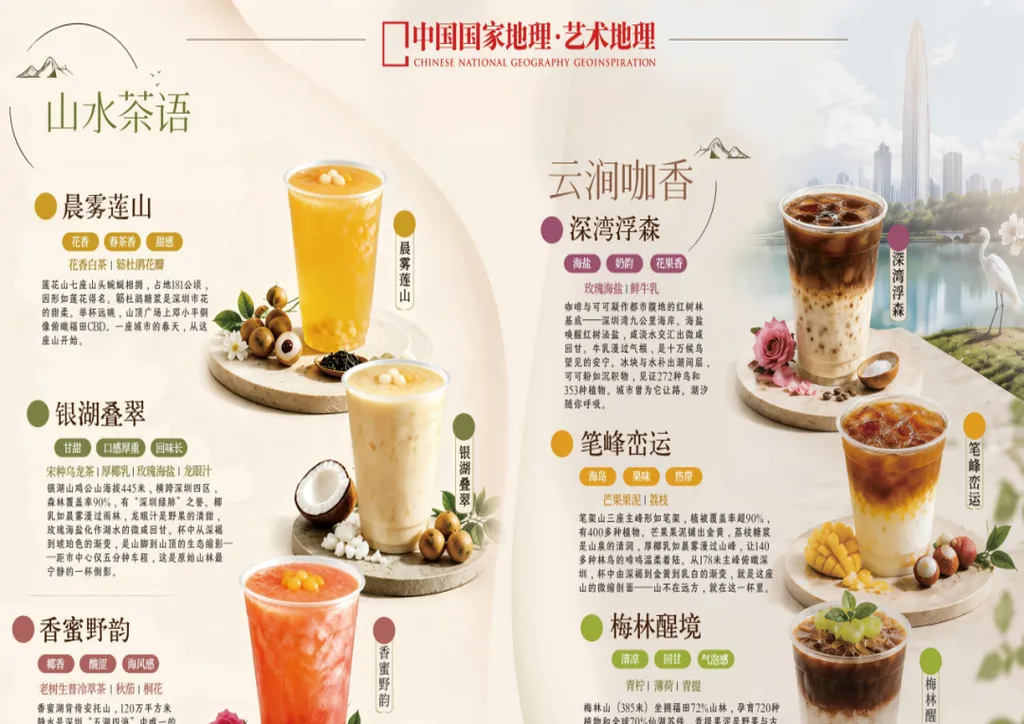
Geografie zum Genießen: Wenn Chinas Landschaften als Tee und Kaffee im Glas landen
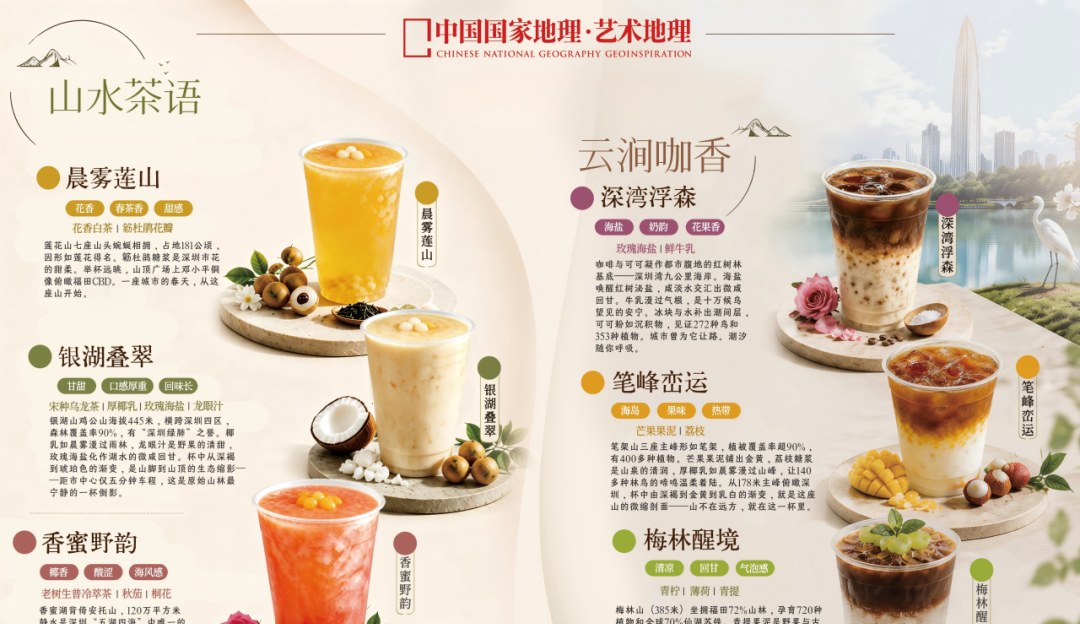
Geographieunterricht für die Geschmacksknospen | Wie lässt der „Berg-und-Fluss-Genuss-Mikroraum“ Berge und Flüsse schmecken?

Achtseitige Sonderbeilage der China Tourism News! Wenn die Schätze Shandongs zu einer langen Rolle der Qi- und Lu-Kultur werden
Category navigation
Jump to the article’s category or explore nearby topics.
Montag sehen! Der Montag in der großen Aktion, welche verrückten Knaller kommen alle
Jump to the more recent article in this topic series.
Im Bild reisen, bis die Nudeln süchtig machen, unbeschreiblich schön! Diese versteckte kleine Stadt hat mich wirklich überrascht.
Continue to the previous article in this series.
Related stories
More articles from the same category and nearby topics.