In the Fragrance of Tea, Encounter the Most Beautiful Spring in China
Read, share, and explore related stories through curated categories and tags.
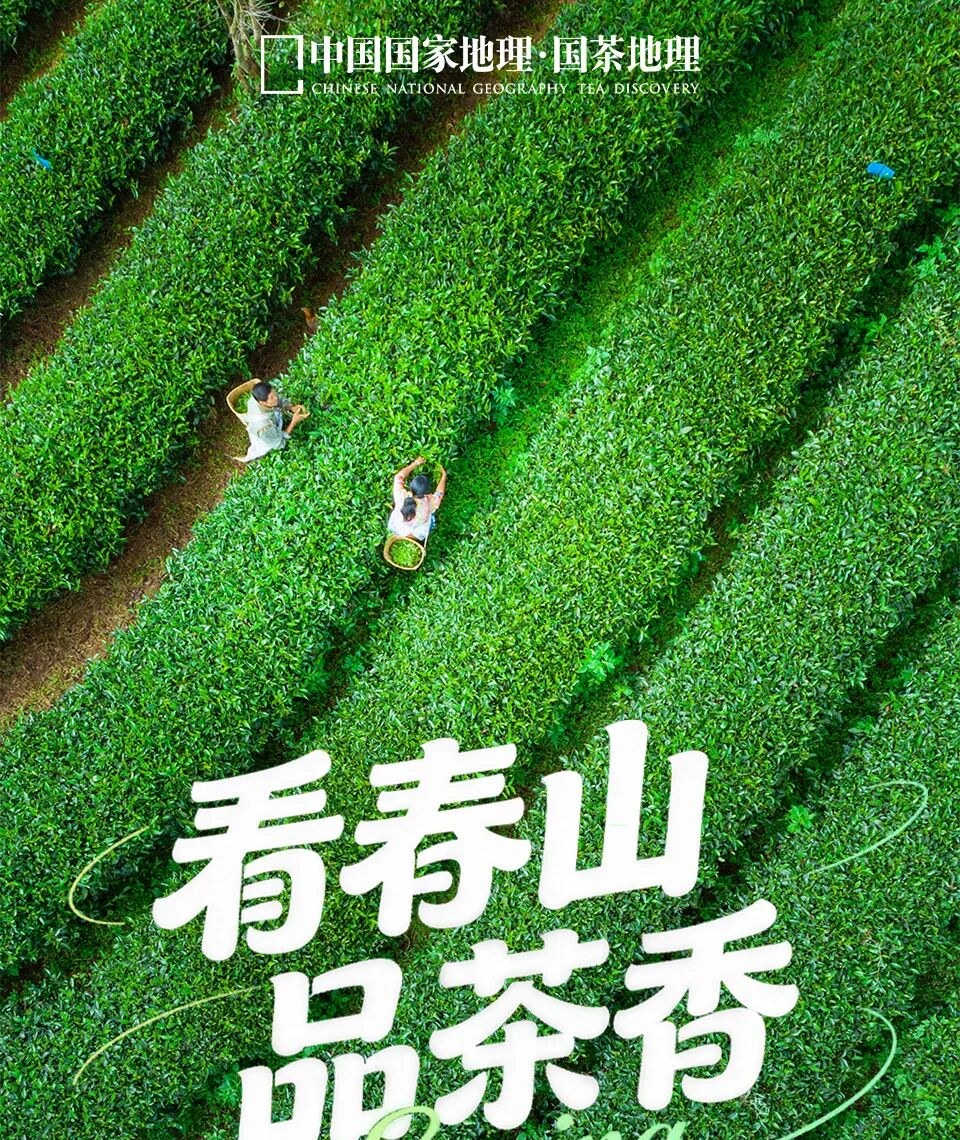
When the March wind warms, the trees and grass begin to stir.
As the first spring breeze sweeps across the tea mountains in Jiangnan, and the first spring rain falls upon the snowy forests of the highlands, a grand spring feast quietly unfolds across the land of China.
In some places, cherry blossoms and tea fields intertwine, blooming like radiant clouds; in others, golden flowers blanket the slopes, painting pastoral scenes; and elsewhere, plum blossoms and tea plants grow side by side, elegant and paired in beauty.
With the gentle spring breeze and all things thriving, why not set out on a journey guided by the scent of tea this spring—take a deep breath in the tea gardens, listen to stories under ancient trees, and savor the taste of China’s spring in a teacup.
Yongfu, Zhangping, Fujian
The breathtaking “tea-field cherry blossoms” of spring
You’ve seen cherry blossoms, and you’ve seen tea gardens, but you may never have witnessed the ultimate spring spectacle of cherry blossoms and tea gardens coexisting in harmony.
A gradual blend of pink and green, a stunning spring scene
In Yongfu Town, Zhangping, Fujian, over 50,000 mu of tea gardens spread across the hillsides like layered green terraces. Amid this sea of green, more than 100,000 cherry trees bloom along the winding paths of the tea mountains, with pink clouds of blossoms crashing into the vibrant green—like the earth had tailored a green silk skirt embroidered with flowers just for spring.
This is the “Most Beautiful Cherry Blossom Spot in China,” praised by Chinese National Geography magazine. Yongfu boasts 42 varieties of cherry blossoms, and from late January to mid-March, the entire valley is immersed in romantic spring pink.
The beauty of it all is that these cherry trees weren’t planted deliberately—they were an afterthought by Taiwanese farmers who brought in tea trees and used the cherry trees for shade. Yet this unintentional act unexpectedly created a nationally renowned spring landmark, giving Yongfu’s spring a dual soul of tea fragrance and floral scent.
Planting cherry trees among the tea gardens provides shade for the tea plants, increases biodiversity in the garden, and reduces pests and diseases.
Standing high on the tea mountain and gazing into the distance, cherry blossoms dance gently in the wind among the endless terraced tea fields, with petals fluttering down—into the baskets of tea pickers and onto the shoulders of visitors. You can stroll along the mountain paths, watching the distant mountains like ink strokes, listening to the chirping of birds, and when you’re tired, take a rest at a roadside tea pavilion, brewing a cup of local Zhangping Shuixian tea.
As the only compressed tea among oolong teas, Zhangping Shuixian has pioneered a unique “paper-wrapped tea” technique: using a wooden square mold to press the tea into neat little cakes, wrapping them in white paper, and slow-roasting them over a gentle fire to seal in the fresh spring flavor of the Fujian tea mountains. The tea liquor is golden and clear, with an elegant and lingering orchid fragrance—just like the cherry blossom tea gardens before your eyes, a unique spring gift from this land.
Zhangping’s Shuixian and Wuyi Mountain’s Shuixian are the same variety, but due to differences in geography and processing techniques, they develop entirely distinct flavors.
From Yongfu, a one-hour drive takes you to Hua’an Earth Buildings. Compared to the fame of Yongding Earth Buildings, these are quieter, where Hakka culture and tea village charm blend together. Heading further north, the ancient city of Changting lies quietly by the Ting River. In spring, this “most beautiful mountain city in China” features rippling river waters and teahouses lining the ancient city walls—a perfect spot to spend half a day sipping a cup of spring tea.
Tea gardens often appear beside earth buildings.
If you come in early to mid-March, you’ll catch the cherry blossoms at their peak. Miss this window, and you’ll have to wait an entire year.
Wuyuan, Jiangxi
A pastoral poem within the tea fragrance of Huizhou
When people think of Wuyuan, the first image that comes to mind is often the endless sea of rapeseed flowers in spring.
Golden flowers covering the slopes, hiding the spring poetry of the Huizhou tea country
On the Jiangling terraces, a golden ocean of flowers spreads across the hillsides, dotted with white-walled, grey-tiled Huizhou-style villages. Morning mist and cooking smoke intertwine, creating a living ink-and-wash painting that breathes.
But few know that Wuyuan is also a thousand-year-old tea county hidden within the Huizhou cultural lineage. As one of the six ancient Huizhou counties, it was once an important node on the ancient Tea Horse Road. The history of Wuyuan green tea began during the time when Lu Yu wrote The Classic of Tea.
March in Wuyuan is a spring symphony of golden flower seas and emerald tea gardens. While crowds flock to Jiangling and Huangling to see the rapeseed flowers, the true spring poetry of the tea country lies hidden in the mountain corners away from the crowds.
Amid the white walls and grey tiles, a thousand-year-old Huizhou tea story unfolds
In Longteng Village, Sikou Town, old tea gardens from the Qing Dynasty still survive, where tea trees grow alongside Chinese tallow trees, with crisscrossing paths. Walking up the hill path from Xiaoqi Village, the tea gardens in the morning mist look surreal, with tea pickers carrying bamboo baskets weaving through them, occasionally singing local tea-picking songs—a sound of the countryside you won’t hear in the city.
These ancient tea gardens scattered across the mountains were once connected by a thousand-year-old road—the Hui-Rao Ancient Post Road, built in the Tang Dynasty and flourishing in the Ming and Qing. It cut through the mountains bordering Anhui and Jiangxi, serving as a vital transportation artery linking ancient Huizhou with Raozhou and reaching Guangdong and Fujian, and it was the core route for Wuyuan green tea to leave the mountains and join the vast Tea Horse Road.
Hiking along the branch paths of the ancient road in spring, you’ll find the bluestone slabs worn smooth and warm by thousands of years of footsteps. Spring orchids bloom by the roadside, and Indocalamus bamboo sprouts new shoots. Tea gardens spread out along the post road, and when the wind blows, the scent of tea and greenery mingles, as if you can still hear the horse bells and shouts of tea merchants from centuries past.
Fresh, mellow, and sweet, with a unique Huizhou charm
At night, you can brew a cup of Wuyuan green tea. The tea fragrance blends with the rustic scent of woodsmoke, and outside the window lies a quiet pastoral scene. Such a night will make you understand why Wuyuan is called “China’s Most Beautiful Village.”
From mid-March to early April, the rapeseed flowers are in full bloom, and spring tea is being harvested. This is the most beautiful time in Wuyuan.
Hangzhou, Zhejiang
Exploring plum blossoms at Lingfeng, and asking about tea at Longjing
Spring in Hangzhou is half filled with the fragrance of plum blossoms and half with the fragrance of tea.
Plum blossoms drift in the air, joining the Longjing tea fragrance in a shared Jiangnan spring
At Chao Mountain and Lingfeng, plum blossoms are in full bloom—red, white, and green calyx plums burst forth in succession among the pavilions and terraces of Jiangnan gardens. Just over the mountain, in the West Lake hills, the buds of Longjing tea gardens are quietly sprouting, waiting for the first picking before Qingming Festival.
Plum blossoms and spring tea bloom together in the same Jiangnan soil—a unique spring scene exclusive to Hangzhou, and the most touching spring footnote of this city, bathed in tea fragrance for a thousand years.
In March, Longjing Village is filled with subtle fragrance
West Lake Longjing, ranked as the top of China’s ten famous teas, grows in the hills west of West Lake. A mere half-hour drive from the city center takes you to Longjing Village, Meijiawu, and Maojiabu—villages built into the mountains, surrounded by endless tea gardens.
You can find a farmhouse teahouse in Meijiawu, sit in the courtyard, watch tea farmers pick and stir-fry tea, and sip a freshly made cup of pre-Qingming Longjing. The tea liquor is clear and bright, with an intense fragrance of bean flowers and a fresh, mellow taste—a crisp flavor uniquely belonging to Jiangnan’s spring.
Or you can visit a tea farmer’s home in Longjing Village and listen to the legend of the “Eighteen Imperial Tea Bushes.” It is said that Emperor Qianlong, during his southern tour, tasted Longjing tea in Longjing Village and designated the eighteen tea bushes in front of the temple as “imperial tea.” The truth of the legend is no longer important, but the respect for tea and spring’s gifts has been passed down through generations in this landscape.
The current eighteen imperial tea bushes have been replanted, but the story is still cherished.
Emerging from Longjing Village, a short walk brings you to West Lake. In spring, Su Causeway in the morning, orioles singing among the willows, peach blossoms just beginning to bloom, and willow branches like smoke. You can stroll slowly along Su Causeway, watching the crowds and painted boats passing by, or head to Lingyin Temple. Amid the Zen atmosphere of this thousand-year-old temple, listen to the distant chimes and see the stone carvings of Feilai Peak intertwine with ancient trees.
Spring at Xixi Wetland also has its unique charm. “A winding stream, a curl of mist,” as the saying goes—row a boat through the reeds, where water birds suddenly take flight and wildflowers bloom. At the Liangzhu Ancient City ruins in spring, the lush greenery evokes a serene, time-traveling stillness amidst a five-thousand-year-old civilization.
When talking about Hangzhou, West Lake and Longjing are inseparable.
Coming in mid-to-late March, the plum blossoms are still in their final bloom, and Longjing has just begun to sprout. In just a few days, it will be time for the first harvest of pre-Qingming tea.
Suzhou, Jiangsu
A landscape painting of Dongting Biluochun
Spring in Suzhou is hidden in the vast misty waves of Taihu Lake and within the tea gardens and fruit trees on the east and west mountains of Dongting.
The vast misty Taihu nurtures the fresh mellow flavor of Dongting Biluochun
Dongting Biluochun, one of China’s ten famous teas, is produced on this land surrounded by lakes and mountains.
The tea gardens here are not as orderly as typical terraces; instead, they rise and fall with the mountain terrain, intermingling with fruit groves, creating a unique ecosystem where “tea absorbs the fragrance of fruit, and fruit infuses the tea with its aroma.”
At a tea farmer’s home on East Mountain, you can witness the intangible cultural heritage frying technique of Biluochun, where “the leaves never leave the hand, and the tea never leaves the pan.” Watch how the tender buds are twisted into snail-like curls by the master’s hands, revealing fine white hairs, ultimately creating this legendary spring tea, “Frighteningly Fragrant.”
Biluochun is also known as “Frighteningly Fragrant.” Do you know why?
Sip a cup of freshly fried Biluochun—its aroma is elegant, its taste fresh and mellow—as if you’ve drunk the entire spring of Taihu Lake. The tea leaves slowly sink to the bottom, and the fine white hairs gently float in the water, marking the freshness of spring and the unique quality bestowed on this tea by the terroir of Dongting Mountain.
After leaving East and West Mountains, take a stroll in Suzhou city. In the Humble Administrator’s Garden and Lingering Garden, spring light filters through the window lattice, and crabapple flowers hang like silk threads, perfectly complementing the elegance of Biluochun. Along Pingjiang Road and Shantang Street, find a teahouse by the river, listen to a Pingtan performance—this is the most delightful way to enjoy spring in Suzhou.
The elegance of Jiangnan gardens is perfectly matched by the fresh, sweet aftertaste of Biluochun.
If you want to go further, take a boat trip on Taihu Lake to enjoy the vast scenery and visit Sanshan Island. Or go to Zhouzhuang or Tongli, water towns where spring willows sway and rowboats glide through the waterways, offering a unique charm.
A soft Pingtan melody and a leisurely cup of spring tea
From mid-March to early April, the first harvest of Biluochun begins. The most precious pre-Qingming tea of the year is hidden within the spring lake—
Among the Mountains.
Nyingchi, Tibet
A Secret Tea Garden Beneath the Snow Mountains
If the springtime of the first four tea regions is a gentle poem, then spring in Nyingchi is a magnificent symphony.
Snowy peach blossoms bloom in profusion, hiding the spring secrets of a cloud-shrouded tea garden.
In late March in Nyingchi, peach blossoms are blooming one after another along the Yarlung Zangbo River. In Suosong Village, at the foot of the snow-capped mountains, a sea of pink flowers stretches endlessly, and travelers flock here to keep their spring date with southeastern Tibet.
But many don’t know that not far from the heart of the Peach Blossom Festival, there lies a true cloud-shrouded secret—the “Ethereal Tea Garden” in Green Village, Medog.
Snowy peach blossoms spread along the river, encountering the spring romance of southeastern Tibet.
The tea garden in Green Village sits at an average altitude of 1,759 meters, a true high-mountain tea garden hidden above the clouds. In the early morning, the tea garden is concealed within rolling seas of clouds, which is how it earned the name “Ethereal Tea Garden.”
Standing on the observation deck and looking into the distance, beneath your feet is a vast expanse of clouds, before you are layers of lush green tea terraces, and in the distance, the 7,782-meter Namcha Barwa Peak appears and disappears in the mist. Snow mountains, clouds, and tea gardens together in one frame—any snapshot you take becomes a cover-worthy scene for Chinese National Geography.
Tea trees nourished by melted snow from the mountains carry a unique snowy highland flavor.
Green Village’s charm goes beyond the tea garden. In the forest stands a Bhutan pine tree towering 76.8 meters, named “Xindabu,” the king of trees, embodying the villagers’ reverence for nature. A forest hiking trail built around this tree king has become a new attraction for visitors—it’s a natural oxygen bar, with dendrobium and orchids clinging to the trees, and a stunning richness of biodiversity that leaves you in awe.
Starting from Green Village, you can head to the Yarlung Zangbo Grand Canyon to witness the grandeur of the world’s deepest gorge, or go to Medog County, at the end of the Zhamo Highway, to touch the mystery and vitality of this lotus-like hidden land.
The Yarlung Zangbo Grand Canyon is also closely connected to the tea garden—click on the image or text for details.
From late March to early April, during the Nyingchi Peach Blossom Festival, the tea garden is at its most vibrant, and visibility of Namcha Barwa Peak reaches its annual peak—this is the best time to embark on this snowy highland spring tea journey.
Mountains and rivers awaken in spring, inviting you to a tea journey.
Five tea regions, five kinds of spring.
Across the vast land, spring awakens, and the fragrance of tea is everywhere.
From the interweaving of tea and cherry blossoms in southern Fujian, to the golden flower tea slopes in Huizhou; from the dual perfection of plum and tea in Hangzhou, to the symbiosis of tea and fruit by Taihu Lake, and finally to the snowy mountain tea gardens in southeastern Tibet—each has its own terroir and scenery, yet all offer a cup of fresh spring tea waiting for you to savor.
In March in China, the tea fragrance drifts with the spring breeze across mountains, rivers, lakes, and seas. While the spring scenery is at its best, follow the tea fragrance, head to the tea gardens to catch the spring wind, meet spring in the wilderness, and in a cup of tea, come to understand the myriad charms of the Chinese land within Chinese tea.
There are many more tea regions with beautiful spring landscapes waiting for you to discover.
This is the most enchanting form of spring.
Tea Journey Invitation: How many of these five tea regions have you visited? Which one do you most want to go to? Feel free to share your tea journey stories in the comments.
| Previous Picks
Writer: Zheng Honglong
Layout: Zheng Honglong
Design: Tang Yutao
Reviewer: Gao Yuan
[Disclaimer]
This article is original content from [Guo Cha Di Li].
Reproduction without account authorization is strictly prohibited.
Tag navigation
Explore articles that share the same tag and jump to tag pages.

Geografie zum Genießen: Wenn Chinas Landschaften als Tee und Kaffee im Glas landen
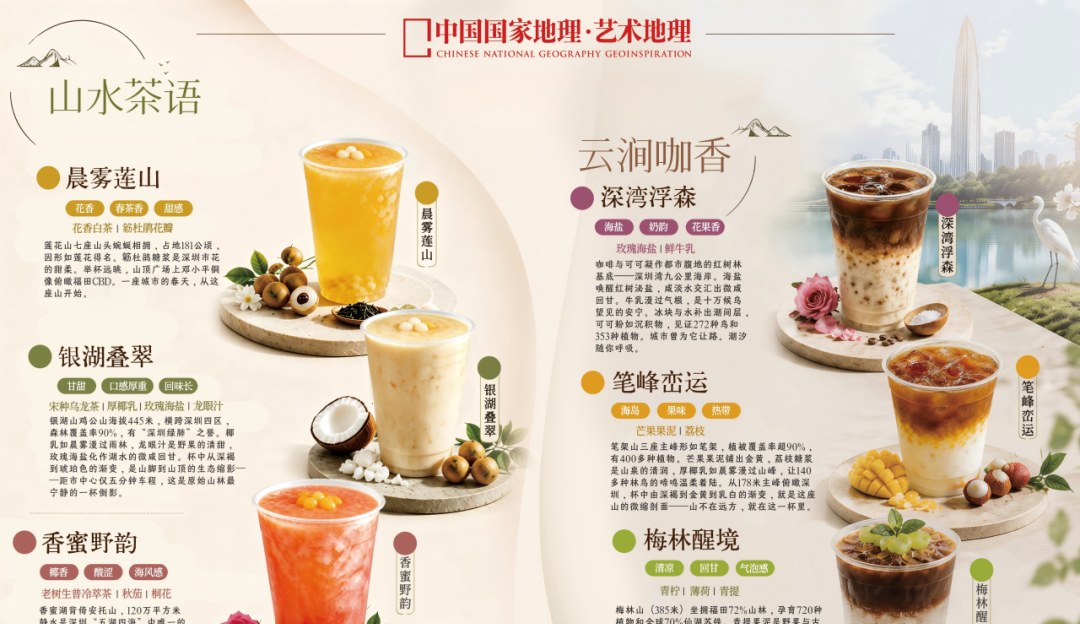
Geographieunterricht für die Geschmacksknospen | Wie lässt der „Berg-und-Fluss-Genuss-Mikroraum“ Berge und Flüsse schmecken?
Achtseitige Sonderbeilage der China Tourism News! Wenn die Schätze Shandongs zu einer langen Rolle der Qi- und Lu-Kultur werden
Category navigation
Jump to the article’s category or explore nearby topics.
Teeduft verabredet, gemeinsam zur eleganten Sommerfrische kommen – Leitfaden für die ‚Eine Ausstellung, Zwei Konferenzen‘ 2026 und Aktivitäten zur Verbrauchsförderung
Jump to the more recent article in this topic series.
Chinas am meisten unterschätzter Kulturprovinz: Bronzen stehen Yinxu in nichts nach, Blau-weiß-Porzellan übertrifft die Verbotene Stadt!
Continue to the previous article in this series.
Related stories
More articles from the same category and nearby topics.