Away from the hustle and bustle of the metropolis, living in seclusion in a small town, the first person to showcase Chinese nighttime landscapes! A master almost forgotten.
Read, share, and explore related stories through curated categories and tags.
China Influential Art Figures Professional Platform
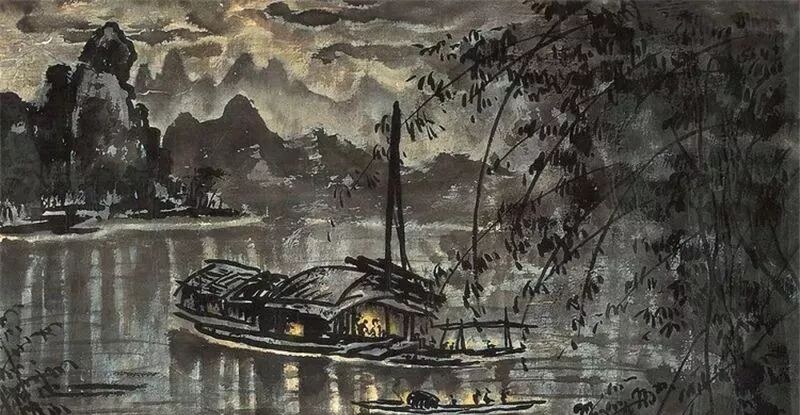
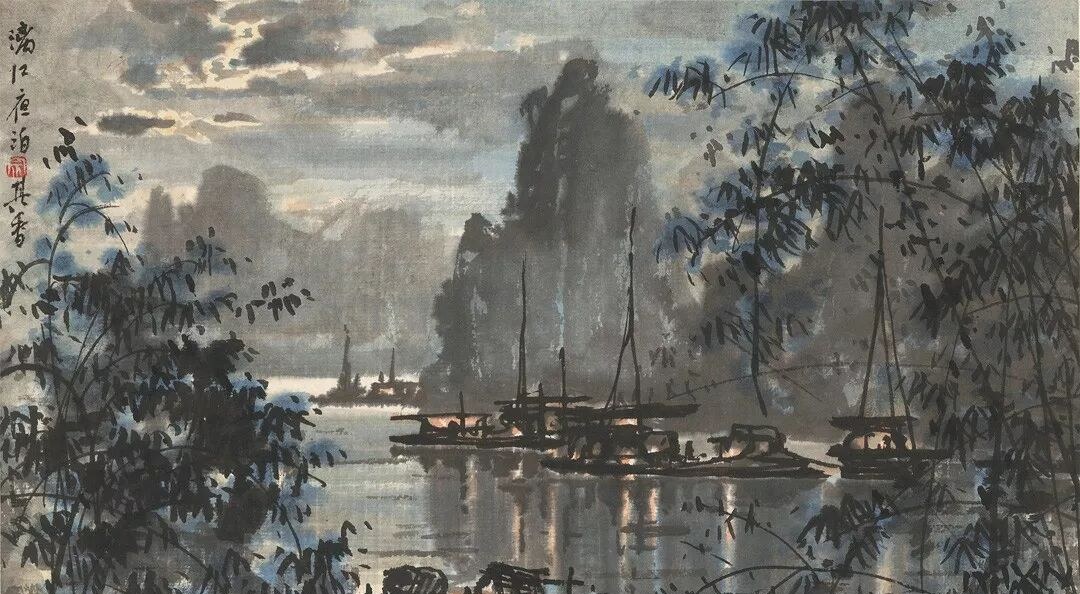
Zong Qixiang, Night Scene of Li River
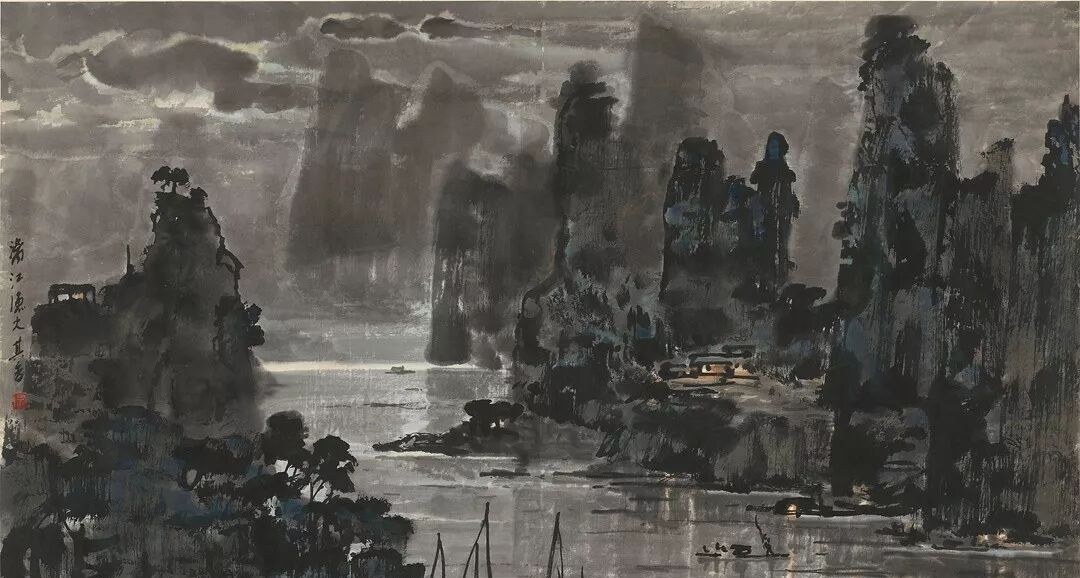
Fishing Fire on the Lijiang River
45.5×68.5cm, ink and color on paper, 1991
Artist’s Works Album Series
Zong Qixiang
“As early as the early 1940s,
his reputation had spread across the length and breadth of China.
He first gained fame in Nanjing, later made his mark in Chongqing and Beijing,
and was one of the first painters to successfully transform
traditional Chinese landscape painting with Western techniques.
Along with Jiang Zhaohe, Li Keran, and Li Hu,
he was one of the four great reformers of new Chinese art.
He pioneered the Chinese nighttime landscape painting,
breaking the traditional limitation that Chinese painting could not depict light.”
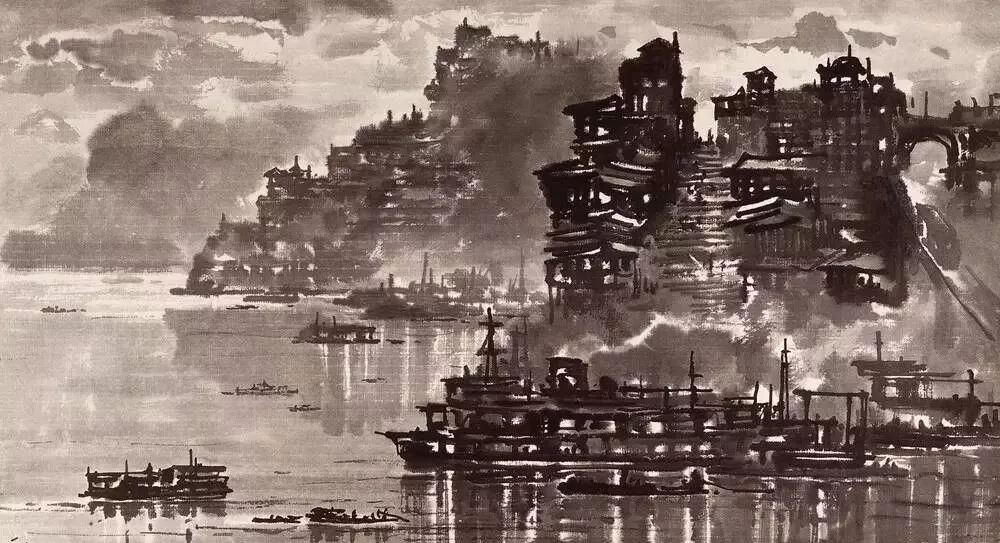
Night in the Mountain City Zong Qixiang 1944 48x71cm Ink and color on paper
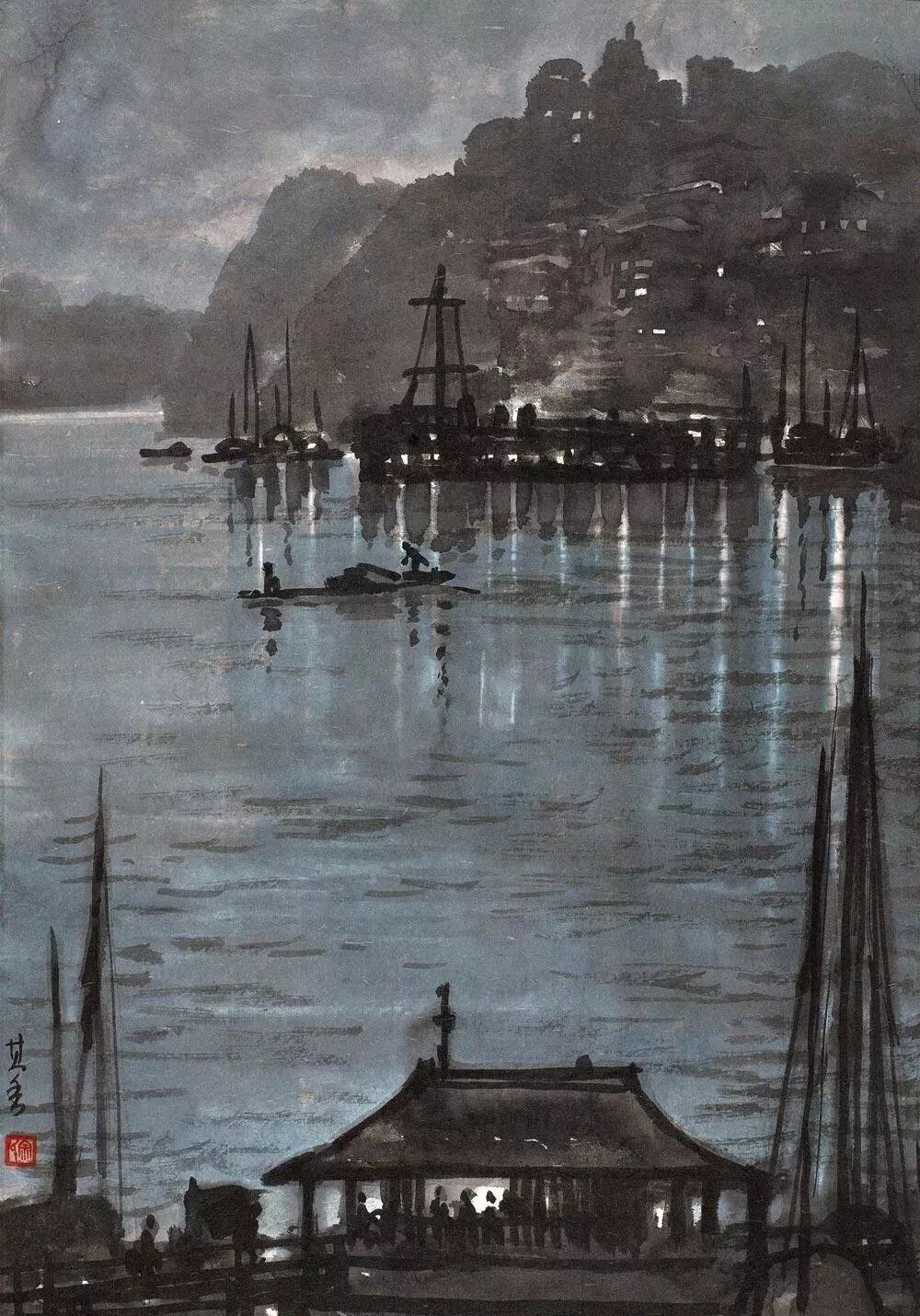
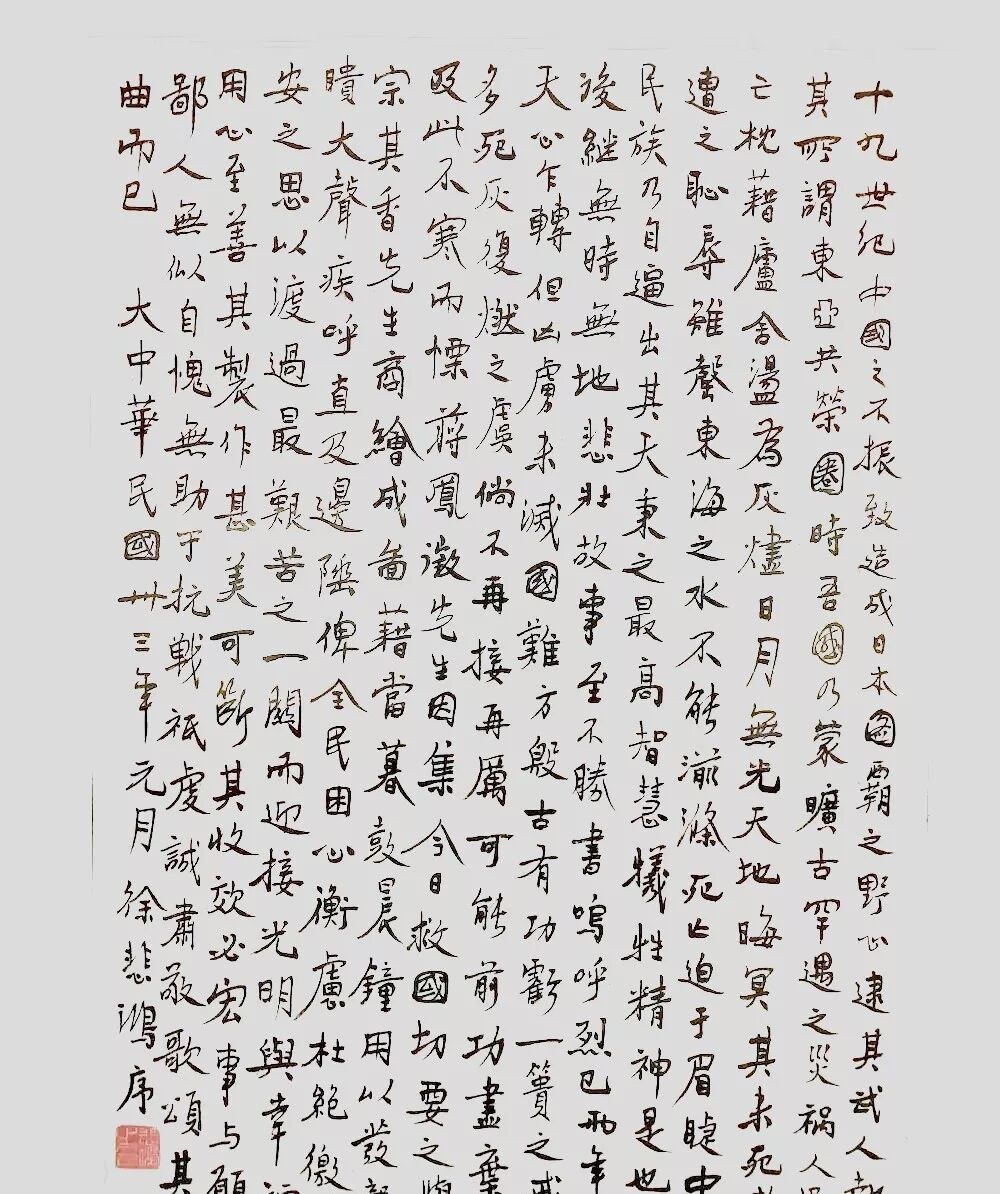
Xu Beihong once wrote in an article:
“Zong Qixiang used Guizhou native paper,
and with the brush and ink of Chinese painting, he depicted the flickering lights of Chongqing’s night scene,
the irregular rows of buildings, the rugged mountain terrain, and the chaotic street views,
all rendered with extremely simple brushwork.
In the past, those who talked about brush and ink often spoke of nothing substantial,
but now, Mr. Zong’s brush and ink contain countless images and scenes,
breaking through the ancient methods of expression.
This is a great innovation in Chinese painting,
and it deserves to be celebrated wholeheartedly!”
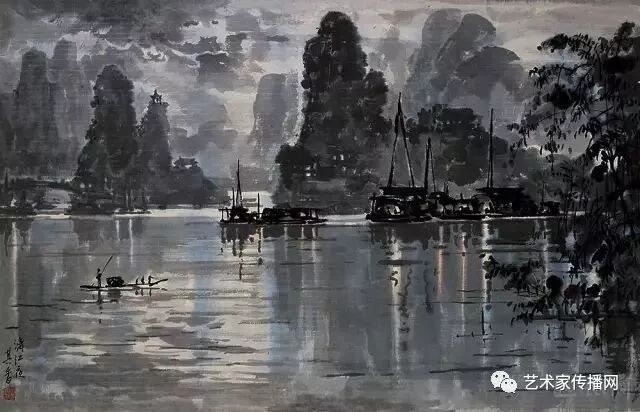
Li River Night 51.5 X 80.5cm 1982
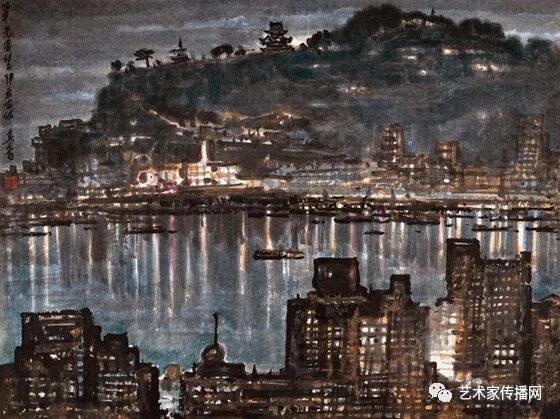
Zong Qixiang, “Viewing the Ancient Izu Castle from Cuiguang Garden”
Chinese painting, ink and color on paper, 34×45cm, 1987, Collection of the National Art Museum of China
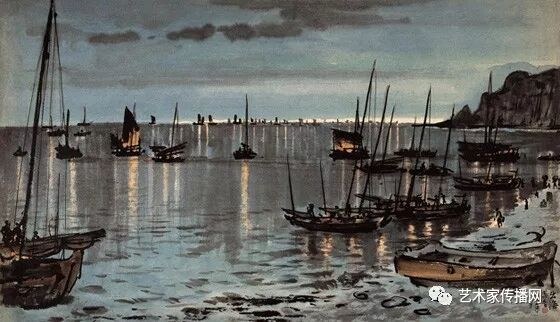
Zong Qixiang’s “Setting Sail”
Chinese painting, ink and color on paper, 31×53.5cm, 1959
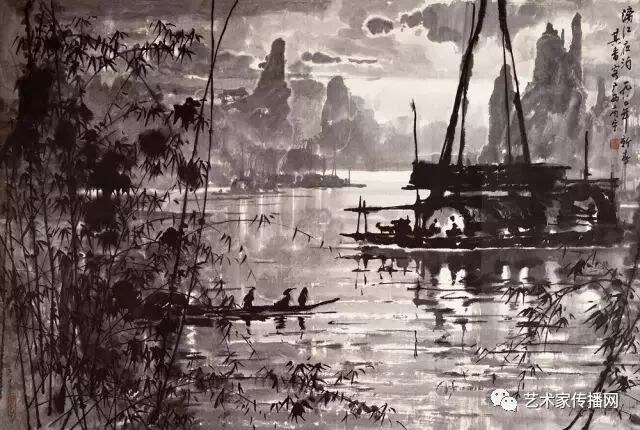
Night Mooring on the Li River 69.8×104.3cm 1980
Night Mooring on the Li River
33.5×49cm Ink and Color on Paper, 1984Night in the Mountain City, Zong Qixiang, 1944, 48x71cm, ink and color on paperZong Qixiang
(November 30, 1917 – December 29, 1999), born in Nanjing, Jiangsu. He was a renowned Chinese artist and art educator. He served as an instructor at the National Beiping Art College, professor at the Central Academy of Fine Arts, director of the Watercolor Teaching and Research Office, head of the Landscape Painting Department in the Chinese Painting Department, and a member of the Chinese Artists Association.
With a comprehensive artistic background and mastery of various techniques, his outstanding works in Chinese painting, oil painting, watercolor, and sketch have been recorded in the history of modern Chinese art. He was especially skilled in night scenes and ink-and-color landscapes, and along with Li Keran, Li Hu, and Jiang Zhaohe, was honored as one of the “Four Standard-Bearers” of the reform of traditional Chinese painting in New China.
His representative works include “Portrait of Yijun”, “Night on the Li River”, and “Gathering at Siqian”. He also published a collection of his works titled “Zong Qixiang’s Paintings”.Night Mooring in a Small Town, Zong Qixiang, 1994, 34X52cm, Ink and Color on PaperReturning Home at Night
46×68cm, Color Ink on Paper, 1993
Throughout his life, Zong Qixiang persistently explored the fusion of Chinese and Western art. Using ink and color to depict the flickering fishing lights on the Sichuan rivers at night became a hallmark of his mature artistic style.Banyan Lake Night Zong Qixiang 1994 45 X 68cm Ink and Color on PaperDew turns to frost, moon veiled in mist
45.5×68.5cm, ink and color on paper, 1994Night Ferry by Banyan Shade
47×70cm, Color Ink on Paper, 1994
1
A Young Prodigy
Born in Nanjing, Zong Qixiang’s love for painting ran through his youth.
From an early age, he followed his father in painting and worked as an apprentice at a craft gift shop. The misty rain and humid warmth of Jiangnan, along with the rich history and deep heritage of Nanjing, nurtured him.
Zong Qixiang started learning painting at age five, studying and copying the landscape works of the Four Great Masters of the Song and Yuan dynasties under his father’s guidance. After ten years of study, he created a traditional landscape piece in 1933 that was selected for the National Art Exhibition in Nanjing. Following the exhibition, he was accepted as a member of the All-China Art Association. The next year, his works “Double Fish” and “White Peacock” were chosen for a Chinese painting exhibition in Vancouver, Canada, commemorating the city’s founding. Both pieces were sold for two hundred silver dollars, and he was not yet 17 years old.
In 1937, while working as an apprentice, his Chinese painting “Landscape” was selected for the Second National Art Exhibition by the Ministry of Education, laying the groundwork for his lifelong practice of ink painting. Later, he was admitted to the Art Department of Central University, where he studied painting under Xu Beihong.Night Navigation on the Three Gorges by Zong Qixiang, 1977, 69×139 cm
Following in Xu Beihong’s Footsteps
In 1939,
Zong Qixiang, at the age of 22, fled to Chongqing to pursue his studies,
where he was admitted to the Art Department of National Central University and graduated in 1944.
Emotional setbacks and loneliness, along with poverty,
often left him wandering along the banks of the Jialing River at dusk.
Facing the misty and mysterious mountain city and the sobbing river flowing by,
he was moved by the scene to create watercolor paintings of the Jialing River at night.After sending his watercolor nocturne along with a letter to Xu Beihong, he gained Xu’s appreciation and advice: “Ancient painters depicted night scenes only symbolically, without a true sense of light—like in ‘Feast in the Peach and Plum Garden on a Spring Night.’ Have you tried blending Chinese ink brushwork with life sketching to capture the beauty of lamplight?” Thus, by exploring the rich variations of ink in night scenes and capturing the different layers and gradations of light and darkness, Zong Qixiang found his breakthrough in artistic creation.Night at the Two Intersections Zong Qixiang 1943 52x40.5cm Color on Paper
In 1942, he held a landscape painting exhibition titled “Chongqing Night Scene” in Chongqing, creating a unique Chinese night-scape landscape painting and breaking the traditional Chinese painting’s limitation in expressing light. Xu Beihong personally presided over the opening ceremony of the exhibition. In 1946, he accompanied Xu Beihong northward. At the age of 29, Zong Qixiang became a lecturer at the Beiping Art School, already the most favored disciple of Mr. Beihong, and was as renowned as Jiang Zhaohe and Ye Qianyu in Beijing.A photo of Zong Qixiang taken in the year he served as a lecturer at the Beijing Art Academy.
In Beiping, Zong Qixiang often accompanied Xu Beihong to receptions at foreign embassies. Through his teacher’s introductions, he got to know some international friends, including the wife of an American consul, the grandson of Indian poet Tagore, an American woman named Ferguson who had long lived in Beiping, and British consulate diplomats. They regularly ordered Zong Qixiang’s night scene paintings and also studied Chinese painting with him.In 1946, a group photo of young teachers at Beiping Art School: Ai Zhongxin, Sun Zongwei, Kang Shoushan, Chen Lingjuan, Zong Qixiang.In 1946, teachers and students from Beiping Art School sketched at the Great Wall, including Zong Qixiang, Chen Lingjuan, and Qi Zhenqi.Xu Beihong with students from the Art Department of National Central UniversityGroup photo of Zhongda University classmates (front row: Kang Shoushan, Chen Lingjuan, Mei Jianying, Sun Zongwei; back row: Ai Zhongxin, Zong Qixiang)
On the first day of classes at the Beiping Art School, Xu Beihong appointed Zong Qixiang as the instructor for the graduating class of the Traditional Chinese Painting Department. On his very first day, Zong Qixiang took his students to the outskirts for outdoor sketching, breaking away from the old teaching system in Beiping. Among the graduating class students was Mr. Sun Qifeng, who later became the president of the Tianjin Academy of Fine Arts.Year: A photo taken while serving as a cultural instructor in the Political Department of the Third Field Army of the Chinese People’s Liberation Army
In the history of 20th-century Chinese art: within the realms of Chinese painting, watercolor, and oil painting, Zong Qixiang’s artistic achievements are unmistakable. He was a versatile artistic genius following in the footsteps of his teacher, Xu Beihong. As many of Zong Qixiang’s students who graduated from the landscape painting department put it: “In the 1950s and 1960s, Mr. Zong influenced the entire Chinese art scene and was a revered master among teachers and students in national art academies.”
In 1961, Zong Qixiang became the first director of the Landscape Painting Department at the Central Academy of Fine Arts’ Chinese Painting Department, nurturing students such as Jia Youfu, Zhang Ping, Wang Wenfang, Zhou Zhilong, Zhang Renzhi, Fu Yixin, and Li Baolin.Seamstresses Zong Qixiang 1954 42X30cm WatercolorPortrait of a Little Girl by Zong Qixiang, 1955, 30X23.5cm, WatercolorPortrait of Shen Shuyang by Zong Qixiang, 1955, 47.5×34.5 cm, ink and color on paperPearl Spring, Zong Qixiang, 1962, 47.5x69.5cm, ink and color on paper
3
Through Hardships
“In 1966, the unprecedented Cultural Revolution began. Overnight, Zong Qixiang and the renowned teachers at the Central Academy of Fine Arts became targets of persecution. The academy established a Cultural Revolution group, and some activists locked them in cowsheds. A ‘Black Painting Exhibition Room’ was set up, and every night a huge bonfire was lit in the academy. The activists would drag them out of the cowshed, make them kneel in a circle around the fire, and subject them to public denunciation. Some painters’ hands and faces were scorched by the flames, but they dared not move an inch.”Imitating German Copperplate Engraving, Zong Qixiang, 1942, 60x105cm, color on paper
Later, in his old age, Zong Qixiang recalled, “Back then, locked up in the cowshed, they couldn’t figure out how to escape the struggle sessions. When they couldn’t take it anymore, they just lay down on the ground and played dead. A few painters were carried to the morgue and left there overnight—and the next day, they walked home alive! During the Cultural Revolution, Zong Qixiang was brutally persecuted by the Gang of Four. They raided his home, withheld his wages, tortured him, forced him to ride the ‘airplane,’ and subjected him to unprecedented physical abuse, humiliation, and persecution. At the same time, along with other teachers, he was denounced by students he had personally trained. From then on, his spirit was dealt a fatal blow, and he often contemplated ending his life.”On the Jialing River, Zong Qixiang, 1947, 112x199cm, ink and color on paper
“Regarding the counterrevolutionary ‘Three Tigers’ incident by Zong Qixiang, over 40 years ago, Zong Qixiang was one of the older artists hardest hit during the ‘Cultural Revolution.’ In 1974, while painting for the Beijing Hotel and other diplomatic venues, he created dozens of works. One of them, ‘Three Tigers,’ caused immense trouble. This painting was actually a very ordinary ink wash piece, but it was labeled as ‘Three Tigers equals Biao, a rehabilitation for Lin Biao,’ earning it the black hat of being a political statement. He was placed under isolated investigation, repeatedly forced to confess, and dragged to struggle sessions everywhere.”The Immortal Hero Yang Gensi by Zong Qixiang, 1957, 180 x 230cm, ink and color on paper.
After the “rectification and restoration,” painters who had long been dormant re-emerged and founded the Art Creation Group in Beijing, the predecessor of the Chinese Painting Research Institute. Zong Qixiang was among the first few masters incorporated into this organization. In the summer of 1978, together with other top-tier artists nationwide, he was gathered at the Beijing Friendship Hotel to paint, producing an immense volume of work with relentless dedication.
On July 7th, invited by the Guangxi government, he was about to depart for painting. Before leaving the hotel and boarding the special plane, he completed an eight-foot plum blossom painting as a culmination of two months of work. With vibrant passion and masterful brushwork, he splashed and dotted freely, finishing the piece in one go. The renowned painters present—Liu Haisu, Lu Yanshao, Li Keran, Wu Zuoren, and others—set down their brushes to watch.Secluded Realm of Wuling, Zong Qixiang, 1983, 78X145.6cm, color on paperA Myriad of Springs
178.5×96cm Color Ink on Paper, 1984Spring Rain on the Li River
45.5×68cm, Color Ink on Paper, 1988A Joyful Journey on the Lijiang River
68×92cm, ink and color on paper, 1994
The 83-year-old veteran painter Liu Haisu witnessed the entire process of Zong Qixiang’s painting and was deeply moved and highly impressed. After Zong finished his work and packed up his brushes and ink to leave the hotel, Liu Haisu suddenly caught up with him from behind, smiling, and handed him a handscroll. Zong quickly unrolled it to take a look—it turned out to be a freshly written calligraphy piece by the elder, inscribed with: “As the brush races down like wind and rain, its spirit surges even before the strokes arrive.” The inscription read: “To my esteemed brother Qixiang, on his departure for Guangxi to sketch, these words are sent as a farewell.”
The art master Liu Haisu quoted Su Dongpo’s poem, which precisely defined Zong Qixiang’s creative style. Zong Qixiang was one of the pioneers of reform in Chinese painting and a banner bearer for innovation in Chinese ink and wash, until the downfall of the “Gang of Four” and his subsequent rehabilitation.Vast expanse enters the bosom, Zong Qixiang, 1988, 91x68.5cm, color on paperFar better than ascending to immortality
45×70cm, color ink on paper, 1986Autumn Tinge Fragrance Stains the Green Silk Ribbon
68.5×69.5cm, Ink and Color on Paper, 1963My Desk by Zong Qixiang
1944, 44.5x34.5cm, ink and color on paper
Collection of the Art Museum of the Central Academy of Fine Arts
Jia Youfu, a professor at the Central Academy of Fine Arts’ Chinese Painting School who is now over 70, still remembers every detail of studying with his mentor. “Mr. Zong once gave me some extremely harsh criticism. During a creative class, he pointed at me and said, ‘Jia Youfu, you only know how to work hard blindly, but you’re numb to the richness of nature. You’re like a spike that won’t even ooze yellow fluid, always seeing the world through others’ eyes without a single fresh personal feeling.’”He pointed out the window and said, “You should love every blade of grass and every tree around you, think with your own mind, and form your own understanding.” If it weren’t for Mr. Zong’s many earnest teachings, I might still be a clueless person today, achieving nothing.” Jia Youfu said that it was precisely because he was fortunate to have such a mentor that he still often reflects on himself, keeps striving, and dares not slack off even slightly.Woman in Red Satin Dress
1953 27.5x18.5cm Watercolor Collection of the Central Academy of Fine Arts Museum
Donated by the family of Mr. Zong Qixiang in 2017Old Peasant Portrait by Zong Qixiang, 1953, 24.5x19cm, watercolorWinter (Fine Arts Academy Playground)
1953 27x38cm Ink and color on paper
Collection of the Central Academy of Fine Arts Museum
4
Secluded in Guilin
In 1980,
Zong Qixiang left the tumultuous Beijing,
and lived a reclusive civilian life
amid the landscapes of Guilin until his death.During the last 20 years of his life in seclusion,
Zong Qixiang created countless paintings of Guilin’s landscapes.
Together with Li Keran and Bai Xueshi, he pioneered a new style of Guilin landscape painting.Beijing Exhibition Hall under Construction
Zong Qixiang 1954 31.3 x 42.9cm Color on paper Collection of the National Art Museum of ChinaThat year, Zong Qixiang was in the Wuyi Mountains, gathering inspiration.
From then on, he was gradually forgotten, while his equally renowned painter colleagues became “masters.” He drifted away from China’s political center, from the art world and the media, to the point that many in the art scene mistakenly believed he had long passed away. He gave up staying in Beijing, gave up his teaching position at the Central Academy of Fine Arts, and gave up the city that had once brought him both honor and hardship, choosing instead to roam among the genuine landscapes of the small town of Guilin, enjoying the joy of family in his later years.Ancient Banyan Trees by the Clear Stream, Zong Qixiang, 1994, 140.5 x 363 cm, ink and color on paper.
During his sketching trips across the South, he created nearly a hundred monumental works for various hotels. His later years were happy and fruitful—a season of harvest. Wherever he went, he often gave his paintings to children he had just met who loved art, encouraging them to learn. When asked what kind of painter he was, he would humbly reply, “I’m a retired teacher.” And when someone called him a “master,” he would seriously tell them, “I’m no master, just a university teacher.”
Teachers and students from the Central Academy of Fine Arts, including Zong Qixiang’s own disciples,多次 traveled to Guilin in the South to invite him back to Beijing, but he politely declined every time. Perhaps the Cultural Revolution had left too many wounds…Zong Qixiang’s “Faded Pink”
Chinese painting, ink and color on paper, 75.5×51cm, 1942, collected by the National Art Museum of China.
“In the over a decade since he withdrew from China’s art scene, many reporters from major art magazines called to interview him and publish his works, but he declined. Several art brokerage firms approached him, offering to collect a batch of his works, fund a several-million-yuan exhibition, and produce a catalog, but he just smiled it off.”In 1940, Zong Qixiang was painting in Guilin.
In a market-driven society, it’s hard for people to understand Zong Qixiang’s behavior. Just as his old friend Huang Miaozi wrote in “Zong Qixiang’s Art” published in the Hong Kong Evening News on October 6, 1985: “Among my friends, Zong Qixiang is the artist with the most artistic temper. He does things his own way, paints whatever he wants, however he wants. He has superb painting skills, is a painter who loves life, never cares about what others say, and is a unique artist—irreplaceable and one of a kind. Xu Beihong was an innovator in the art world of that time. Because he refused to follow the ‘conventions’ of traditional Chinese painting, he was once criticized by conservative painters.”Zong Qixiang’s “Mother and Son”
Chinese painting, ink and color on paper, 75.5×55.5cm, 1942, Collection of the National Art Museum of China
Zong Qixiang’s works today don’t strictly follow the rules of “Xu-style Chinese painting,” and in this regard, he truly inherited his master Xu’s legacy. “In 1996, a high-ranking government official from the north wrote asking for one of his paintings, and the local government even sent him paper and ink, but he still declined. Three days later, however, he painted a white plum blossom with the inscription ‘A Pure Life,’ and gave it to a five-year-old child who loved to draw. That same year, a top Asian leader stayed at the Presidential Suite of Ronghu Hotel in Guilin. Late at night, a secretary knocked on Zong’s door (accompanied by the hotel’s general manager). The secretary announced the leader’s name and asked Zong to meet him. Everyone present stood up excitedly!
But Zong just sat there, smiling naively, and said, ‘Who is he? I don’t know him, I can’t go.’ The fiery atmosphere froze in an instant. After a moment, Zong smiled again and said, ‘I need to sleep.’ That’s Zong Qixiang! A Zong Qixiang who can’t be replaced or replicated.
At that time, I thought, which painter today wouldn’t jump at the chance to befriend and take photos with heads of state to boost their own fame? But Zong Qixiang was truly different.Zong Qixiang’s “Boatman on the Jialing River”
Chinese painting, ink and color on paper, 76.5×58 cm
Another thing that made him happy happened that same year. Zong Qixiang received a letter, and he was as delighted as a child. He handed me an apology letter that had been delayed for twenty-nine years. With tears in his eyes, Zong Qixiang said, “This kid knows he was wrong—how wonderful! That political era, they were still young, we can’t blame them all. Then he muttered to himself, ‘But there’s someone who might never realize their mistake until they die…’”
That was Zong Qixiang—a broad-minded old man. He saw the disciple who admitted his mistake as his own child. As for those who hadn’t yet owned up, he had already forgiven them in his heart long ago.
“On December 29, 1999, the master Zong Qixiang passed away in Guilin, a place of unparalleled natural beauty. This revolutionary giant, who devoted his life to China’s fine arts, completed his 83-year journey.
At the memorial service that day, a striking couplet read: ‘His art startled the nation early on, a genius bridging East and West; his legacy endures as a model, his teachings reach across borders.’ After the farewell ceremony, in accordance with Zong Qixiang’s final wishes, his ashes were scattered into the Li River landscape he so deeply loved…”Zong Qixiang, Breaking Through the Nianzhuang Encirclement
Chinese painting, ink and color on paper, 30×41.5cm, 1952, collected by the National Art Museum of China
5
Night Scene Techniques
In the 1990s, Mr. Zhang Rongsheng wrote an article introducing Zong Qixiang’s techniques for painting night scenes, such as the method for painting boats:
-
First, use ink lines to outline the boat’s framework, but don’t complete it—leave some room;
-
Organically connect the lines of the framework, washing light ink from left to right, with variations in lightness and darkness as primary and secondary, leaving the main lights blank. The lights are rich—some deeper, some lighter, some brighter, some dimmer, plus reflective light—all must be accurately painted;
-
After painting the lights on the boat, use light ink to depict the reflections in the water and the hazy effect of the trees.How to Draw a Boat
Another example: how to draw clouds:
-
The clouds in the sky should have a clear hierarchy. Use thicker ink to outline the main clouds. A night scene includes moonlight, but don’t draw the moon itself—let it hide behind the clouds, illuminating them. Use variations in cloud density to suggest the moonlight, making the image lively and subtle.
-
Behind the clouds is the night sky. Use slightly lighter ink than the clouds to paint the sky, highlighting the glow along the edges of the clouds.
-
Finally, use light ink to blend the clouds and the sky together, creating a harmonious and consistent tone.How to Paint Clouds
When Zong Qixiang painted night scenes, whether it was moonlight, lamplight, water reflections, shadows, or mirrored light—everywhere there was brightness, he never used white paint. Instead, he skillfully left blank spaces to represent “light,” making it appear clear, transparent, and naturally striking. If he had relied on white paint to show light, it would have lacked a sense of transparency and felt messy.
Zong Qixiang told his students, “When painting, think about the theme first. What do you want to express? What moves you the most? First, move yourself—only then can your work move others. A painter must have the talents of an actor, a director, and a stage designer.”Copy of German copperplate painting, Zong Qixiang, 1942, 60x105cm, color on paper
When Zong Qixiang demonstrated night scene painting to his students, he made sure to leave plenty of blank spaces (light), then applied layers of light ink over them. At the most exciting moments, he would say vividly: “Look, now the lights are slowly going out…”Zong Qixiang’s “Night at Chongqing University’s Engineering College”
Chinese painting, ink and color on paper, 76.5×58.5cm, 1945
He said earnestly:
“When ink hits xuan paper, every stroke is final, with no room for revision.
In night scenes, leave plenty of blank space.
It’s easy to ‘turn off the lights,’ but if you leave too little blank space,
turning them ‘back on’ becomes difficult.”Mengmao Village Houses, Zong Qixiang, 1959, 46×68cm, color on paperLiangfeng River, Zong Qixiang, 1980, 137 x 437 cm, ink and color on paperA Small Gathering in Front of the Temple Zong Qixiang 1992 80X105cm Ink and Color on PaperPearl Spring, Zong Qixiang, 1962, 47.5X69.5cm, ink and color on paperLower Reaches of Peach Blossom River
31.8 × 41.2 cm, color ink on paper, 1984Longsheng, Guangxi
Zong Qixiang, 1984, 117.5 x 67.5 cm, ink and color on paperZong Qixiang, “Chongqing After Japanese Bombing”
Watercolor on paper, 24.5×31.5cm, 1939Zong Qixiang’s “Lion Beach Waterfall”
Chinese painting, ink and color on paper, 30×42.5cm, 1954Zong Qixiang’s “Beijing Exhibition Hall Under Construction”
Watercolor on paper, 32×43cm, 1954, Collection of the National Art Museum of ChinaZong Qixiang, “Connecting Wires”
Chinese painting, ink and color on paper, 30.5×42.5cm, 1955, collection of the National Art Museum of ChinaZong Qixiang’s “Bamboo and Grass Support Construction”
Chinese painting, ink and color on paper, 30.5×42.5 cm, 1955, collection of the National Art Museum of ChinaUnder the Banyan Shade by Zong Qixiang
Chinese painting, ink and color on paper, 23×37.5cm, 1959, Collection of the National Art Museum of ChinaZong Qixiang “Buying Floral Fabric”
Chinese painting, ink and color on paper, 45.5×70cm, 1959, Collection of the National Art Museum of ChinaZong Qixiang “Painting Northwest Yunnan in the Style of Song Dynasty Masters”
Chinese painting, ink and color on paper, 47×70cm, 1959, Collection of the National Art Museum of ChinaZong Qixiang, On the Border Village Road
Chinese painting, ink and color on paper, 99×69.5cm, 1960
Collection of the National Art Museum of ChinaZong Qixiang, “Shamian, Guangzhou”
Chinese painting, ink and color on paper, 31.5×44cm, 1961Zong Qixiang, “Fierce Battle Among the Flowers”
Chinese painting, ink and color on paper, 136.5 × 69.5 cm, 1961, Collection of the National Art Museum of ChinaZong Qixiang’s “Mystical Scene of Manjing”
Chinese painting, ink and color on paper, 69×137cmZong Qixiang, “Grazing in the Highlands”
Chinese painting, ink and color on paper, 137.6 × 69.5 cm, 1961, collection of the National Art Museum of ChinaZong Qixiang’s “Wonders of Water and Rocks”
Chinese painting, ink and color on paper, 97×265cm, 1979, collected by the National Art Museum of ChinaZong Qixiang’s “Mooring on the Li River at Night”
Chinese painting, ink and color on paper, 69.8 × 104.3 cm, 1980, collection of the National Art Museum of ChinaZong Qixiang, “Liangfeng River”
Chinese painting, ink and color on paper, 69×137.7cm, 1981, Collection of the National Art Museum of ChinaZong Qixiang “Pan Brook”
Chinese painting, ink and color on paper, 68.5×45cm, 1983Zong Qixiang, “Pure and Clean, Untainted by Dust”
Chinese painting, ink and color on paper, 95×179cm, 1984, Collection of the National Art Museum of ChinaZong Qixiang’s “Full of Vigor”
Chinese painting, ink and color on paper, 92×69cm, 1985, Collection of the National Art Museum of ChinaGraceful and Uniquely Ancient, Pleasing to the Heart
48.5×90.3cm Color on Paper 1992White Sand Fishing Fire
19×45cm, Color Ink on Paper, 1963Far better than ascending to immortality, flying phoenixes have no time to hitch a ride.
188×700cm, ink and color on paper, 1980s.Cruising on the Li River
182×460cm, Ink and Color on Paper, 1978New Moon over the Li River
160×350cm, Color Ink on Paper, 1992Ancient Banyan by Clear Stream
131×432cm Color Ink on Paper, 1993Dawn
137.5×332cm, Ink and Color on Paper, 1994The setting sun is infinitely beautiful
131×432cm, Color and ink on paper, 1996
Trunk Hill
68×94cm Color Ink on Paper 1994
By the Seven Star Crags
32.3×41.8cm, ink and color on paper, 1979Night at the Dong Village
51×70cm, Color Ink on Paper, 1979
Autumn Fragrance in the South by Zong Qixiang
1984, 67.7x76.5 cm, ink and color on paper, collection of the Central Academy of Fine Arts MuseumZong Qixiang memorized the myriad forms of plum blossoms, infused them with his emotions, and painted them from memory. Whether depicting red or white plum blossoms, he used ink to render the branches—thick but not murky, light but not thin. The plum branches could stretch forward, backward, left, and right with effortless fluidity, capturing their beauty with unique charm, giving the artwork a three-dimensional feel.
His plum blossom paintings stand out through their commanding momentum. He first sketched the robust old trunks with bold brushwork, then added vigorous new branches, with dense buds and sparse sepals interwoven in varied forms. To highlight the subject, he sometimes used light ink or pale colors to leave open spaces, then painted branches to enhance contrast and layering. Using dawn red to dot the blossoms, his brushstrokes varied—some thick, some thin, some dry, some wet—with petals either fully red or outlined, and pistils delicately dotted. The blossoms, whether upright, sideways, or tilted, radiated both spirit and form, breaking away from convention.
Zong Qixiang’s “Portrait of Yijun” Chinese painting
Ink and color on paper, 93×63cm, 1985, Collection of the National Art Museum of China
Human Anatomy Classroom Zong Qixiang 1983 31.5X43.5cm Ink and Color on Paper
Zong Qixiang’s “Outside the Vermilion Gate”
Chinese painting, ink and color on paper, 68.5×45cm, 1947, collected by the National Art Museum of ChinaPortrait of Madame M by Zong Qixiang
Chinese painting, ink and color on paper, 59.5×45.5cm, 1947, Collection of the National Art Museum of China
Guests visit the exhibition.Guests visit the exhibition.Exhibition siteExhibition Site
Click to read the original text! More exciting things await in the Artist Marketplace, making you even more artistic! !
Tag navigation
Explore articles that share the same tag and jump to tag pages.

Leipziger Kunstsaison in Shanghai: Wöchentliche Highlights
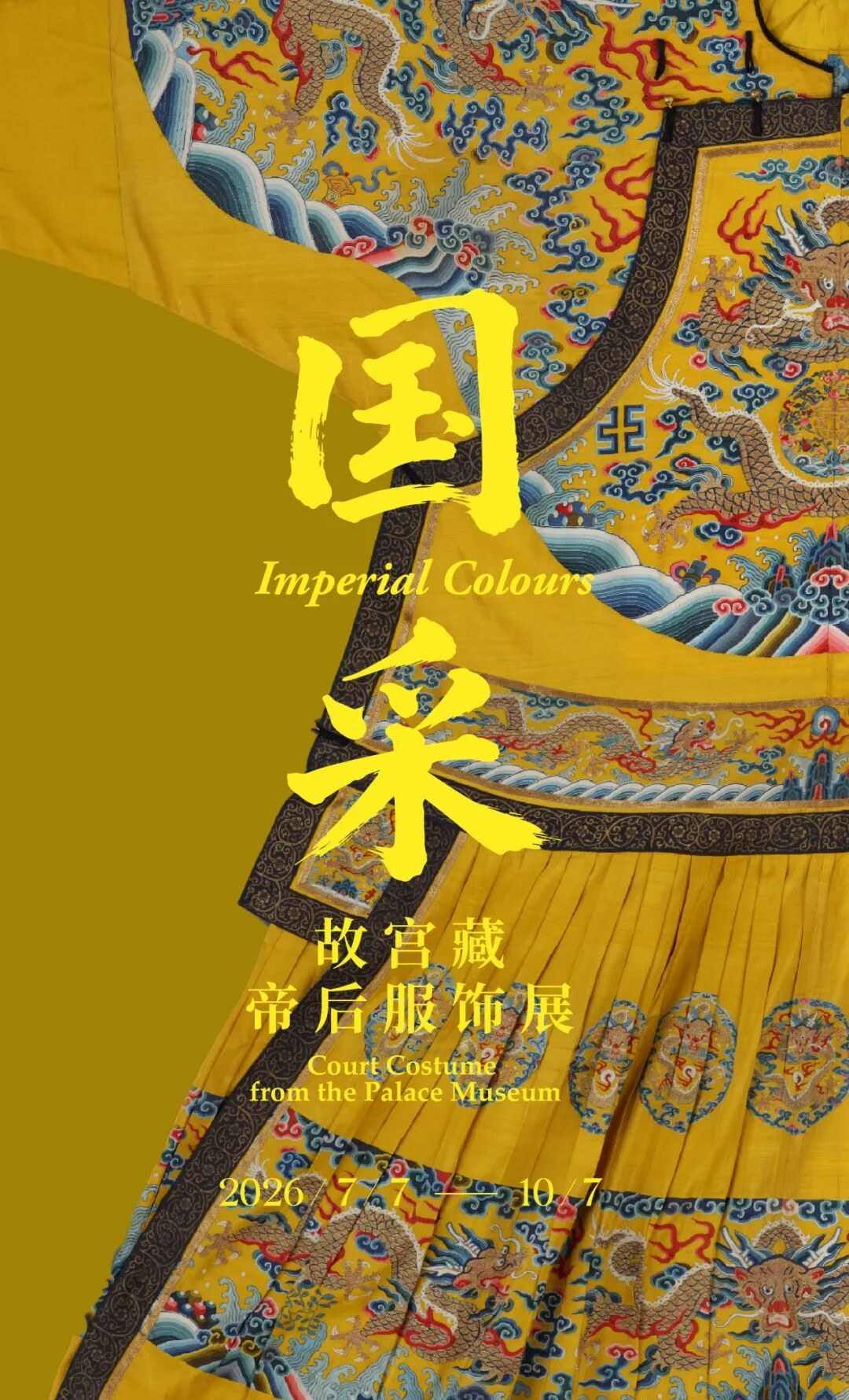
Ausstellungshighlights im Sommer: Eine Welle großartiger Museumsausstellungen versammelt sich→
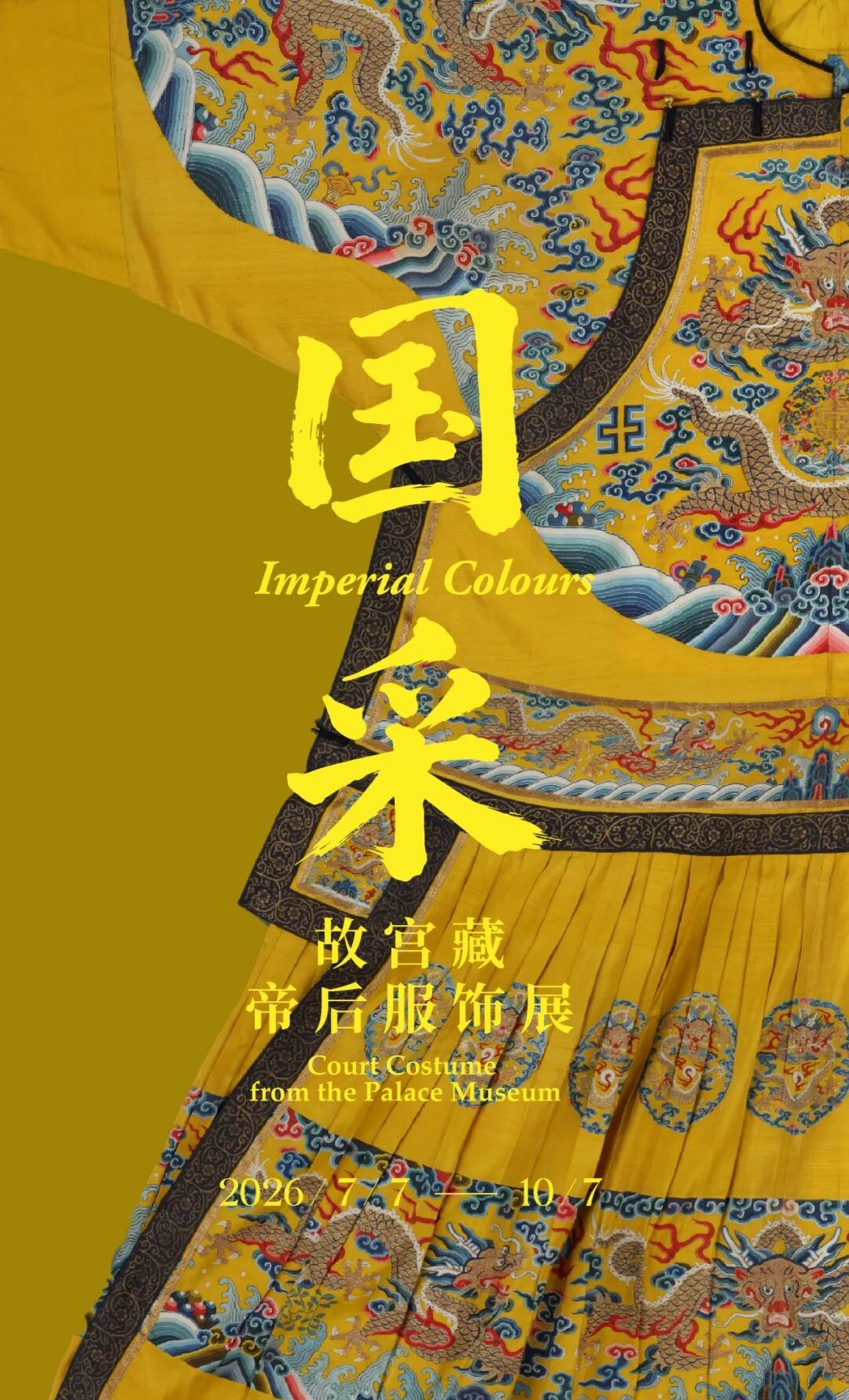
Sommerliche Ausstellungshighlights: Eine Welle großartiger Museumsausstellungen versammelt sich→
Category navigation
Jump to the article’s category or explore nearby topics.
Noch mehr Freude! Vier Orte in Jiangmen als nationale Schwerpunktdörfer für den ländlichen Tourismus empfohlen!
Jump to the more recent article in this topic series.
Prachtvolles China | Wie schön sind die Nachtlichter Chinas?
Continue to the previous article in this series.
Related stories
More articles from the same category and nearby topics.