The Most Fundamental Spirit of Chinese Culture
Read, share, and explore related stories through curated categories and tags.
Compared to Western culture, putting people first is the most fundamental spirit of Chinese culture and also its most important characteristic. Chinese culture does not rely on an external deity or creator, but on people’s own moral awareness and self-discipline, emphasizing human subjectivity, independence, and initiative. The maintenance of family order and social order in China depends on people’s moral awareness and self-discipline. This is the people-oriented humanistic spirit of Chinese culture.
—The difficulty lies in one’s own moral awareness and self-discipline. Human nature is first of all “I want to be better than you,” and human nature initially seeks self-interest, which is why morality is praised.
—“Human subjectivity, independence, and initiative,” without relying on gods or creators, can also be understood as relying on oneself, which is a strong culture.
—What if culture is detached from human nature? This might be the root cause of modern China’s backwardness. When will it change? When social contradictions evolve to the point where no one feels stable.
The people-oriented humanistic spirit in Chinese culture is a significant contribution of the Chinese nation to humanity. Many of us mistakenly think that humanism is a Western import, completely unaware that it is actually a native, indigenous product of Chinese culture. Moreover, the humanist ideas promoted in Western culture since modern times are closely related to the humanist thought in Chinese culture.
In Chinese culture, the people-oriented cultural spirit and character were established as early as the Western Zhou Dynasty, whereas Western culture was built on a god-centered foundation after the Common Era, only raising the banner of humanism during the European Enlightenment, encouraging people not to be slaves of God but to be themselves. One of its ideological sources is ancient Greek and Roman culture, but an even more important source is the people-oriented Chinese humanistic culture introduced back to Europe by missionaries after the 16th century.
They used Chinese humanist thought to critique the god-centered culture of medieval Europe, advocating for the independence and autonomy of human reason, viewing China as an ideal society. Thus, European humanism was transmitted from China and was greatly influenced by Chinese culture.
To understand the formation and characteristics of this Chinese culture, one must know two excellent traditions in Chinese culture. One is “using history as a mirror,” and the other is “taking heaven as the standard.” Regarding “using history as a mirror,” Emperor Taizong of Tang said: “Using bronze as a mirror, one can straighten one’s clothes. Using history as a mirror, one can understand the rise and fall of dynasties” (from the New Book of Tang, Biography of Wei Zheng), emphasizing the importance of historical experience. “Taking heaven as the standard” means that every word, action, and behavior of a person must follow the principles of heaven, earth, and all things, and must not violate their inherent nature. The standard is the rule, and emulating it. The Analects also have a saying: “How majestic was Yao as a ruler! Only heaven is great, and only Yao followed it.” Emperor Yao was truly great; heaven is the greatest, but Yao could emulate it, “only Yao followed it.” The concept of “taking heaven as the standard” is a very important tradition in China. We must establish human subjectivity, independence, and initiative, not to be slaves of external forces, but at the same time, we must not use human power to dominate heaven, earth, and all things—that is also not acceptable. “The Doctrine of the Mean just goes along with nature.”
Precisely because of this, China’s historical records are the most systematic and complete in the world. China has the Twenty-Four Histories or Twenty-Five Histories, along with many unofficial histories and supplementary historical materials. In every dynasty, after the regime became relatively stable, the first task was to establish rituals and music, and the second was to compile the history of the previous dynasty. The people-oriented humanistic spirit in Chinese culture was summarized through “using history as a mirror” and is a result of this tradition.
In the early Western Zhou Dynasty, people reflected on the rise and fall of the Xia and Shang dynasties. Through historical observation, they saw that the Xia Dynasty began with Yu the Great controlling the flood. At that time, the world was plagued by floods, and the people were destitute. Yu controlled the flood, allowing the people to live and work in peace, and everyone supported him in establishing the Xia Dynasty.
But by the time of the last ruler, Jie of Xia, he was licentious and tyrannical. The people cursed him day and night, saying, “When will this sun perish? Let us die together with you!” (from the Book of Documents, the Speech of Tang). In such a time of “the Xia ruler’s moral decay, the people were mired in misery” (from the Book of Documents, the Conquest of Li), the Shang tribe under Cheng Tang’s leadership overthrew the Xia Dynasty and established the Shang Dynasty. The people praised him for rescuing them from suffering.
The Shang Dynasty was a very important era in Chinese history. The earliest relatively mature script we can see today is the oracle bone script from the Shang Dynasty. The Shang people deeply believed in fate. By the time of the last ruler, King Zhou, he was also licentious and tyrannical. During his reign, there was popular unrest. The minister Zu Yi told him that the people’s hearts were turning to the Zhou tribe and that he should be careful. King Zhou said, “Alas! Don’t I have my life from heaven?” (from the Book of Documents, the Conquest of Li).
In Chinese culture, we also see the emperor as our ancestor, who, after passing away, protects his descendants from heaven. He thought that the Zhou people could do nothing to him. But unbeknownst to him, the Zhou tribe in the northwest region, with the support of the people and under the leadership of King Wen and King Wu, overthrew the Shang Dynasty, and King Zhou committed suicide after his defeat. The Shang overthrew the Xia, and the Zhou overthrew the Shang, which is historically known as the “Tang and Wu revolutions” (from the Book of Changes, the Hexagram of Reform).
The history of these two dynasties gave the Zhou Dynasty profound lessons. Using history as a mirror, the Zhou Dynasty recognized from the start: “Heaven’s mandate is not constant” (from the Book of Songs, the Odes of King Wen). Heaven’s mandate can be revoked by others.
Then how does Heaven’s mandate change, and based on what? The Book of Documents records the Zhou Dynasty’s summary of history: “Heaven has no favorites; it only assists the virtuous” (from the Book of Documents, the Mandate of Cai Zhong). This is a very important saying. Therefore, the Zhou people proposed a key concept—“revering virtue,” and moreover, “urgently revering virtue” (from the Book of Documents, the Announcement of Shao), striving to quickly enhance their moral conduct.
This formed a fundamental characteristic of Chinese culture: the determination of fate and the rise and fall of political power do not lie in external forces, but in the quality of people’s own virtue. Heaven acts according to the will of the people. The Book of Documents contains many such records, such as “The people are the foundation of the state; when the foundation is stable, the state is at peace” (from the Book of Documents, the Songs of the Five Sons), and “Heaven sees as my people see; Heaven hears as my people hear” (from the Book of Documents, the Great Declaration).
—How is the quality of people’s own virtue formed? How is the people’s will expressed? Without institutional design, moral teaching cannot work; it goes against human nature.
During the Spring and Autumn period, there was a dialogue between Duke Huan of Qi and Guan Zhong: “Duke Huan of Qi asked Guan Zhong: ‘What does a king value?’ Guan Zhong replied: ‘He values heaven.’ The duke looked up at the sky. Guan Zhong said: ‘What I call heaven is not the vast sky. A king takes the people as heaven.’” (from the Outer Commentary to the Book of Songs, Volume Four).
Thus, “heaven” in Chinese culture does not simply mean the sky, nor is it a creator god. Heaven has rich meanings; it is the natural way of heaven and also represents the will of the people. The people-oriented humanistic spirit in Chinese culture emphasizes that people do not listen to external forces or fate, nor are they slaves to any god; rather, they rely on the enhancement of their own virtue.
Therefore, Chinese culture places great emphasis on self-cultivation. The first sentence of the Great Learning is: “The way of the Great Learning lies in illuminating bright virtue, in renewing the people, and in resting in the highest good.” The first “illuminating” means to shine forth, and the second “bright” describes this virtue as clear and upright. Everyone has bright virtue; we must bring it out.
These lines are the “three guiding principles” of the Great Learning. The Great Learning also has “eight items”: investigating things, extending knowledge, making the will sincere, rectifying the mind, cultivating oneself, regulating the family, governing the state, and bringing peace to the world. Among these, self-cultivation is key, so it is said: “From the Son of Heaven to the common people, all must take self-cultivation as the root.” Self-cultivation means the improvement and enhancement of one’s own virtue, not just in words or understanding, but more importantly in action and practice.
This is the fundamental characteristic of Chinese culture. Its core is that the decisive factor in a person’s fate is their own virtue, based on “virtue,” not on external “fate.” People cannot become slaves to “fate” (gods).
And to maintain and continuously enhance one’s own virtue, one must guard against the temptation and corrosion of material desires; people cannot become slaves to things. The late pre-Qin thinker Xunzi recorded a proverb passed down through history in his book: “The superior man controls things; the inferior man is controlled by things.” This means that a superior man can control and manage things, while an inferior man is controlled by things.
There is also an ancient book called the Guanzi, which includes an article titled “The Art of the Mind.” It clearly states that the “mind” occupies the leading position of a ruler in the human body, while the five senses are in the position of ministers. “Do not let things disturb the senses, and do not let the senses disturb the mind.” The senses of eyes, ears, nose, tongue, and body must be ruled and managed by the mind. After the senses come into contact with the outside world, they manage external things.
When the eyes see beauty, the nose smells fragrance, and the tongue tastes flavor, they must manage things, not let these things manage the senses, and not let the senses manage the mind. If this is reversed, one becomes an inferior man. Being able to use the mind to control the senses and use the senses to control external things is what makes a superior man. Thus, to become a person with independence, subjectivity, and initiative, one must not be controlled by things or corrupted by material desires; otherwise, one will lose virtue.
A simple description of this people-oriented humanistic characteristic of Chinese culture is: “Above, it despises worship of gods; below, it guards against worship of material things.”
The people-oriented thought of Chinese culture once played an important enlightening and driving role in Europe’s transition from the Middle Ages to modern society. In fact, its influence goes further. In the first half of the 20th century, two world wars occurred, both originating in Europe. Why did humanity experience such brutal mutual slaughter? Let’s trace the cause of the war…
The ultimate purpose of life is nothing more than the struggle for resources and wealth. In order to obtain resources and wealth, people disregard morality and resort to any means to slaughter each other. People are completely driven by material desires, once again self-alienated, losing their subjectivity, independence, and initiative, and becoming slaves to things.
Therefore, after the two world wars, a group of insightful thinkers in the West once again raised the issue of establishing humanism, holding high the banner of new humanism. They almost unanimously agreed that the ideological resources for this new humanism should be drawn from traditional Chinese culture.
If, during the European Enlightenment in the 17th and 18th centuries, the human-centered humanistic spirit drawn from Chinese culture was meant to help people stand up from under the feet of gods, no longer being slaves to gods, but becoming independent, rational, and free individuals, then after the two world wars in the 20th century, raising the banner of new humanism was to free people from the cage of material things, enabling them to follow humanity, care for others, and practice self-discipline and self-awareness.
However, it is extremely difficult for people to consciously free themselves from material desires, and it is equally hard for them to consciously and self-disciplinedly practice the “way of being human.” In today’s world, conflicts between people are endless, and wars, both internal and external, among nations and groups continue. The banner of new humanism still needs to be held high, again and again.
— Therefore, an institutional order is needed. Any individual, team, organization, country, or region… the ultimate goal is to establish morality and express public opinion.
Regarding the humanist thought during the Enlightenment in Europe, it achieved great success in breaking through medieval theocentric culture, giving rise to modern Western rational culture, and bringing unprecedented development and progress in science, technology, and human culture.
But at the same time, we must also note the variation of the human-centered humanistic spirit in Chinese culture under the influence of Western traditions. That is, in traditional Western culture, the binary, either-or way of thinking, with its separation and opposition, brought about problems. When humanity stood up from under the feet of gods and affirmed their subjectivity, independence, and initiative, they sought to replace gods in dominating heaven, earth, and all things.
— Typically, after becoming stronger, one wants to control others. The ideal situation is, “After I become stronger than you, I do not bully the weak.” Following the natural condition of “I must be stronger than you” can drive social development and progress. If one can achieve being stronger without bullying the weak, this progress can become harmonious rather than heading toward destruction.
At that time, with the affirmation of reason and the development of science and technology, people boldly proclaimed that “man can conquer nature,” believing that humanity should and could conquer and transform nature. Under the growing development and progress of science and technology as fruits of human rational power, “scientism” and the belief in the omnipotence of science and technology increasingly grew.
Humanity thought that with the power of reason, science, and technology, they could arbitrarily conquer nature, transform it, and dominate the universe. The original humanism, opposed to theocentric culture, gradually became alienated into “anthropocentrism,” where humanity sought to dominate heaven, earth, and all things. And humanity’s conquest and transformation of nature were further alienated into excessive exploitation and plundering of natural resources and wealth to satisfy material desires, causing people to become slaves to material desires. This is also the fundamental reason why modern Western society critiques “anthropocentrism.”
In fact, the human-centered humanistic culture in Chinese culture would not become alienated into “anthropocentrism.” This is because Chinese culture has another important fine tradition: “taking heaven as the standard.”
— That is, every word, action, and move of a person must take heaven, earth, and all things as their standard, and cannot violate the nature of heaven, earth, and all things.
China’s human-centered approach emphasizes self-management, turning inward to control oneself. It is not only about controlling one’s senses but, more importantly, controlling one’s mind. Only by controlling the mind can one control one’s behavior.
— Seek inward, follow causality, make choices.
“The mind in the body holds the position of ruler. The nine orifices have their duties, like the functions of officials.” (“Guanzi: The Art of the Mind, Part 1”) “Do not let things disturb your senses, do not let your senses disturb your mind.” (“Guanzi: The Art of the Mind, Part 2”) “The noble person controls things; the petty person is controlled by things.” (“Xunzi: On Self-Cultivation”) To maintain moral character, one must guard against the corrosion of material desires. If one indulges oneself and pursues desires endlessly, one will be controlled by things, losing independence, subjectivity, and initiative, becoming a slave to things.
Originally, Western humanism opposed theocentrism to emphasize the significance of human rationality and moral self-awareness in all aspects. But under the influence of Western traditions, their values, especially the binary, either-or, separated, and opposed way of thinking—where good is absolute good and bad is absolute bad—led to the variation of humanism.
This variation was the root of many subsequent problems. They saw that theocentric culture constrained social development and the dynamic power of human reason, while humanism allowed people to stand up from under the feet of gods, which was absolutely good, so they went to the other extreme. Originally, God determined everything; now, man determines everything, and all things in nature must obey man’s domination; man replaced God.
Humanism degenerated into anthropocentrism. People did not realize that if man tries to determine everything, man ends up being determined by everything. After the development of modern Western society, people would do anything to compete for resources and wealth, and as a result, man lost himself.
The second important tradition in Chinese culture is “taking heaven as the standard.” Confucius said: “Great indeed was Yao as a ruler! How lofty! Only heaven is great, and only Yao modeled himself on it.” (“Analects: Tai Bo”) The Chinese strongly emphasize taking heaven and earth as models and learning from them. If you go to the Confucius Temple, you will see that we use phrases like “virtue matching heaven and earth” or “virtue equal to heaven and earth” to praise Confucius.
The virtue of a sage can match heaven and earth, as lofty and generous as heaven and earth. So people absolutely cannot act as the masters of all things; on the contrary, they should learn from heaven, earth, and all things. The Daoist concept of “the Way follows nature” is similar. “Nature” here does not mean the modern concept of nature; it refers to the inherent state of things, the natural and spontaneous state. “The Way follows nature” emphasizes that people should respect the inherent state of things.
Heaven and earth have many virtues. We see that heaven and earth never abandon anything because of likes or dislikes. The sun, moon, and stars in the sky shine universally. “Heaven does not cover with partiality, earth does not bear with partiality, the sun and moon do not shine with partiality.” (“The Book of Rites: Confucius at Home at Leisure”) Heaven and earth are so vast, selfless, and inclusive. People should first learn this virtue of heaven and earth.
Many people say that Chinese culture emphasizes the unity of heaven and man. In fact, it is more accurate to say “the unity of virtue between heaven and man,” meaning the consistency of virtue between humans and heaven. Heaven and earth are very sincere. Confucius said: “Does heaven speak? The four seasons go their way, and all things are born. Does heaven speak?” (“Analects: Yang Huo”) This can be expressed in one word: sincerity. In “The Doctrine of the Mean,” it is said: “Sincerity is the way of heaven; to attain sincerity is the way of man.”
Mencius also said: “Sincerity is the way of heaven; to reflect on sincerity is the way of man.” (“Mencius: Li Lou I”) This means that the human way is learned from the way of heaven. The way of heaven is sincerity, so we humans must also be sincere. This idea can also be confirmed in “The Book of Changes: Guan Hexagram Commentary”: “Observing the divine way of heaven, the four seasons never err. The sage uses the divine way to establish teachings, and the world submits.”
The “divine” here does not refer to a creator god. “The unfathomable yin and yang is called the divine,” and “Those who understand the way of change will know the workings of the divine.” (“The Book of Changes: The Great Commentary”) In Chinese culture, the most fundamental meaning of “divine” refers to the changes of all things. In the past, we have completely misinterpreted “establishing teachings through the divine way,” thinking it meant conjuring up a mysterious, lofty god to educate everyone.
In fact, there is no mysticism here at all. We observe the way of changes in heaven and see that the four seasons—spring, summer, autumn, and winter—never err. That is sincerity. The sage uses this divine way of heaven—“sincerity”—to educate the people, and the world is at peace. So it is said that the main virtues of humans are all learned from heaven and earth.
— This “sincerity” is the “law,” and perceiving change is the divine.
We must not only learn from heaven and earth but also from all things. In a poem by Tang Dynasty poet Bai Juyi, describing the grass, it says: “The grass on the plain spreads far and wide, each year it withers and thrives; wildfires cannot burn it all, the spring wind blows it alive again.” (“Farewell to an Old Friend on the Ancient Grassland”) This teaches people to learn from the grass’s tenacious vitality.
Another couplet about bamboo says: “Before it emerges from the soil, it already has joints; even when it reaches the clouds, it remains hollow.” This uses bamboo as a metaphor, telling people to uphold moral integrity from the roots and remain humble no matter how high their status.
And the thing most worth learning from is “water.” Laozi’s “Dao De Jing” says: “The highest good is like water,” meaning water has the highest virtue. Many books record that Confucius would stop to observe water whenever he encountered it. China pays the most attention to learning from water among all things. Water has many virtues. Water always flows downward, nourishing all things, never taking credit or demanding repayment. This is the virtue of humility.
Water can also contain all things; it has no fixed shape but takes the shape of the vessel containing it. So Confucius said, “The noble person is not a utensil.” (“Analects: Wei Zheng”) Water also has the virtue of perseverance and overcoming the strong with softness. Water droplets wear through stone. The softest water droplets can penetrate hard stone because of water’s persistent, unyielding, and relentless spirit, drop by drop,
One year, ten years… eventually, the stone is worn through by the dripping water.
The ancients said women are made of water. Women are gentle, yet they have a resilient streak. Softness overcomes hardness, and hardness and softness complement each other—that’s a win-win. If hardness meets hardness, both sides lose. In today’s society, too few people understand the principle of softness or know how to apply it.
Women’s roles in society are increasingly prominent, and people often talk about “yin flourishing while yang declines.” But really, that’s just looking at the surface. It seems like yin is thriving and yang is fading, but in truth, it’s yang thriving and yin fading. Because what should be yin and soft has turned into yang and hard. Take humanity and nature as a whole: if nature is yang, then humans are yin. But now humans want to conquer nature, so they become yang. Yang against yang—that’s why we’re in trouble now.
We are yin, so we should go along with nature. Many people think Laozi’s “natural inaction” means doing nothing. Actually, inaction doesn’t mean no action. As it’s said, “What I call inaction is not letting personal desires interfere with the public way, not letting cravings twist proper methods, acting in accordance with principles, and achieving success by relying on circumstances.” In short, it’s about “following the natural course of things” (from the Huainanzi, “Cultivating Effort”).
This is also what Laozi meant by “assisting the naturalness of all things without daring to act.” To assist, of course, requires movement and action, but without daring to impose personal desires or cravings on things—you must not only follow the inherent principles of things but also consider whether the circumstances and conditions are ripe. So, natural inaction is actually the most proactive form of action.
—Acting within the bounds of natural laws and the possibilities of conditions.
Therefore, in Chinese culture, on one hand, it emphasizes that people shouldn’t be slaves to gods or to things, but should be themselves, maintaining their autonomy, independence, and initiative. On the other hand, it also warns against arrogance, against trying to dominate heaven, earth, and all things. Instead, people are encouraged to humbly learn from the world, respect nature, and go along with it.
This is the excellent idea of “Tao follows nature” and “the unity of heaven and humanity” in Chinese culture. The humanistic spirit of “people as the foundation,” combined with the ideas of “Tao follows nature” and “unity of heaven and humanity,” ensures that the humanism in Chinese culture won’t degenerate into “anthropocentrism.”
Looking at the history of the last few centuries, the relationships between humans and nature, between people (society), and within individuals themselves (body and mind) have become increasingly tense and deteriorated. One major reason is the loss of the humanistic spirit that puts people first.
So now, it’s urgent to revive people-centered humanistic culture, while discarding the alienated “anthropocentrism” and related ideas like “scientism” and “technology can solve everything.”
Properly interpreting and promoting the true meaning and spirit of people-centered humanistic culture in Chinese culture, and sharing it with the world, is a key task in carrying forward and developing China’s excellent traditional culture.
What is culture? What is our culture now? And how is it changing?
At its core, culture is about values and ways of thinking, followed by lifestyles, beliefs, and customs.
What systems coexist with culture? How do systems shape cultural changes? Culture and systems—like productive forces and relations of production? They complement each other.
System, or institution, is a concept in social science. From a social science perspective, an institution generally refers to a social structure that uses rules or operation models to regulate individual behavior. These rules carry the society’s values, and their operation reflects a society’s order. The concept of institution is widely applied in sociology, political science, and economics.
An institution is something purposefully constructed by people. Its existence always carries value judgments, thereby regulating and influencing the behavior of people within it. For example, if we see an electoral system as an institution, different places have different electoral rules. Institutionalists would explain that this results from different societies having different understandings of electoral values. If a society values expressing diverse voices over efficiency in governance, the electoral system will be designed to favor diversity (e.g., proportional representation), allowing multiple parties to gain public support and be elected through such a system.
The concept of institution has a blind spot: it’s hard to explain why institutions change. Over the years, many scholars have tried to explain this, citing changes in societal norms, interactions between people’s behaviors, and historical factors leading to reform. But it’s still tough to fully explain political phenomena.
—Reasons for change: intensifying contradictions. —Why didn’t traditional Chinese culture bring modern prosperity to the nation? Because it wasn’t thorough; it had flaws. It went along with nature but not with human nature, relying on people’s self-discipline and conscience to govern the world—that’s not going along with it; it’s wishful thinking.
What is human nature? Human nature is “I want to be stronger than you,” always stronger, and even bullying the weak. That’s why modern China fell behind: after the ruling class got strong, they started to keep people ignorant and bully the weak, thus hindering change (the divine), hindering the expansion of the human nature of “I want to be stronger than you.”
How do you go along with human nature? Only by putting it in a cage. Metaphorically, you walk the dog (go along with human nature) but also put a muzzle on it (the cage) to keep it from hurting people.
What is the cage? It’s the system.
So culture and systems complement each other.
The U.S., after its independence, established the separation of powers (the cage), which allowed the human nature of “I want to be stronger than you” to develop. In a few hundred years, it has achieved far more than millennia of development, with immense power.
What should we individuals do in the future?
Understand culture and human nature. Go along with nature and human nature. Observe systems and think about change.
In other words, watch changes in relations of production to judge the development of productive forces.
What are the current systems in the A-share market? What are the current systems in Chinese society? What’s changing?
Using books to see the heart, borrowing texts to see oneself | A page of words illuminates the original mind.
Tag navigation
Explore articles that share the same tag and jump to tag pages.

Leipziger Kunstsaison in Shanghai: Wöchentliche Highlights
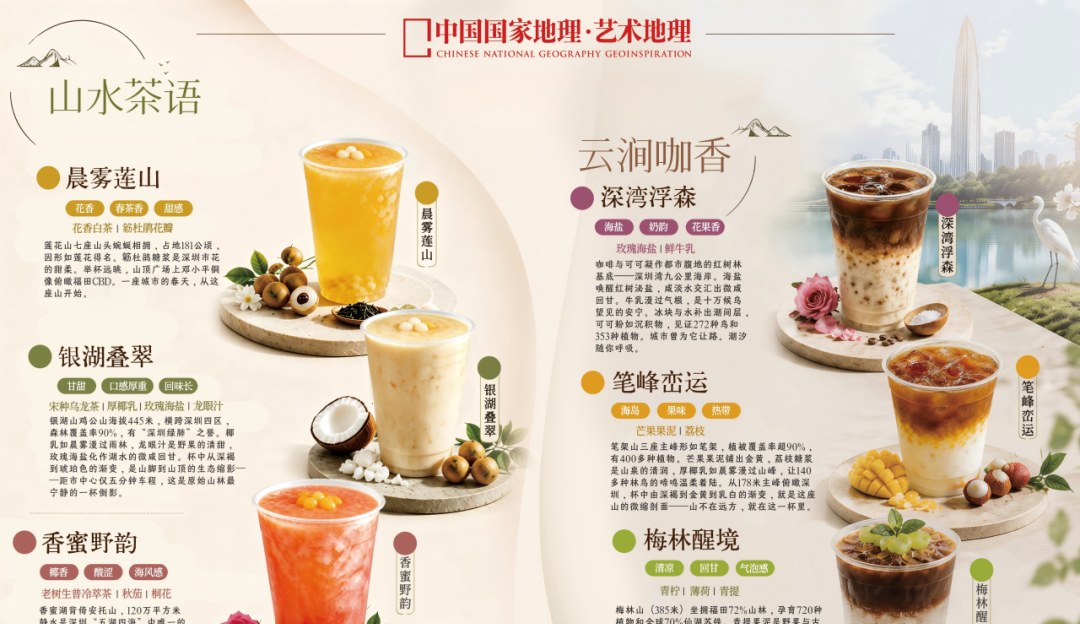
Geographieunterricht für die Geschmacksknospen | Wie lässt der „Berg-und-Fluss-Genuss-Mikroraum“ Berge und Flüsse schmecken?
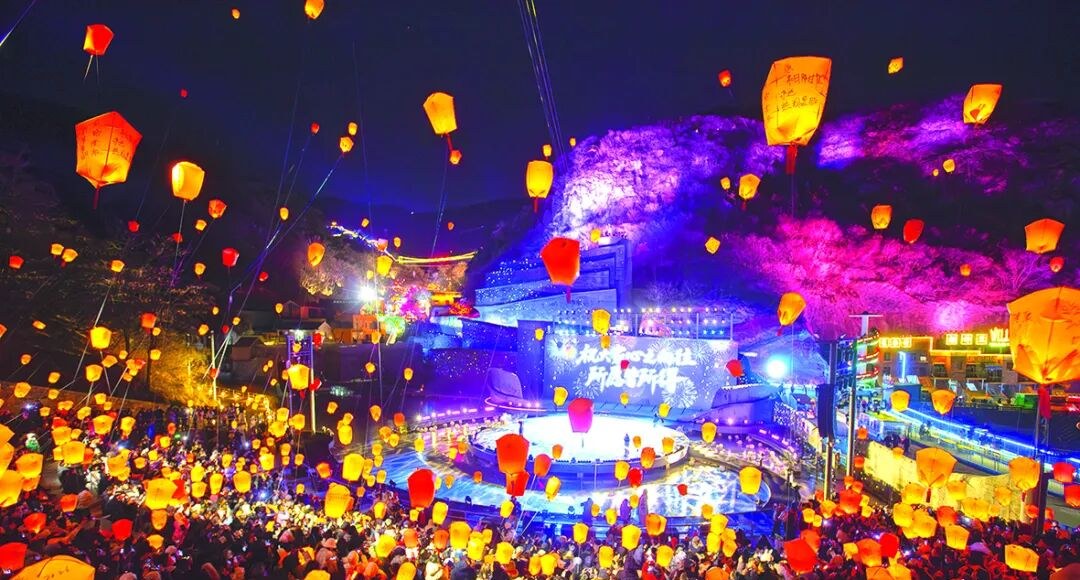
Achtseitige Sonderbeilage der China Tourism News! Wenn die Schätze Shandongs zu einer langen Rolle der Qi- und Lu-Kultur werden
Category navigation
Jump to the article’s category or explore nearby topics.
【Chinesische Kultur】Die vier großen klassischen Romane: Geschichten, die auch nach Jahrhunderten noch berühren
Jump to the more recent article in this topic series.
Die kulturellen Grundlagen des Aufstiegs Chinas
Continue to the previous article in this series.
Related stories
More articles from the same category and nearby topics.