Why Do All Bosses Fall into the Same Trap? What's Wrong with China's Tourist Attractions?!!
Read, share, and explore related stories through curated categories and tags.
**China’s Practical Marketing Think Tank for Tourist Attractions! The trendsetter in scenic spot marketing, focusing on industry dynamics, gathering the most practical and innovative marketing success stories and hands-on experiences from professional marketing managers of various attractions, helping scenic spots quickly and effectively solve marketing challenges.**In reality, many tourist attractions are not profitable. What’s going on with these attractions? Where have the tourism investments gone wrong?
Common Mistakes of Tourist Attractions
Based on past experience and lessons, it seems that many poorly managed or unprofitable tourist attractions have made the same mistakes:
1. Tourism is a new industry, and its marketization is a fresh challenge with no precedents to follow. Blind imitation has planted hidden risks for the survival and development of these attractions.
Of all industries, tourism is the toughest! There are no rules to follow, no models to copy.
Many decision-makers rely on a three-step approach to develop tourism: research, learn, and imitate. They first send teams to study similar projects nationwide, then return to copy them outright, creating identical replicas. This “groupthink” leads to a monotonous landscape where every attraction looks the same, stripping away tourism’s charm and market competitiveness.
What’s worse, they go all out with big-scale, high-end projects, completely losing sight of their core selling points, product highlights, and market hooks. They treat landscapes as attractions, obsessing over grand gates, towering buildings, wide boardwalks, abundant greenery, dazzling light shows, and luxurious visitor centers—things that tourists care about the least! Why do visitors come? This question is rarely pondered or prioritized, never the focus of their thinking.
As a result, many attractions are built like urban parks or city squares, with heavy investments and flashy appearances. They open with a bang but end up deserted!
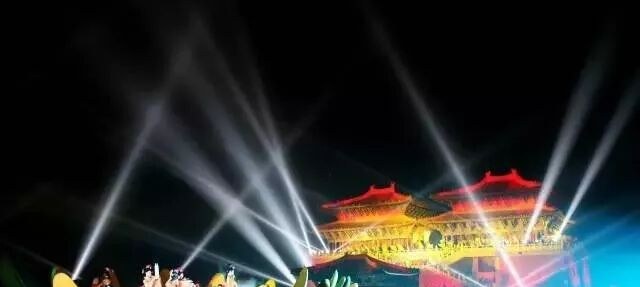
Why must tourists come? What is the core selling point of your scenic spot? Where is the breathtaking attraction? These questions are never considered, because urban landscape thinking and municipal engineering thinking don’t take them into account. You have to break free from these two mindsets and deeply reflect on consumers and the market to successfully build a tourist attraction.
The same goes for business owners. In China, about half of them tend to mimic the mindset of officialdom, while the other half genuinely possess good market awareness and skills. But since they’re entering the tourism industry for the first time from another field, they usually follow the same pattern of inspecting, learning, and imitating.
Because tourism is the hardest industry to crack. Positioning, products, and marketing are all variables. Every project differs vastly in history, culture, natural geography, and ethnic customs—there’s no template to follow. It demands super creativity and stunning planning. Otherwise, no creativity means no business! No stunning impact means nothing but regret!

Why do entrepreneurs from almost every industry fail when they switch to tourism? The reason is that tourism is completely different from all other industries.
In other industries, you have to study your competitors, make your product look like a proper product, and make it similar to what competitors offer—that’s how you stay competitive.
But tourism is the exact opposite. Never develop a tourist attraction to look like a tourist attraction!
Never make your scenic spot look like someone else’s! That would be dangerous. Because it’s all a trap—fancy gates and parking lots, proper roads, decent reception facilities—if you focus all your energy on those, you’ll end up mediocre. Your energy and money must go into things that don’t look like a tourist attraction, but into things that will make tourists travel thousands of miles to pay for. Only then will your scenic spot have vitality, and only then can you make big money.
Why is tourism said to be a high-investment, slow-return industry? It’s because you end up spending big money on things that don’t attract tourists at all, on things that are exactly the same as what your competitors offer!
What sets tourism apart from other industries is that from the moment you’re born, you’re up against all the scenic spots out there!
Don’t just focus on what you and your locals need in terms of travel styles, and don’t just eye your local competitors. Instead, look nationwide—how can you stand out from all the scenic spots across the country, and how can you attract people from all over? That’s your only shot at survival.
Bosses from other industries who switch over are totally lost! They have no clue, so they just fall back on the same old routine of site visits, learning sessions, and research. And the result? They study themselves to death, learn themselves to death, and research themselves to death!
Second, they only know the establishment, not the real world. They only know planning and design institutes and prestigious universities, but can’t distinguish good planning and strategy. You must understand that we live in the real world!
For decades, the fixed mindset has been that when you mention planning, you think of academic institutions, but the designers from these institutes basically go from the school gate to the institute gate—they’ve never set up a stall, never worked the market, never done sales, never ventured into business, never studied consumers. So how can you attract consumers?!
To do good tourism planning and strategy, you must think to the extreme! You must exhaust all possibilities and strive for perfection! You must come up with ideas that make competitors break out in a cold sweat! You must treat the project as if you were investing in it yourself! Only then can it be done well. Not just turning in a plan that looks like a plan and calling it a day.
Any tourism project that needs approval must have a tourism plan, and this has become an administrative procedure. This industry has completely become a hotbed of administrative protection, lacking market awareness and intense competition. It’s an almost brainless, unimaginative field. Professionals have estimated that nationwide, up to a hundred billion yuan is wasted annually on mediocre planning! The resulting investment mistakes in tourism projects amount to trillions!% of China’s tourism planning consists of mediocre, copycat schemes! 90% of China’s tourist attractions struggle to make money, and this is directly related to the overwhelming prevalence of such mediocre tourism plans. Planning is about solving problems—you need to hit the nail on the head and land a decisive blow from the start. If you can impress the boss and the management team with at least three creative ideas, congratulations! You’ve found one of the 1% of experts!
Furthermore, when a company sends a director, manager, or so-called branch head to discuss a project, it’s because the owner of that tourism planning firm isn’t up to par, and the company itself lacks top-tier talent. Every tourism investment project is a life-or-death gamble! If the other company’s boss won’t even show up, you can imagine what kind of people will end up handling your project. How much responsibility and effort will they put into a project that decides your fate?
99% of China’s tourism planning follows a cookie-cutter formula: the first few dozen pages are economic environment and market analysis, then another few dozen pages showcase models of similar projects worldwide, followed by a few dozen pages of classically worded points centered around four key words, and finally a few dozen pages of plagiarized projects that look vaguely familiar.
Leaders and bosses feel like they’ve learned something after reading it. But in reality, you’re in danger! None of the projects in this plan are original based on your circumstances, none are stunning enough to attract people nationwide. Your planning fee is wasted, and if you invest according to this plan, you’re doomed!
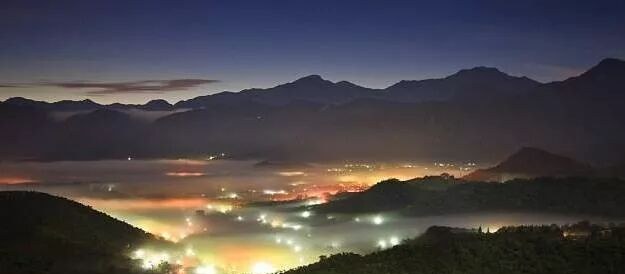
Third, only fixed asset investment is considered spending money, while neglecting creativity and planning—refusing to spend a single cent on intellectual investment and creative concepts.
Wang Jianlin recently sold 75 hotels and all of his cultural tourism projects to Sunac and Fuli. Rumors say it was due to pressure from debt and stock declines, but the real reason might be that Wanda’s tourism business simply wasn’t profitable. How do you recoup your investment with only over 200,000 tourists a year? Even with money, you can’t necessarily make tourism work.
In contrast, when Disneyland Shanghai opened, it netted nearly 10 billion yuan in its first year and recouped its investment within that same year! Back then, China’s richest man declared that because of Wanda’s presence in tourism, Disney wouldn’t make money for 20 years. That sure backfired.
Why can’t Wang Jianlin compete with Disney?
First, having money alone doesn’t guarantee success in tourism! This industry craves stunning creativity, not just cash.
Second, it’s not enough to have a team with strong execution skills; tourism needs people with wild imaginations! A rigid, iron-army mentality just doesn’t cut it.
Third, people who build houses don’t understand how to “build” castles—how can a mind packed with floor-area ratios conjure up Mickey Mouse? Disney has countless original creations and IPs! It’s these breathtaking creative concepts that determine the fate of a tourist attraction—something Chinese tycoons with their “money is everything” mentality just can’t grasp.
In 2016, Disney’s global revenue hit $55.6 billion, exceeding the combined total of China’s internet giants Baidu, Alibaba, and Tencent. What keeps this century-old company outpacing China’s internet firms? First, creativity; second, creativity; and third, creativity. Because these creative original cartoon characters have won over billions of fans worldwide. Wanda, on the other hand, just buys roller coasters and amusement equipment, completely missing the soul of tourism competition: creativity.
Investing hundreds of billions with a third-grade level of creativity—that’s why Wanda struggles to profit from tourism. Intangible investment outweighs tangible investment! Intangible investment guides tangible investment! Intangible investment amounts to brilliant creative planning. Without outstanding creative concepts, no amount of money is worth a dime!

Fourth, there is a lack of clear understanding of the scenic area’s resources, positioning, and products, leading to blind optimism, blind decision-making, blind planning, and blind investment.
First- and second-tier tourism resources were already fully developed back in the 1990s. Most of the tourist attractions left today are third- and fourth-tier resources. Many tourism investors suffer from four kinds of unclear understanding:
First, an unclear understanding of resource quality.
As soon as they see mountains, water, forests, and fresh air, they get carried away. They build a gate, pave a road, go on study tours to copy and imitate things from other places, and then start charging admission. Little do they realize that what they find novel is old news to tourists, and the result is an empty, desolate place.
Second, an unclear understanding of tourism planning and design companies.
Mediocre tourism planning will certainly leave you losing your entire investment! Thousands of bosses in China have already lost their fortunes on tourist attractions due to mediocre tourism planning.
Third, an unclear understanding of the scenic area’s positioning, leading to a generic positioning and weak appeal.
Only by attracting tourists from across the country can a scenic area sustain development, grow stronger, and become bigger. Therefore, the positioning must be national, never regional.
Fourth, an unclear understanding of the scenic area’s products.
Most bosses understand their scenic area’s products this way: they must develop projects and products they have seen or heard of, as if others have already proven they can succeed, so copying them feels safe and reassuring. Additionally, they want things to be lively. Bosses do have an innate market sense, or they wouldn’t be bosses. They place great importance on projects that draw crowds and create buzz, like amusement parks, roller coasters, singing and dancing, and the like. These clichéd projects aren’t necessarily bad—they can indeed bring some foot traffic, at least for the first few years. However, these are standard projects, focused primarily on local residents and nearby crowds. After a few visits, this limited audience will leave you. These projects lack long-term vitality and lasting appeal.

What’s the future of tourist attractions?
Tourism has long moved past simply selling history and culture—what’s even more powerful is selling dreams and the future! That’s when ordinary tourist attractions get their chance to shine!
The key is to tap into tourists’ psychology, leverage your own strengths, and creatively develop unexpected sights and products. That’s how you survive and thrive, even surpassing others from behind. The trick lies in mastering three steps:
1. Have an unforgettable tourism image positioning.
The key to tourism image positioning is to achieve “three ones”: First, be unique—what others don’t have, scarcity is productivity! Second, be the best in the world—authority brings persuasion! Third, be consistent and persistent—persistence beats perfection!
To sum it up: the only one, the first one, and the focused one. Only a tourism image positioning that meets these three criteria is truly successful.
For example, Dali’s creative tourism slogans “Wind, Flowers, Snow, Moon—Carefree Dali” and “Wind, Flowers, Snow, Moon—Easy Dali” moved it beyond the cliché of “Home of the Five Golden Flowers” and toward a world-class new image! “Wind, Flowers, Snow, Moon” is a physical sensation, “Carefree and Easy” is a mental one—they grab both your body and mind, so where can you run! “Wind, Flowers, Snow, Moon” became Dali’s super brand and one of China’s most successful tourism image positionings!
With a killer tourism image positioning, the name is right, words flow, and success follows! Positioning sets the direction! Positioning determines success or failure! Otherwise, a leader’s positioning, a scholar’s positioning, or a contest-based positioning will make tourism development lose its direction and momentum.
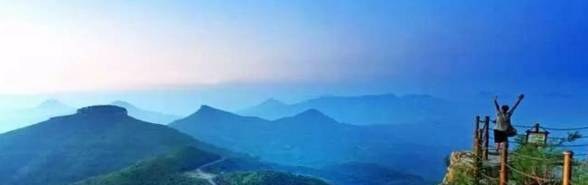
2. You need an absolutely breathtaking world wonder, even if it’s a man-made creation.
In over 3,000 years of history, which county or city in China doesn’t have eco-tourism? Which doesn’t have mountains, rivers, or forests? Which doesn’t have ancient towns? Which doesn’t have former residences of famous people? Find a tourism planning company to categorize, zone, route, and copy-paste from books based on your city’s tourism resources—what’s the point of doing that kind of planning?
China’s top-tier and second-tier tourism resources were already fully developed 20 years ago. As for the leftovers, I won’t flatter them—they’re all third-tier or below! So, to all the officials and investors, you must take this to heart: Never overestimate your tourism resources! Never stick to conventional thinking! Because you’re holding cards that are third-tier at best. If you still play by the usual rules, don’t bother! You’d be better off doing something else! Third-tier cards demand a super-first-class strategy! Third-tier resources need out-of-the-box thinking. That’s your only shot at success.
What does super-first-class, out-of-the-box thinking mean? Put simply, it means having at least one world wonder! How many mountains, forests, or rivers you have doesn’t matter at all. Tourism is about selling creativity, selling marvels. With creativity and a marvel, even a barren patch of land will be trampled by footprints from all over the country. Don’t think green hills and clear waters alone qualify you for tourism—that’s not special at all, there’s too much of it. Spending hundreds of millions on a mediocre scenic spot that can’t sell—you can see that happening in every county and city across China.

3. Create a jaw-dropping marketing event.
In many Chinese cities, tourism festivals and events end up being nothing more than self-entertainment. The result is often “hot in the first year, cold in the second, and loss-making by the third or fourth!” Truly successful and sustainable events are extremely rare. Most are barely kept alive by the government’s full-scale efforts at the city or county level.
It can be said that 90% of tourism festivals are just putting on a brave face. Why can’t they sustain? High costs, heavy manpower, and a lack of creativity—most are just impulsive decisions by officials, turning into self-indulgent spectacles propped up by public funds.
The key to tourism marketing is bold creativity and clever concepts that capture the media’s attention. Then, leverage free media coverage to spread the word about your destination far and wide. That’s the only true way to succeed in tourism marketing.We’ve entered an era where everyone is getting into tourism development, and competition is incredibly intense. Conventional tourism products and projects can hardly survive anymore—only extraordinary and mind-blowing projects can ensure survival and growth! You need to create projects that go beyond imagination, projects that shock the world, and projects that defy expectations. Only by being new, unique, and special can you truly understand the way of tourism development.
For China’s tourist attractions to succeed, first, take the success or failure of a project as a matter of life and death. Review the best experts nationwide and find the plan that moves you the most and has the strongest market appeal. Second, it’s okay if several planning drafts are done in vain, but never rush into blind implementation. With decades of market experience and instinct, if something feels off, wait—keep searching until you land on the right idea before acting. Third, learn to use Baidu; if there’s something you don’t understand, look it up online.
For more exciting content, follow the Scenic Area Marketing Practical Guide public account and check the historical messages!
-
The hard times for tourism workers have just begun. Chinese tourism needs a sober voice!
-
The “Great Leap Forward” in tourism: Why is there no profit after investing so much money?
-
[In-depth Analysis]: Where is Chinese tourism heading in 2017?
-
If scenic spots don’t make money during holidays, the whole year will be tough! Holiday marketing planning guide!
-
Rural tourism won’t last long. Don’t let your money turn into tears flying in the air!
-
The survival status of small and medium-sized scenic spots is worrying!
-
Scenic spots all waive tickets—who can save them from life and death?!
-
Scenic area marketing is misled by too many theories. In frontline work, take your own path and let the experts go to hell!
-
[Practical Summary]: Scenic spots should stop price wars. Whoever cuts prices hardest closes first. Differentiated competition is the way to go!
-
[Practical Summary]: Scenic area marketing—let the scenic spot survive first!
-
In the grim second half of 2017, how can small and medium-sized scenic spots survive the crisis?! Attached marketing emergency practical tricks.
-
Scenic spots: Don’t be killed by your own positioning!!
-
Just take the buzz lightly. The Forbidden City selling tickets entirely online doesn’t represent the future of small and medium-sized scenic spots!
-
[Frontline Scenic Area Investigation Report]: Difficulties and problems in scenic area operations are not the fault of tourism workers, but they need tourism workers to solve!
-
Let tourists sprint and show off on cliffs—the next explosive project for landscape scenic spots: Via Ferrata!
China’s first practical public account for scenic areas!
Effectively solving market issues for scenic spots!
Scan the QR code to follow the Scenic Area Marketing Practical Guide public account
Tag navigation
Explore articles that share the same tag and jump to tag pages.
Warum fallen Chefs immer wieder in dieselbe Grube? Was ist los mit Chinas Touristenattraktionen?!!
![Marktanalyse der chinesischen Campingindustrie 2021: Rasantes Branchenwachstum [Diagramm]](/images/article/article-1779590344-d0e546/image_2.jpg)
Marktanalyse der chinesischen Campingindustrie 2021: Rasantes Branchenwachstum [Diagramm]
Warum fallen alle Chefs in dieselbe Grube? Was ist los mit den chinesischen Touristenattraktionen?!!
Category navigation
Jump to the article’s category or explore nearby topics.
Branchenpremiere in China! „China Tourist Attraction Happiness Index (THI)“ offiziell veröffentlicht
Jump to the more recent article in this topic series.
Die Leidenschaft der chinesischen Touristenattraktionen!
Continue to the previous article in this series.
Related stories
More articles from the same category and nearby topics.
Warum fallen alle Chefs in dieselbe Grube? Was ist los mit den chinesischen Touristenattraktionen?!!
Warum fallen Chefs immer wieder in dieselbe Grube? Was ist los mit Chinas Touristenattraktionen?!!