Intangible Heritage Crafts, a Cultural Thread | Traditional Chinese Craft Series Experience Classes Are Here!
Read, share, and explore related stories through curated categories and tags.



Intangible Cultural Heritage Handcrafts
A Thread of Cultural Essence
Traditional Chinese Craft Experience Classes Are Here!

Song Brocade · Gold and Silver Inlay · Cloisonné
Explore the real history settled by time
Step into the time-honored intangible cultural heritage
Specially designed for college students
A series of traditional craft experience courses is coming!
The courses focus on three national intangible cultural heritage techniques:
Song Brocade, Gold and Silver Inlay, and Cloisonné
Guiding you to personally touch
From the Han and Tang dynasties to the Song dynasty
From the court to the folk
The warmth of craftsmanship
Between weaving, inlaying, and enamel filling
Turning vivid pieces of history
Into your own creations
【Course Introduction & Event Information】
Course Philosophy
One-time cultivation, leapfrog growth
Core module of the course
“Carrying Forward Civilization”
Extended course module
Community Comprehensive Practice Series in Sports, Arts, and Labor
Course Supervisor
Guliziba, School of Psychology and Cognitive Science
【Instructor】
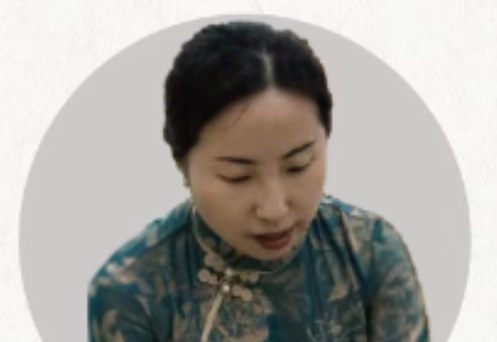
Liu Yan, Distinguished Research Fellow at the Center for Intangible Cultural Heritage Inheritance and Application Research, East China Normal University; Shanghai Intangible Cultural Heritage Instructor in Traditional Incense Making Craft; National Senior Floral Artist; Independent Curator; Member of Yan Wenhua’s Ecological Art Therapy Team at East China Normal University; Librarian at East China Normal University Library.

Course Overview

This traditional craft experience course consists of three sessions, and registration requires full participation. Below are the details for each session.
01
Session 1: Making Song Brocade PendantsSong Brocade originated in the Song Dynasty (flourishing during the Southern Song period). Since its main production area was Suzhou, it was called “Suzhou Song Brocade,” and together with Nanjing Yunjin and Sichuan Shu Brocade, it is known as one of China’s three famous brocades. Initially, it was exclusively used for mounting calligraphy and paintings and making court garments, prized for its firm yet soft texture, elegant patterns, and antique colors, carrying a thousand years of Jiangnan cultural heritage.
After a millennium of development, Song Brocade gradually moved from imperial use to the public, and in 2009, it was inscribed on UNESCO’s Representative List of the Intangible Cultural Heritage of Humanity. Its craftsmanship is extremely intricate, using a “three-end twill” weave where both warp and weft threads reveal patterns, requiring dozens of steps including silk refining, dyeing, pattern design, pattern drafting with knotting, and loom weaving. With rich color layers and patterns that naturally transition under different lighting, it is hailed as the “crown of brocades.”
This Song Brocade pendant-making activity aims to bring everyone close to this intangible heritage treasure through delicate small brocade pieces. By blending traditional patterns with modern aesthetics, these pieces serve both as auspicious personal accessories for blessings and as vivid carriers of China’s weaving wisdom.
02
Course 2: Gold and Silver Inlay ExperienceGold and silver inlay, an outstanding metal decorative technique from ancient China, began in the Shang and Zhou dynasties and flourished in the Warring States period, Qin, and Han dynasties, earning its place as a gem of the Bronze Age. The method ingeniously leverages the contrasting luster of gold, silver, and bronze—creating grooves on the vessel, embedding gold threads or sheets, then polishing to form brilliant patterns, achieving a magnificent dialogue between metals.
This craft requires multiple precise steps: first, carving patterned grooves into the bronze surface, then embedding gold threads and silver sheets, smoothing them out, and finally polishing the piece until it gleams like new. The patterns often feature auspicious clouds or mythical beasts, combining decorative beauty with symbolic meaning.
The Han dynasty marked the peak of gold and silver inlay, exemplified by the gold-inlaid Boshan incense burner unearthed from a Han tomb, adorned with mountains and mythical creatures in stunning luxury. Today, this ancient skill continues to be passed down, serving as an artistic bridge connecting past and present. By participating in gold and silver inlay workshops, you can set gold threads by hand, touch the craftsmanship of a thousand years, and experience the timeless charm of metal intertwined with time.03
Course 3: Filigree Enamel ExperienceCloisonné, also known as “Jingtai Lan,” is a shining jewel of traditional Chinese craftsmanship. With gold wire as its bones and enamel glaze as its soul, it fuses the beauty of metal and minerals across a thousand years. This art originated in the Yuan Dynasty and flourished during the Jingtai reign of the Ming Dynasty, earning its name from the frequent use of blue glaze. Later, it expanded to include vibrant reds, greens, golds, and more, becoming a treasured imperial luxury.
The process is intricate and exquisite: a red copper base is first shaped, then flattened gold or copper wires are bent and inlaid into the surface according to a pattern, forming outlines. Enamel glaze is then filled in, and the piece is fired repeatedly at 800°C, turning the mineral pigments into a gem-like luster. Finally, it is polished and gilded, rendering the object both luxurious and enduring. Each piece goes through dozens of steps, blending the liveliness of painting with the weight of metal.
The cloisonné collections in the Palace Museum still gleam with their former glory. Today, this craft is listed as a national intangible cultural heritage. By hand-twisting wires and dotting the glaze, one can feel the essence of traditional craftsmanship as the enamel flows, embodying the timeless charm of Eastern aesthetics within a small space.
【Course Schedule】
Format: In-person trial class (3 sessions total)
Eligibility: All currently enrolled students (20 spots available)【Registration Method】
Scan the QR code below to register in the second classroom system.Step into the Classroom of Traditional Crafts
Weave to nurture the soul, inlay to let time settle
Limited spots available
Looking forward to meeting like-minded you
On a journey to encounter traditional craftsmanship
Where fingertips converse with time, savoring the charm of ancient eleganceSource | Daxia Academy
Tag navigation
Explore articles that share the same tag and jump to tag pages.

Leipziger Kunstsaison in Shanghai: Wöchentliche Highlights

Geographieunterricht für die Geschmacksknospen | Wie lässt der „Berg-und-Fluss-Genuss-Mikroraum“ Berge und Flüsse schmecken?

Achtseitige Sonderbeilage der China Tourism News! Wenn die Schätze Shandongs zu einer langen Rolle der Qi- und Lu-Kultur werden
Category navigation
Jump to the article’s category or explore nearby topics.
Tradition beleben, Design transformieren, östliches Paradigma — Eröffnung der Ausstellung zur Wiederbelebung des traditionellen chinesischen Festtagsdesigns
Jump to the more recent article in this topic series.
CCTV Top-IP kommt! „China im immateriellen Kulturerbe“ beginnt Dreharbeiten in Qufu
Continue to the previous article in this series.
Related stories
More articles from the same category and nearby topics.