China's First! "China Tourist Attractions Happiness Index (THI)" Officially Released
Read, share, and explore related stories through curated categories and tags.
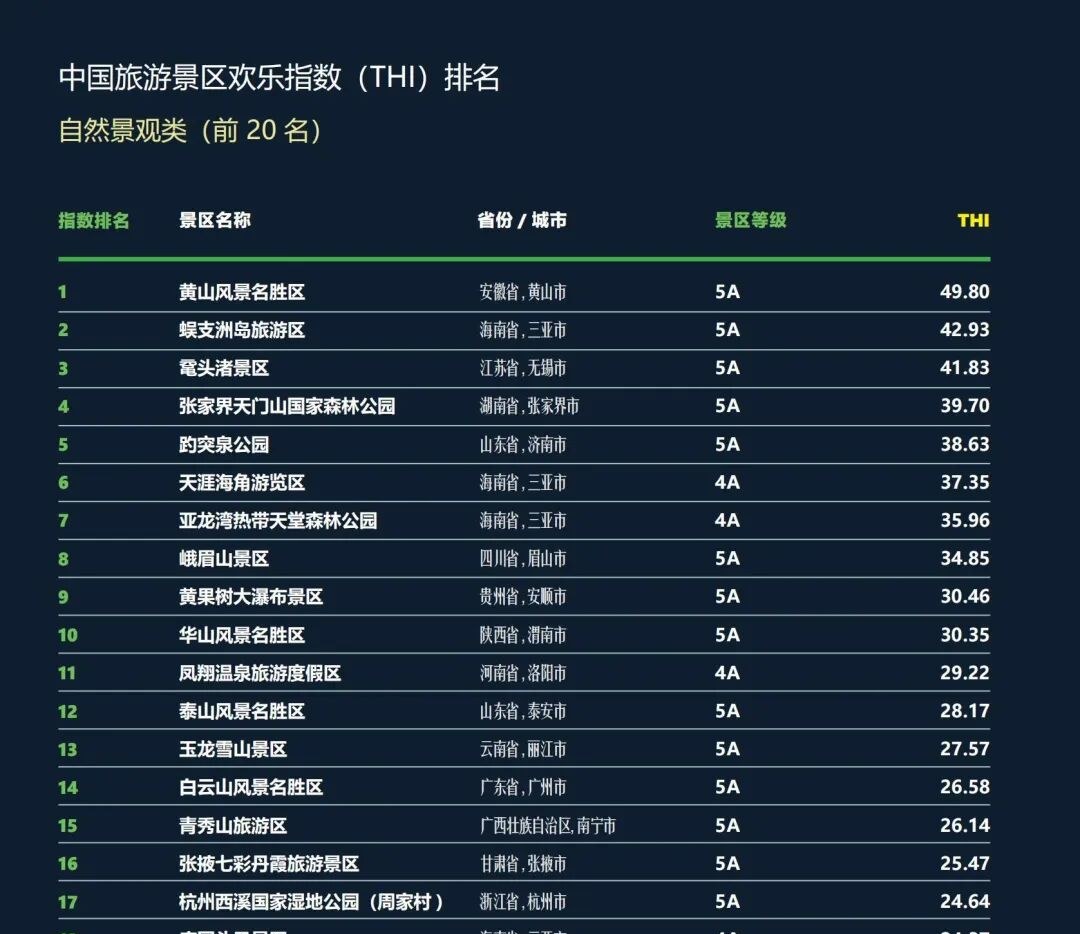
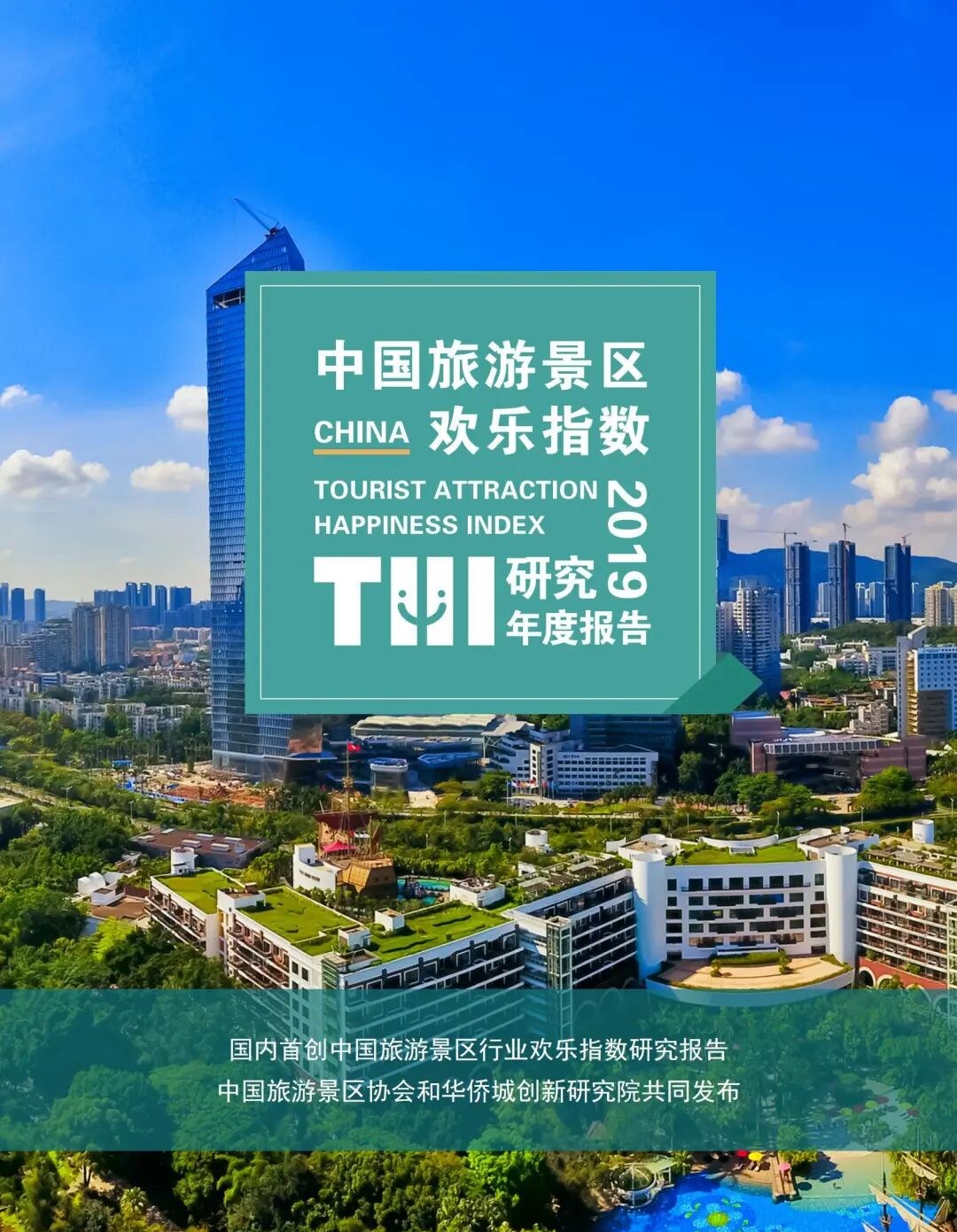
On April 20, the “China Tourist Attractions Happiness Index (THI)”, co-developed by the China Tourist Attractions Association and OCT Innovation Research Institute, was officially released. The index includes the “Top 100 China Tourist Attractions Happiness Index (THI)” and the top 20 happiness indices in categories such as natural landscapes, cultural landscapes, museums, rural pastoral areas, and modern entertainment. The Palace Museum in Beijing, Shanghai Disneyland, and the Chengdu Research Base of Giant Panda Breeding took the top three spots in the 2019 China Tourist Attractions Happiness Index (THI).
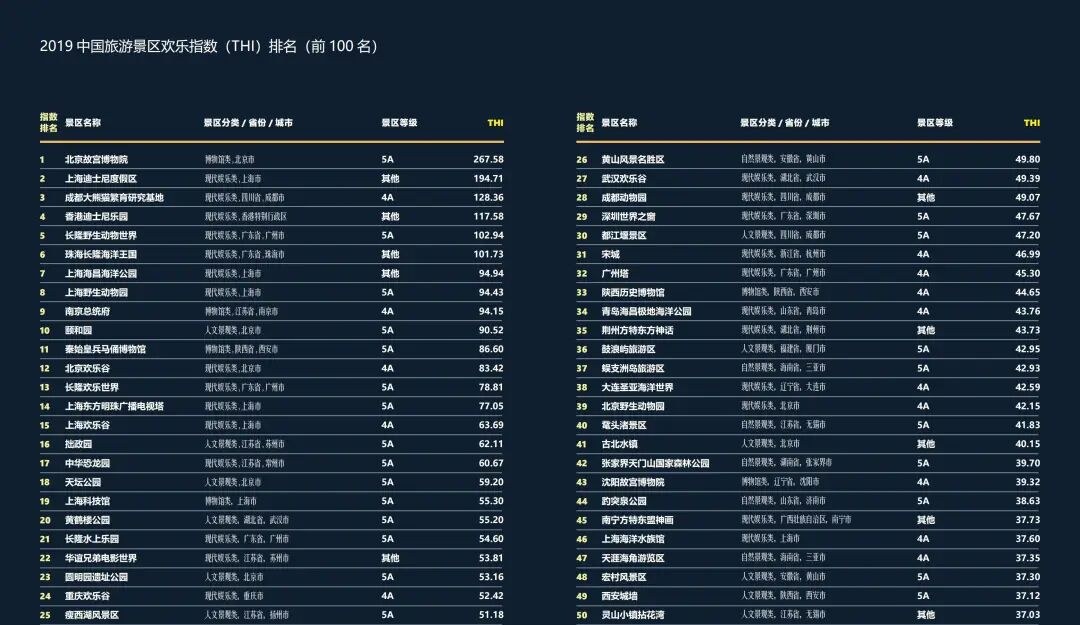
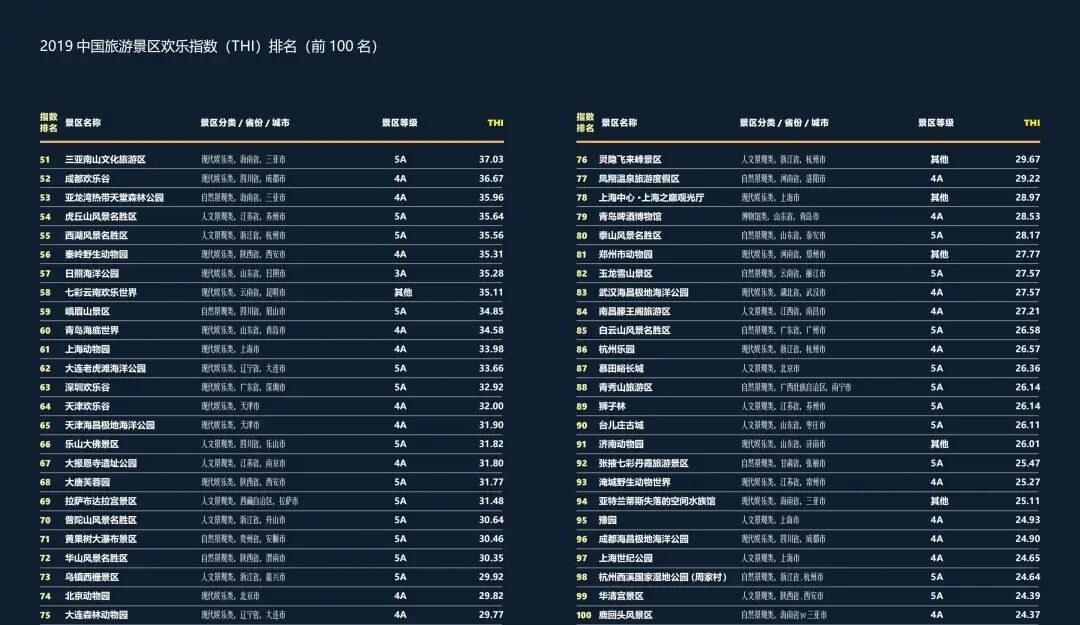
▲ Top 100 China Tourist Attractions Happiness Index (THI) Rankings
<
List of the Top 20 Chinese Tourist Attractions by Natural Scenery Joy Index
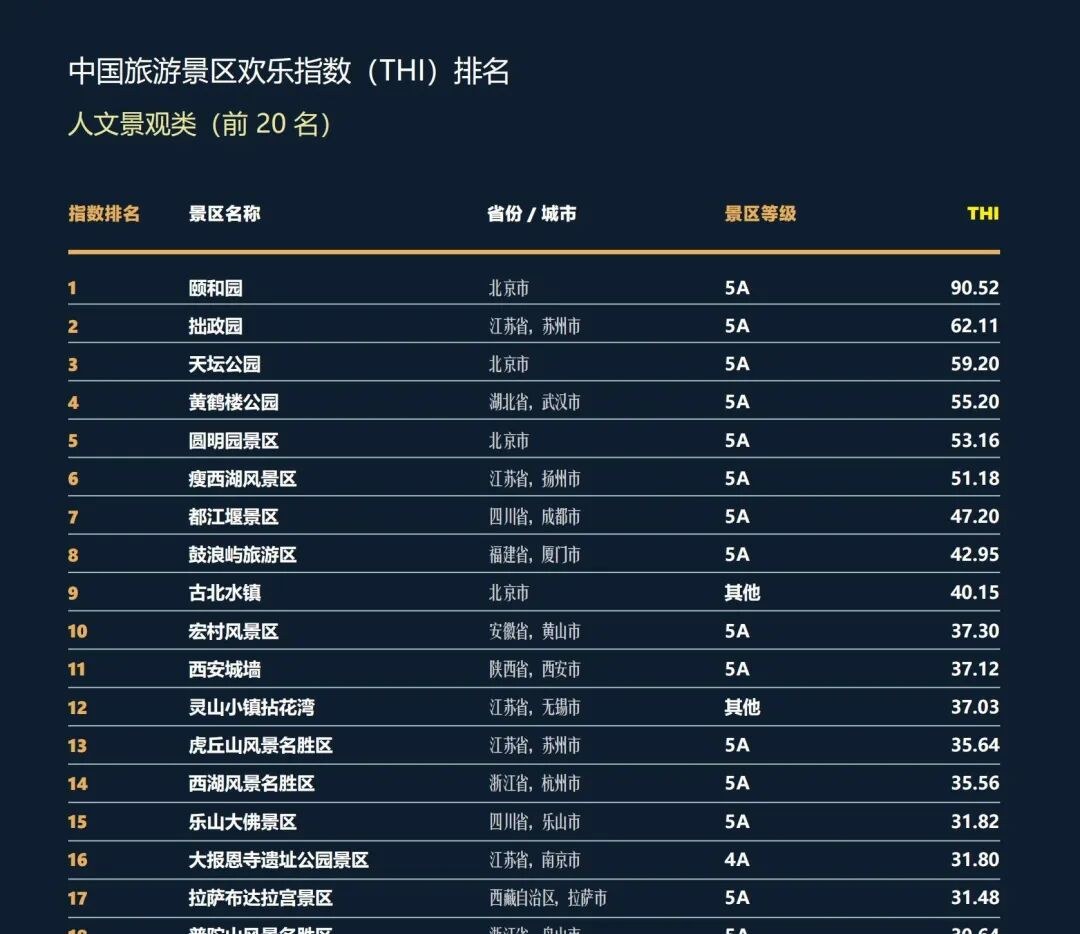
▲Top 20 Chinese Tourist Attractions by Joy Index in the Cultural Landscape Category
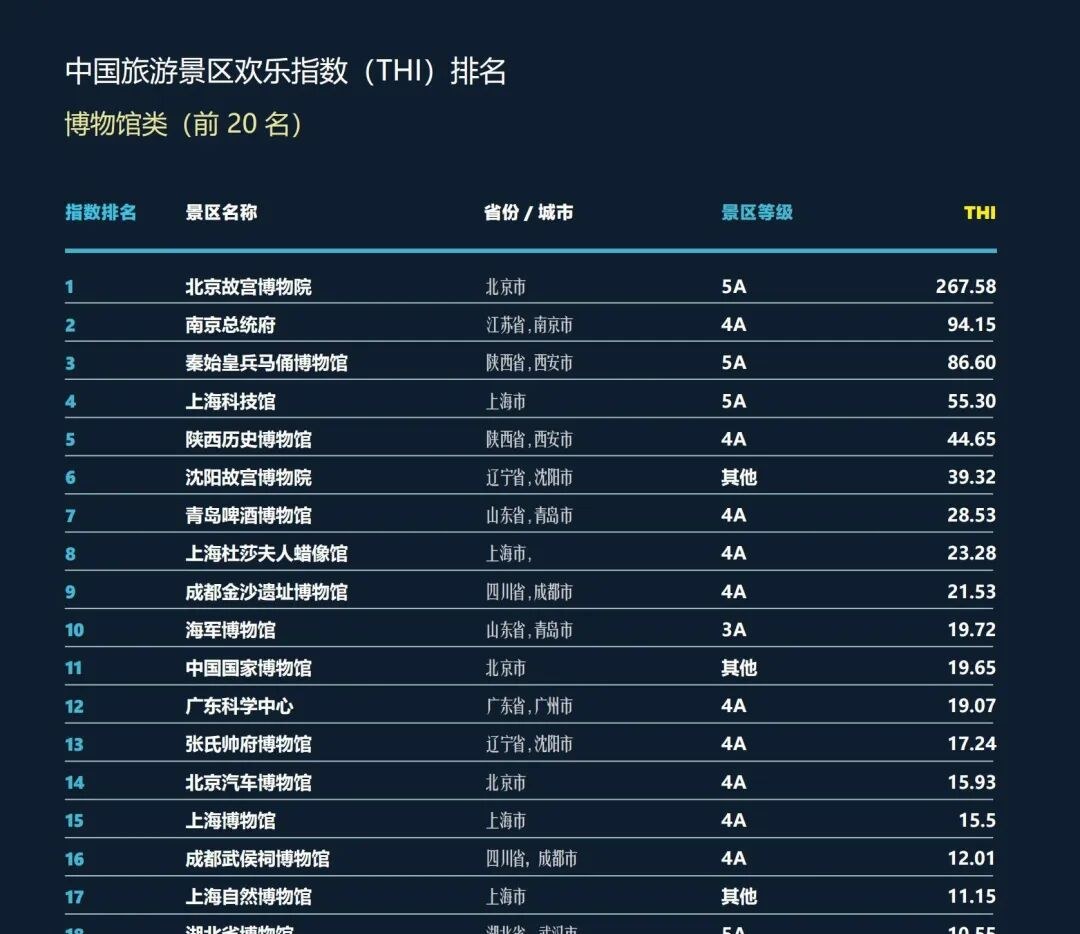
▲Top 20 Chinese Tourist Attractions Museum Joy Index List
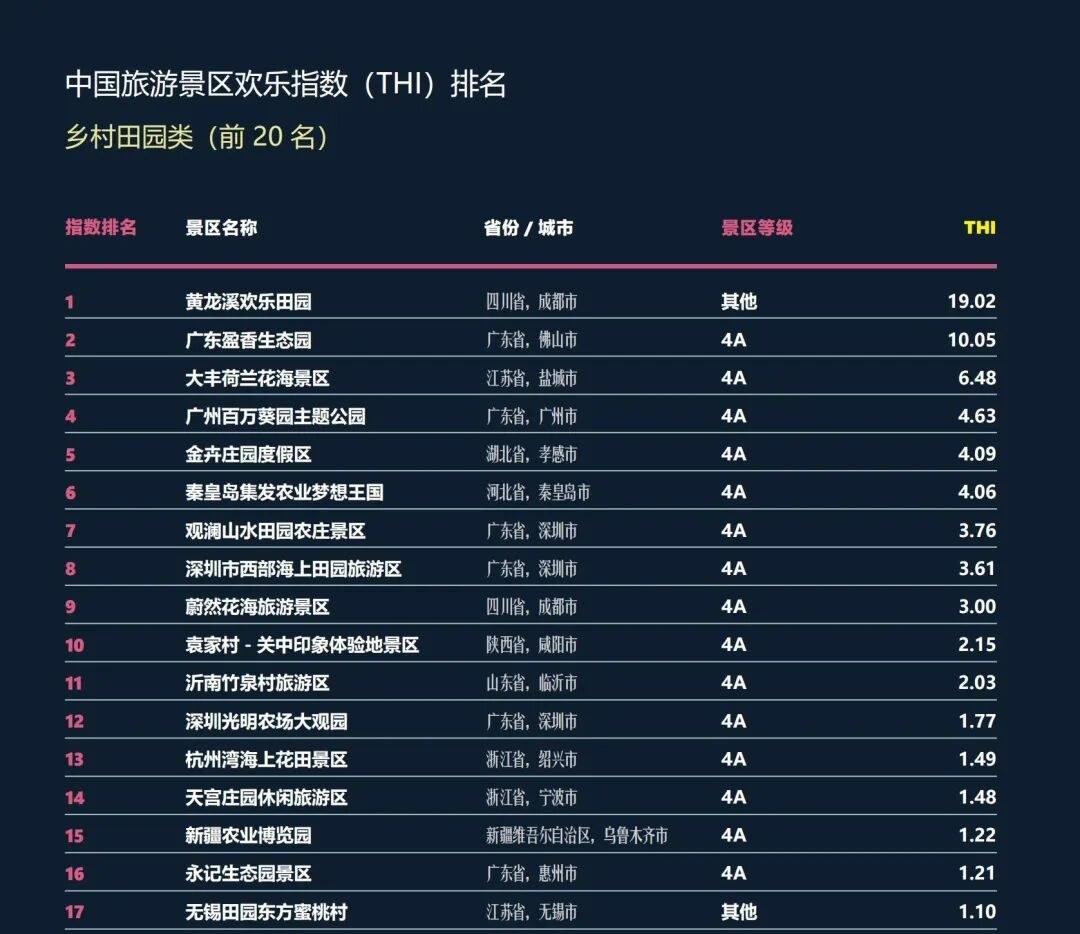
▲Top 20 Happy Index Rankings for Rural Pastoral Scenic Spots in China
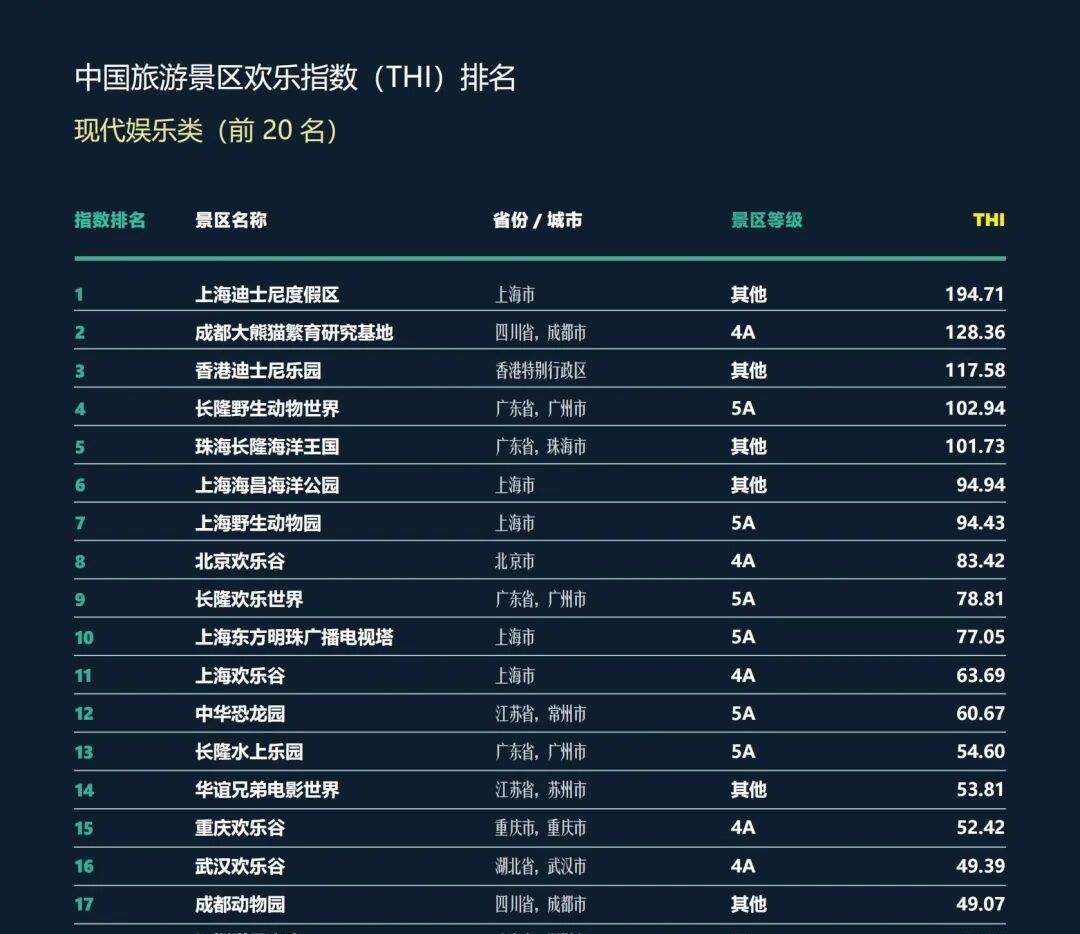
▲Top 20 List of Modern Entertainment Joy Index for Chinese Tourist Attractions
<
“The China Tourist Attraction Joy Index (THI)” is designed to create a fair, scientific, and socially influential tourism index system with industry guidance. Based on the application of big data in tourism, it uses impartial and objective principles to quantitatively and scientifically analyze tourists’ comprehensive experience reviews, reflecting the characteristics of the times in China’s tourism industry development. This index product not only helps with the operation of scenic spots but also provides valuable references for tourists when traveling. The “Joy Index” and its ranking are pioneering in the national tourism industry, with its core algorithm having applied for a patent with the National Intellectual Property Administration.
01
The Era of Online Tourism
Valuing Tourist Experience
According to professional analysis, the number of users in China’s online tourism market reached 360 million in 2018, and it is estimated to hit 390 million in 2019. The internet is driving tourism online and making it smarter, offering tourists a more convenient experience. The shift from offline travel to online travel, and “online travel + offline travel,” has become a clear trend. As it stands, the contradiction between people’s growing needs for a better life and unbalanced and inadequate development also exists in the tourism industry, with a mismatch between the renewal and development of scenic spots and the needs of tourists. As the scale of the industry rapidly expands, the quality of scenic spots represented by “food, accommodation, transportation, sightseeing, shopping, and entertainment” cannot be overlooked.

▲Shenzhen Happy Valley
With the development of mobile internet and online travel, tourists have gradually become accustomed to expressing their opinions online and choosing scenic spots based on online reviews. However, online reviews have drawbacks such as large data volume, fragmentation, and poor intuitiveness. At the same time, tourist experiences are influenced by multiple factors of scenic spots, and different types of scenic spots bring different experiences to tourists. Tourists have strong decision-making goals before traveling. How they quickly choose scenic spots with strong experiential appeal based on their own purposes is a key concern for scenic spot managers. Generally speaking, tourist reviews can reflect the comprehensive emotional experience value of tourists towards scenic spots. Therefore, the application of big data in the evaluation, assessment, selection, management, and industry guidance of scenic spots has profound significance.
02
Deep Application of Big Data Tools
Helping Scenic Spots Improve Service Quality
The “China Scenic Spots Happiness Index (THI)” research uses big data mining and analysis technology, introducing semantic analysis technology into the field of tourism evaluation, and improving traditional evaluation methods from the underlying logic of the research. The Happiness Index (THI) selects 1,181 scenic spots nationwide as samples and conducts a one-year tracking study of tourism big data. The classification of scenic spots in the research is based on the group standard “Classification of Scenic Spots” (T/CTAA0001-2019) issued by the China Tourist Attractions Association. The Happiness Index can not only conduct overall analysis of the entire industry, but also analyze the value judgments and problem diagnosis of micro-subjects.
The Happiness Index is based on online review data from tourists after their visits. Through semantic recognition of reviews, it transforms abstract emotions, feelings, and experiences into intuitive, visible, and measurable data. Compared with traditional scenic spot evaluation and analysis systems, this bottom-up evaluation of scenic spots by tourists can more accurately and objectively reflect tourist experiences. It provides a support tool for accurately and quickly grasping industry trends and tracking consumer preferences. At the same time, relying on the big data platform, it can achieve large-scale coverage from the tourist perspective and experience orientation, enabling round-the-clock monitoring.

▲ Chengdu Huanglongxi · Happy Farmland
Compared to tourist volume rankings, the Happy Index ranking of scenic spots can intuitively and quickly reflect market feedback at different times, dynamically showcasing the level of tourism services. Operators can adjust their business strategies in a timely manner based on feedback from different periods and the entire year. For tourists, purchasing decisions for tourism products are increasingly reliant on online word-of-mouth. The Happy Index ranking aligns with user needs, providing a more accurate and convenient reference for tourists when choosing scenic spots.
03
Innovative Tourism Research
Gaining Insights into the Industry’s Future
The “China Tourist Attractions Happy Index (THI)” has brought about a significant transformation in China’s tourism evaluation through innovations in thinking, methods, models, indicators, and formats, propelling tourism evaluation into the era of big data.
The China Tourist Attractions Happy Index (THI) study closely aligns with market and tourist demands. Using algorithm models, it measures the popularity and tourist satisfaction of scenic spots, gaining insights into new trends, directions, characteristics, and tourist needs in the development of scenic areas. The study utilizes new technologies to integrate fragmented data, helping scenic spots enhance smart management and operations, effectively improving the service levels and operational efficiency of cultural tourism enterprises. It focuses on three key innovations: first, it shifts away from traditional methods of evaluating scenic spot quality through expert reviews and sample surveys, adopting big data research methods to objectively and systematically reflect operations and quality; second, it changes top-down evaluation systems, assessing scenic spots objectively from the perspective of tourist experiences; third, it develops algorithm models to turn abstract emotions, feelings, and experiences into intuitive, visual, and measurable data.
In the future, the China Tourist Attractions Happy Index (THI) study will continue to deepen, expanding the research samples, enriching the research content, and forming more comprehensive Happy Index reports. At the same time, it will tap into the hidden value of tourism big data, using this research as a foundation to broaden the scope of index studies and build a composite index system encompassing criteria for evaluating China’s tourist attractions.
——END——
Recommended Reading


Editor-in-Charge丨Liu Lingchen
Issue Editor丨Yang Yawen, Wu Wanying
Source丨OCT Innovation Research Institute
Tag navigation
Explore articles that share the same tag and jump to tag pages.



Category navigation
Jump to the article’s category or explore nearby topics.
Warum fallen Chefs immer wieder in dieselbe Grube? Was ist los mit Chinas Touristenattraktionen?!!
Jump to the more recent article in this topic series.
Wo liegt die Zukunft der chinesischen Touristenattraktionen?!
Continue to the previous article in this series.
Related stories
More articles from the same category and nearby topics.