What is the Future of Tourist Attractions in China?!
Read, share, and explore related stories through curated categories and tags.

China’s tourism attractions practical think tank, a real-world trendsetter for scenic spots. Focused on industry dynamics, it gathers the most practical and innovative cases and success stories from various attractions, dedicated to providing operational pain point solutions for tourist destinations.
On July 25, Wei Xiao’an, chief expert of the World Tourism Cities Federation and president of the Leisure & Vacation Branch of the China Tourism Association, delivered a keynote speech at the 5th China Scenic Area Innovation Development Forum and the 2nd Fifth Council Meeting of the China Tourism Attractions Association, addressing the future directions, misconceptions, and reflections on scenic area development.
01. There’s a saying that China is shifting from a sightseeing tourism era to a leisure vacation era. I don’t quite agree with that. It’s still a traditional way of thinking—black and white, either-or.
The real direction for scenic spots going forward is a composite development model, where products are integrated and development is diversified.
There’s no shift from one thing to another; scenic spots cater to the demands of sightseeing tourists. When we analyze the structure of scenic spots, it involves types, regions, affiliations, and grades. When we do trend analysis, it covers current status, development, changes, and so on. At the core, it’s all about demand.
In my view, scenic spots are eternal. Because first-time travelers are always chasing scenic spots; their first destination is inevitably about exploring them.
This year, Qinghai will become a highlight of Chinese tourism. Most people are visiting for the first time. What do they come to see on their first trip? They won’t come to Qinghai for leisure vacation—they must be coming to see the scenic spots.
Hainan is another highlight. Chinese people used to go to Southeast Asia for leisure vacations, but with the pandemic this year, nobody can go abroad. Japan and Korea are off the table, so people who want to vacation go to Hainan. That’s why Hainan has been packed for the past two months. Especially with the new duty-free policy and the constantly changing situation, opportunities are there for all of us.
The so-called shift from scenic spot tourism to all-for-one tourism is also a false proposition. I’ve never agreed with that.
Scenic spots are ever-changing, yet scenic spots are eternal. They’re always evolving with fierce market competition, so we need to adapt. In the past, many scenic spots relied on resource monopolies; now, it’s about operational innovation.
A hot spot in Qinghai is Chaka Salt Lake—the Mirror of the Sky. Why didn’t it take off years ago, despite being there for so long? Why is it booming this year?
Simple—market demand has arrived.
Lately, many people say they want to go to Chaka Salt Lake. I fully support that, but everyone should be mentally prepared. The reality and the photos are too different. Why? Because as a scenic spot, it’s still underdeveloped. If everyone goes there with sky-high expectations and finds a big gap, they’ll complain when they come back. That’s a challenge for Qinghai’s tourism development.
For the future of scenic spots, I’ve summed it up in four points:
First, regional development.
The days of relying on a single scenic spot to dominate the market are over. China’s top-tier sightseeing resources entered the market in the 1980s, like the Forbidden City and the Terracotta Warriors as cultural attractions, and Huangshan and Jiuzhaigou as natural ones. Even today, these four places remain icons of Chinese tourism and global benchmarks. Second-tier sightseeing resources entered the market in the 1990s. Now, we’re promoting third-tier resources. It’s tough for third-tier resources to go nationwide.
Second, immersive experiences.
Third, diversified models.
Fourth, lifestyle-oriented consumption.
02. Some misconceptions have emerged in the development of the scenic spot industry in recent years, mainly including the following aspects:
Misconception about supply and demand: Many investors believe that scenic spots are in short supply and can still be developed on a large scale. This judgment is fundamentally wrong. In the past two years, I have seen many scenic spots that have died. Some are under heavy investment and bustling with construction. When I visited one, I said this project would definitely fail, and it did. But investors have misconceptions. In fact, they lack a true understanding of the market.
Misconception about investment: The belief that China has unlimited resources and that grabbing anything makes a good project is another misconception. As I just said, first-class tourism and sightseeing resources are basically gone, and second-class ones have entered the market. How can resources be unlimited? However, some first-class leisure and vacation resources still exist, so that’s okay.
Misconception about operations: Thinking business is easy and that opening the door will bring in customers—is that possible? Now everyone realizes that even if you open the door wide, if guests don’t come, they just don’t come.
Misconception about structure: New consumption is emerging, but new products are insufficient. People still flock to scenic spots, including substituting consumption. China’s leisure and vacation products are severely lacking. Market demand has risen, but people still go to scenic spots, using these products as substitutes for leisure, vacation, and business travel products.
Misconception about levels: Relying solely on 5A ratings to cover everything, taking the part for the whole.
Misconception about consumption: Single ticket, single consumption, and widespread lack of secondary spending. Everyone knows secondary spending is needed, but what’s the root issue? We often say cultural creative products are insufficient, and we should learn from the Palace Museum, which has over 10,000 cultural creative products. Where else can you find cultural resources like that? They’ve been revitalized, so it’s great. Second in the country is Lingshan, which sells 200 million yuan in cultural products annually with a team of 60. Do we have such capability? Actually, at the core, the lack of secondary spending is mainly due to insufficient consumption time. Scenic spots are often one-day trips—people rush in and out, so when do they have time to shop? If they could stay overnight, they’d be more relaxed, and secondary spending would rise—eating, staying, buying things.
Misconception about construction: Emphasizing resources only, not products. Especially in western regions. Nationwide, in my assessment, Jiangnan (south of the Yangtze River) has the highest level of refinement. Jiangsu, Zhejiang, Shanghai, and extending to the Yangtze River Delta region can rival world-class levels. Next is Guangdong. The rest lack refinement.
Misconception about culture: Resource-oriented, lacking creativity; sightseeing-oriented, lacking activities. I once met an artist, the son of Mr. Wen Yiduo. He told me what he does—creating huge paintings and light scenes. But the technology was too backward back then. Now, with advanced technology, many companies are doing this, but I worry it’s a trend. In China, practice always starts as a craze and ends with a one-size-fits-all approach—everyone dies. That’s how the market works. If the market could be layered with division of labor, it would be mature.
Misconception about all-for-one tourism: Moving from spot tourism to all-for-one tourism, some places even advocate spotless tourism. I don’t believe it because it goes against the law. Without spots, where do you go? There must be a destination, and a destination’s first function is sightseeing. So spotless tourism is also a pseudo-proposition.
Misconception about ticket prices: Now I see government misguidance, difficulty in price reduction, and early death from free entry. State-owned scenic spots had a policy two years ago to reduce ticket prices by 30%, but since they’re state-owned, they had to comply. This year it continues. I ask: is there no cost? If a scenic spot can’t even cover costs by making money, why keep it open? Keeping it open is a pit, filling it daily. This goes against economic laws. To flaunt something that defies economic laws openly—I really don’t approve.
03. Regarding the future development of scenic spots, I have several basic judgments:
First, scenic spots remain the main consumption focus for Chinese tourists and are the top priority for development.
Second, the category structure of scenic spots is now diversifying, reflecting the diversity of demand. Natural sightseeing spots account for 57.3%, with visitor numbers at 88.4% and revenue at 90%, indicating that sightseeing tourism remains the mainstay.
Third, there is a mismatch between the total expansion of scenic spots and per-unit revenue and investment. On one hand, some projects involve huge investments but haven’t achieved proportional growth, meaning a lot of capital is sunk and wasted. On the other hand, the average scale is shrinking, indicating declining per-unit efficiency, so don’t assume scenic spots are cash cows that guarantee profits.
Fourth, the ticket prices of scenic spots are reasonable, and you could even say they’re not high. So why is there so much public outcry? What’s the reasoning?
It’s a case of overgeneralizing, using a few top-tier 5A spots to represent all. Especially this year, I’m really worried. During the pandemic, I feared that once things started to recover, we’d see vicious price wars. Times are tough already, and if you slash prices competitively, you get more visitors but less profit. Now it’s exceeded my expectations—some provinces have proposed completely free admission to scenic spots. I have to ask, do you even want to keep going? Tourism is an industry, and scenic spots are a key part of it. If you make everything free, are you that desperate to attract visitors?
Conversely, how much of an impact will that really have?
On July 14, the Ministry of Culture and Tourism announced that limited cross-provincial group tours could resume. Everyone got excited, but I said, what’s there to get excited about? Here’s another stat: in China’s tourism market, independent travelers account for 85%, with self-driving trips making up 60%, while group tours are only 15%. Independent travel was already allowed in May, but did the market recover as hoped? 85% of the market opening up didn’t yield ideal results, so how much can opening up just 15%—even partially—really do?
Let me ask another question: even if all scenic spots become free, how many more visitors will that bring? Is it really about the money that people aren’t traveling? No, it’s not that. The fundamental issue is still underlying concerns.
Here’s another stat: China has about 30,000 scenic spots, but only one-third are A-rated. What about the rest? Why aren’t they in the ranking? Most are small spots, too big to fail but too small to thrive. As long as they meet demand without losing money, that’s fine. So I think we shouldn’t dismiss small scenic spots as worthless. It’s like running a street stall—if you can sell it, it’s a good product. My spot might not be A-rated, but it has a market. Some small spots are built for just a million or two, operate four or five months a year, and recoup costs in two years—those are good projects too.【Disclaimer】:The articles published and shared on this platform are solely for peer exchange and learning. Some data is sourced from the internet and has not been verified. It is not for commercial purposes, nor is it targeted at specific individuals or organizations. Please do not take it personally. Some content and images are sourced from the internet, with copyrights owned by the original creators. We apologize if the original author or source cannot be identified. If there are any copyright concerns or if any content involves infringement, please contact us via this backend. We will promptly remove it. Thank you.

Tourism planners from the scenic area!
We don’t just provide scenic area planning solutions
But also offer on-site services at the scenic area,
Ensuring the implementation effect of the plans.
Welcome scenic areas in need to cooperate and develop together!
Strength travels across China
Planning services for scenic areas
Sun Zhen: 18937189308
China’s practical think tank for scenic areas, the practical weather vane for scenic areas. Focus on industry trends, gather the most practical and novel practical cases and successful experiences from various scenic areas, and are committed to providing operational pain point solutions for tourism scenic areas.

Sun Zhen, founder of the public account “Scenic Area Marketing Practice,” researcher at the Institute of Cultural Tourism Research under the China Building Decoration Association, visiting professor at Shaanxi University of Technology, and特邀 expert advisor to multiple domestic tourism groups and scenic areas.
With over a decade of experience in tourism, he has traveled extensively across China, integrating top-tier resources from scenic areas and related industry chains. By combining the strengths of many, he advocates for “craftsmanship across China, planning to serve scenic areas.” He has worked at national 5A-level scenic spots such as Yao Mountain-Zhongyuan Big Buddha, South Taihang, China Lavender Manor, and Hanzhong Liping, accumulating rich practical experience. He founded the well-known self-media account “Scenic Area Marketing Practice” and authored numerous professional articles and case studies on scenic area marketing. A search for “scenic area Sun Zhen” on Baidu yields extensive content. He has served as a trainer for the first and second sessions of China’s Scenic Area Professional Managers, a lecturer for the third and fourth sessions of the China Flower Sea Alliance, and a lecturer at the China (Shanghai) Cultural Tourism Industry Development Summit.
For more highlights, follow the “Scenic Area Marketing Practice” official account and check historical messages!
- What exactly is scenic area planning? Without it, most of China’s scenic areas would be doomed to ruin!
- The curtain rises on bankruptcies among China’s scenic areas: who should be held accountable for the final outcome?
- The market won’t lie with you—most of China’s scenic areas are sick!
- Reflections after visiting thousands of scenic areas: how can scenic areas quickly transform and upgrade through secondary consumption projects?
- The road ahead is long and arduous—the difficulties facing small and medium-sized scenic areas will be hard to improve in the near future!
- [In-Depth Good Read]: Breaking inertia is key to the transformation of China’s tourism industry!
- The tricks of event planning for scenic areas!
- A watershed for China’s scenic areas will emerge in 2020!
- Ten trends for the future development of scenic areas!
- China’s scenic area marketing: how far is the gap between theory and reality?
- [Practical Summary]: Blindly imitating typical models in tourism projects is a disease with serious consequences that must be cured!
- Doing short video promotion well might be a lifeline for small and medium-sized scenic area marketing!
- Small and medium-sized scenic areas: facing competition from peers, have you sharpened your knife?
- Scenic areas should focus on high-tech tourism creativity—miss out on imaginative tourism attractions, and you might miss out on this era!
- Not every scenic area qualifies to be one—when scenic areas lose money, what does it have to do with managers? Listen to the frontline “little strong” in scenic areas!
- No road building, no house construction—a new approach to China’s mountain tourism development!
- In the world of TikTok, many scenic areas are walking the path to heaven or hell!
- Don’t be fooled by tourism plans—nine criteria help you distinguish the good from the bad!
- [Practical Summary]: Reflections on creating national 5A-level scenic areas!
- A single cut removes 1,186 scenic areas—behind the cruelty is the powerless, bleeding groan of countless scenic areas!
China’s first scenic area marketing practice official account!
Emphasizing practice and down-to-earth content—a good friend to tourism professionals!
[Important Reminder, Absolutely Practical]:
To solve market difficulties for scenic areas, click the title link below to read the article:
[Practical Planning]: Implement planning based on local conditions to master the core tools for creating internet-famous scenic areas!
Tag navigation
Explore articles that share the same tag and jump to tag pages.
Eine neue Ära des chinesischen Wintertourismus eröffnen – Analyse der Entwicklungstrends des Wintertourismus

Bericht zur Entwicklung des chinesischen Eis- und Schneetourismus 2020
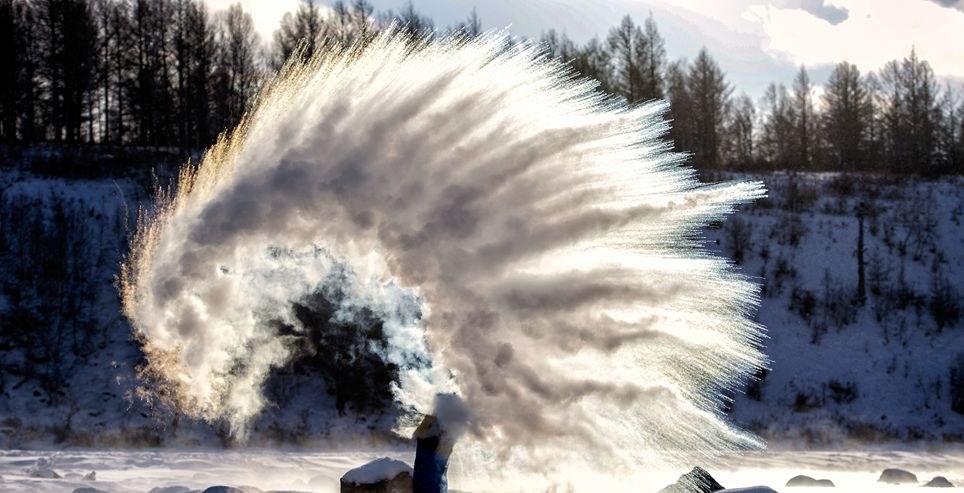
Das inländische Eis- und Schneetourismus boomt, wohin kann man reisen?
Category navigation
Jump to the article’s category or explore nearby topics.
Bundesweit erstmalig! „China Tourist Attraction Happiness Index (THI)“ offiziell veröffentlicht
Jump to the more recent article in this topic series.
Putin trifft chinesischen Jungen wieder, mit dem er sich vor 26 Jahren im Beihai-Park fotografieren ließ. Die beiden schütteln sich die Hände und begrüßen sich! Das von einem Reporter der China News Service aufgenommene Foto hat eine Fortsetzung.
Continue to the previous article in this series.
Related stories
More articles from the same category and nearby topics.