All the ancient towns in China look the same, so boring.
Read, share, and explore related stories through curated categories and tags.
This is the 310th post of City Walk Program.
If you’ve ever visited an ancient town with your ex, you might find that when you travel again, ancient towns are the easiest places to remind you of them.
In China, almost every tourist city has an ancient town or old street tailor-made for visitors. All these ancient towns seem the same, except that the person wandering with you is different. The May Day holiday is exactly the time when you revisit these similar ancient towns and start thinking about your ex again.
You and your ex once admired the small bridges and flowing water of Jiangnan—only to see them again in Sichuan and Yunnan. You bought her wooden hammer candy in Anhui and Jiangxi, only to find it elsewhere. The little shops you visited together, big or small, you can browse again just by changing locations. The differences might exist, but they’re subtle. For example, one place’s signature dish might be spring chicken, another spring goose, and yet another spring duck.
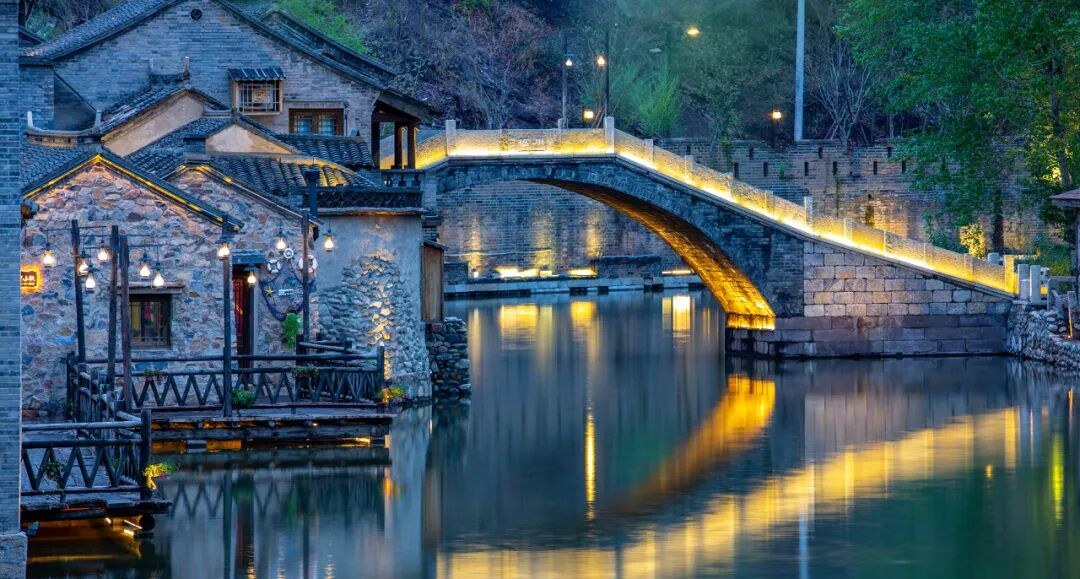
The small bridges and flowing water you imagine in Jiangnan are actually Gubei Water Town in Beijing’s Miyun District.
Same bridges, same flowing water, same ancient paths lined with the same kind of homes. At this moment, the ancient town feels like it’s singing you an old song—“Same sky, same face, same me standing right in front of you.”
You come to a foreign place to see the sights, but no matter where you look, why do all these ancient towns seem the same?
Focusing Efforts, Preserving Ancient Towns
Today, Wuzhen is the symbol of ancient towns, but people first discovered China’s ancient towns back in 1984. The first one to enter the public eye was Zhouzhuang in Jiangsu.
In 1984, American oil tycoon Armand Hammer purchased the famous oil painting Memories of Hometown, later renamed Double Bridges, and gifted it to Deng Xiaoping, symbolizing the building of a bridge of friendship between the two nations. The small bridges and flowing water in the painting are exactly Zhouzhuang[1].
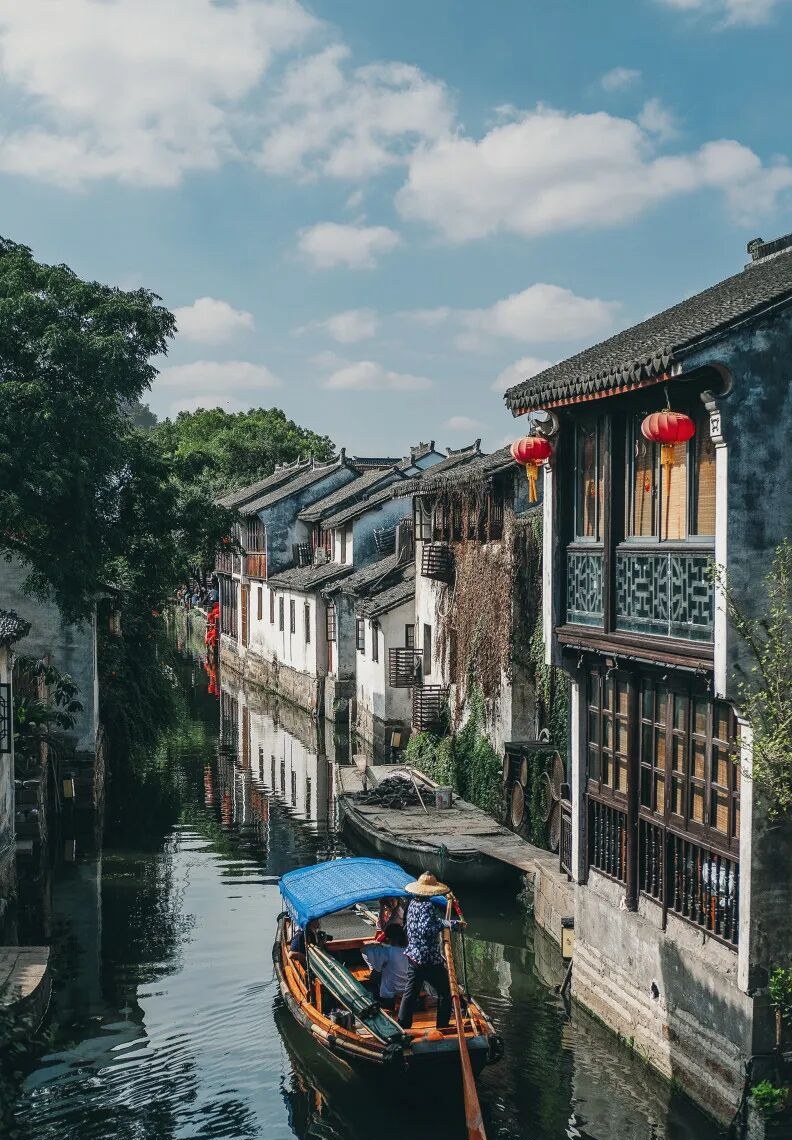
Zhouzhuang, known as “China’s number one water town,” is located in the southwest of Kunshan City.
The water town’s landscape caught the attention of urban planning scholar Ruan Yisan. In the spring of 1985, he led a team to begin investigating and surveying Zhouzhuang and several other ancient towns in the Jiangnan region[2]. Thanks to their efforts, Zhouzhuang’s local ancient architecture was preserved and restored, while the government started to develop tourism.
The research and preservation planning of Jiangnan’s ancient towns marked the beginning of China’s study on the protection of historical and cultural towns and villages. In 1986, the State Council officially proposed the protection of “neighborhoods, building complexes, towns, and villages” with historical or local characteristics, gradually drawing attention to ancient towns[3].
With widespread promotion, Zhouzhuang became famous overnight. Soon after, in 1986, Tongli Ancient Town in Suzhou also began its tourism development. In 1989, Zhouzhuang’s first attraction, the former residence of Shen Wansan, opened its doors to visitors, attracting 55,000 tourists that year.
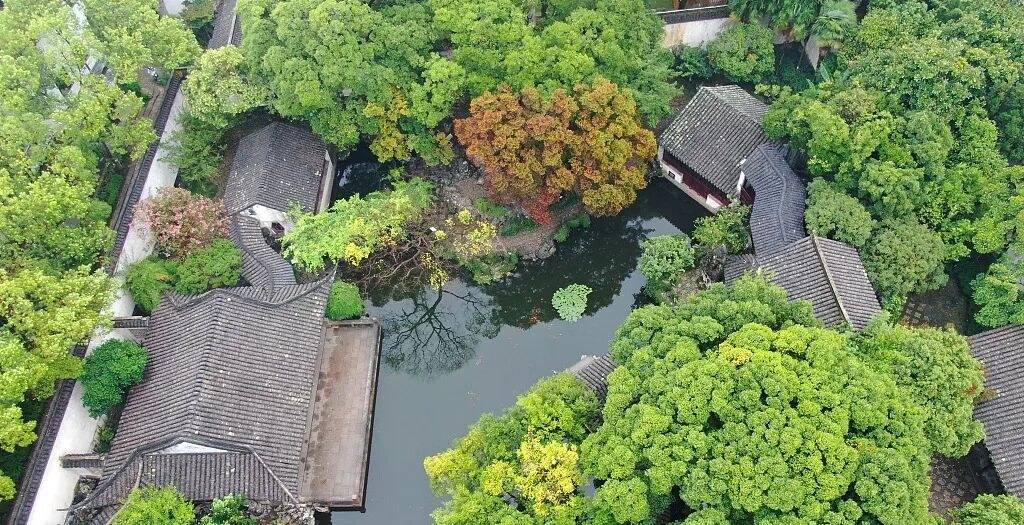
An aerial view of Tongli Ancient Town in Suzhou
By 1998, Zhouzhuang had already received over one million tourists. Around that time, from 1997 to 2001, Xitang, Wuzhen, Nanxun, and Luzhi also began developing their ancient towns. Along with Tongli, these six ancient towns became iconic examples of the Jiangnan region’s historic water towns.
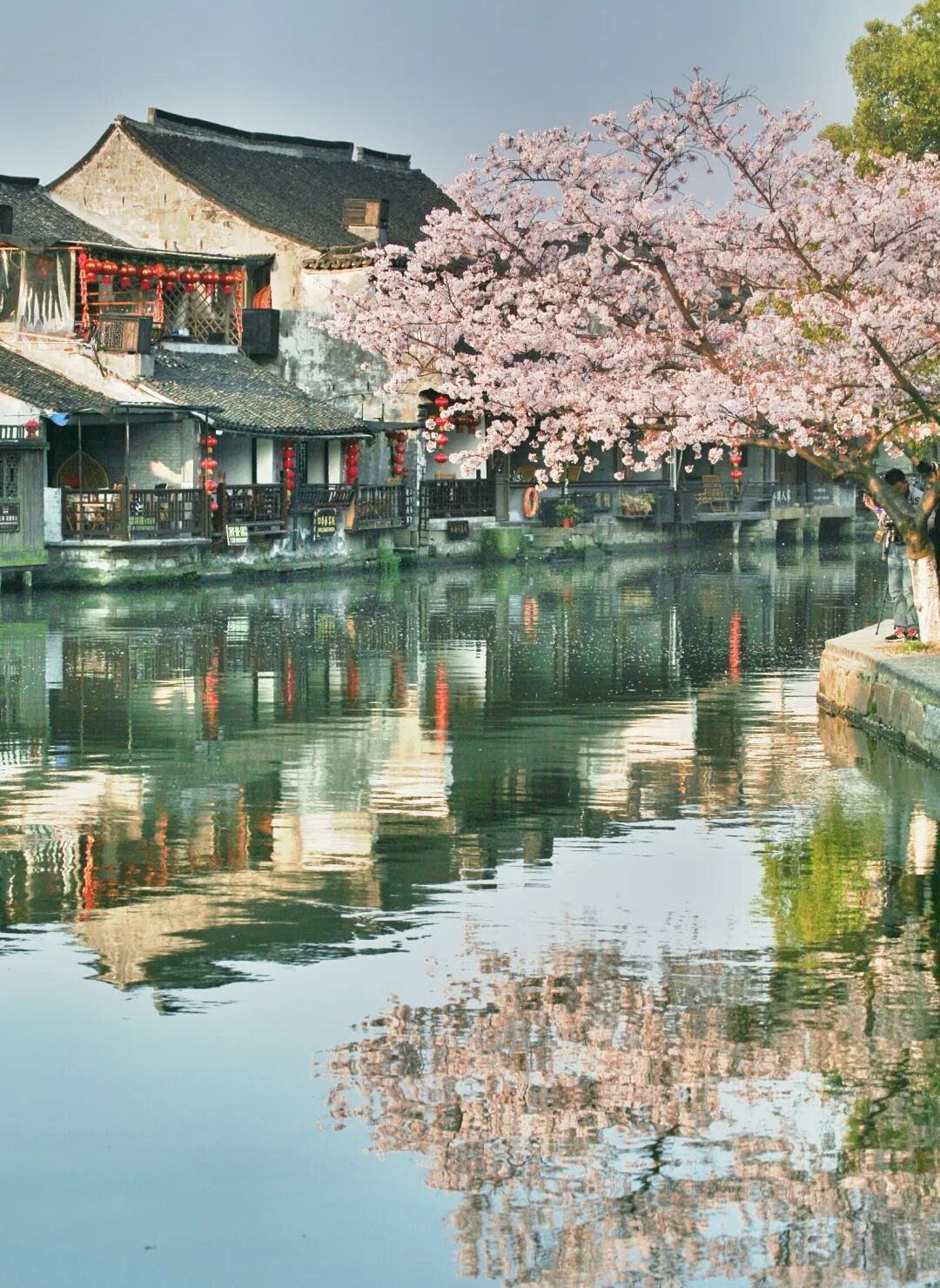
Cherry Blossom Season in Xitang Ancient Town
In 2001, six ancient towns in Jiangnan began joint applications for UNESCO World Heritage status. Leveraging the “Golden Week” system implemented in 1999, the tourism market grew even hotter, with ancient towns gradually becoming a major tourist attraction [4][5].
The state also started to place importance on ancient towns. In 2003 and 2005, the Ministry of Construction and the State Administration of Cultural Heritage successively announced two batches of 44 historically and culturally famous towns.
Driven by the ancient town tourism boom, large-scale development of ancient town tourism began across China. For instance, Wuyuan Ancient Town in Jiangxi and Fenghuang Ancient Town in Hunan—now renowned tourist towns—have a history of conservation and development spanning only 20 to 30 years [6].
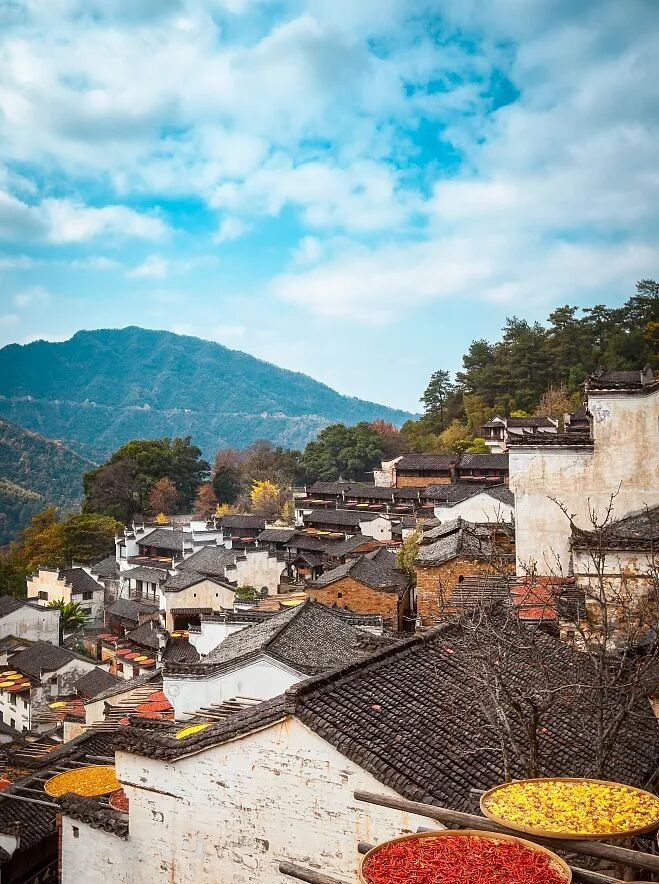
Scenery of Wuzhen
Tourism: The Hope for Reviving Ancient Towns
The story of how Zhouzhuang became a model ancient town is actually a case of “a blessing in disguise.”
In the 1980s, as China gradually opened up its markets, village enterprises in southern Jiangsu rapidly developed. At that time, companies from cities like Shanghai and Suzhou would set up branch factories in nearby towns. For instance, in 1985, Zhouzhuang established a branch of a Shanghai brick and tile factory. Later, factories producing leather shoes, clothing, and steel were also set up one after another.
Many wealthy towns in Jiangsu and Zhejiang grew out of this period, but Zhouzhuang struggled greatly along this path. In the early 1980s, while other areas in the Jiangnan region already had towns with annual incomes reaching tens of millions, the average annual income in Zhouzhuang was only 400 yuan. Fresh pork cost 50 cents per catty, yet few could afford it.
Because of its lagging economic development, Zhouzhuang didn’t undergo the “old looks to new” transformation or large-scale modernization like other towns in Jiangnan. However, this very fact ended up becoming an opportunity for its tourism development.

Zhouzhuang, cloaked in silver and white. The reason why so many ancient buildings are preserved here is actually because economic development was slow in the early 1980s, so it didn’t undergo modernization like other towns.
Before the 1980s, tourism was seen as a symbol of capitalism. The few tourist receptions that existed at the time were usually aimed at “learning and promoting the achievements of socialist construction.”
After the 1980s, tourism began to develop rapidly. Zhouzhuang, which had preserved a large number of Ming and Qing dynasty buildings, was left behind by the wave of industrial development, but just in time to catch the fast-moving train of the tourism industry.
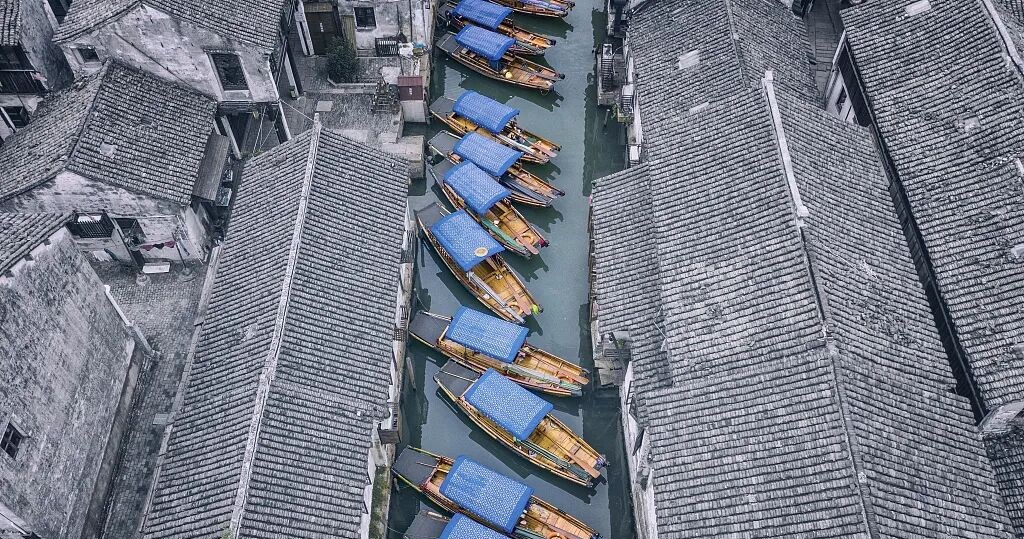
“Only a boat’s reach away, yet a world apart” — Zhouzhuang
The same situation occurred in the ancient town of Fenghuang in western Hunan. In the 1990s, the economic backbone of Fenghuang County was the local Fenghuang Tobacco Factory. When the factory was thriving, the county was the first in Hunan Province to surpass 100 million yuan in fiscal revenue. Leaders of the Xiangxi Prefecture at the time even remarked, “If the Fenghuang Tobacco Factory sneezes, the whole prefecture catches a cold”[8].
When the factory was shut down in the late 1990s, Fenghuang’s economy took a sharp downturn. To crawl out of its financial rut, tourism became the lifeline.
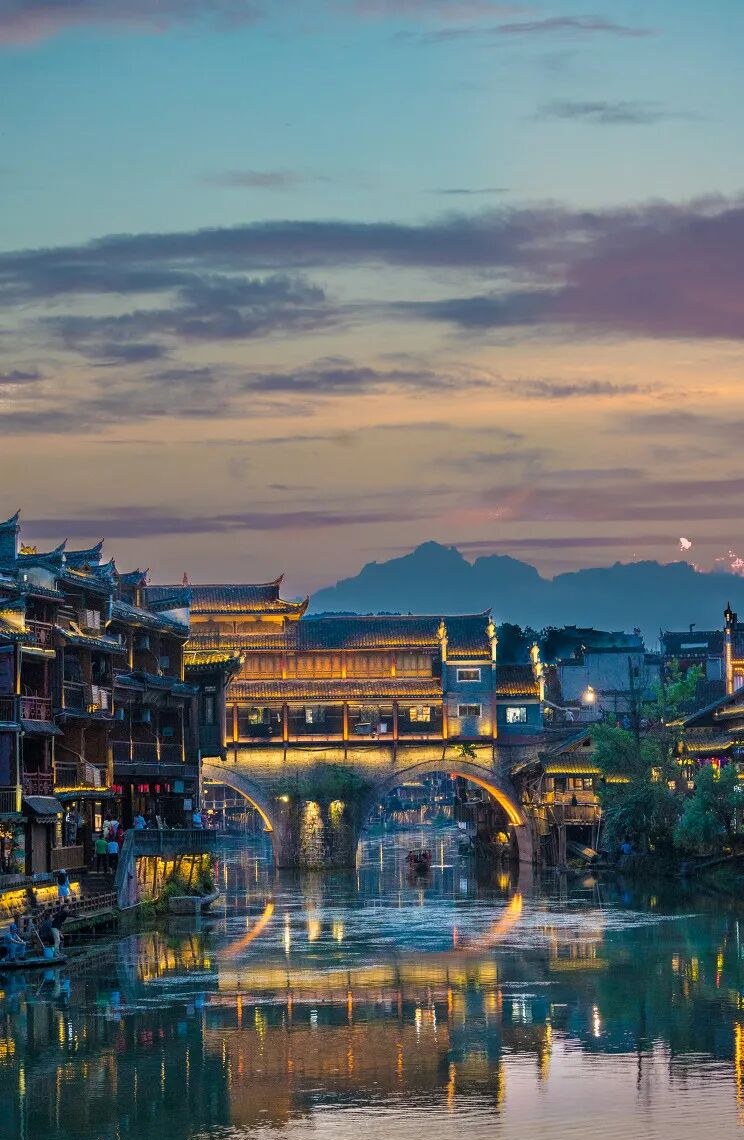
Dusk in Phoenix Ancient Town
In 2001, the Phoenix County government transferred the operating rights of eight scenic spots, including Phoenix Ancient Town and the Southern Great Wall, for 50 years to a company led by renowned planner Ye Wenzhi for market-oriented development. At that time, the total tourism revenue of Phoenix County accounted for less than 10% of its GDP, but by 2009, this share had exceeded 80%[9].
This is very common in China’s ancient towns. For example, in Tangkou Town at the foot of Huangshan Mountain in Anhui and Nanyue Town at the foot of Mount Heng in Hunan, the tourism economy accounts for over 80% of the local economy[4].

Tangkou Town is located at the foot of the famous Huangshan Mountain. The image shows the scenery of Huangshan.
Ancient towns won’t be your dreamlike hometown
The large-scale demolition and renovation in the 1980s led to ancient towns and villages that have become tourist destinations today sharing certain similarities in history.
They usually had glorious pasts—for example, Zhouzhuang was once a waterborne trade hub and economic center in Jiangnan; Hongcun in Anhui was densely populated with rows of buildings due to the prosperity of Huizhou merchants. It is precisely for this reason that they have preserved exquisite architectural complexes and rich historical and cultural stories. [10]
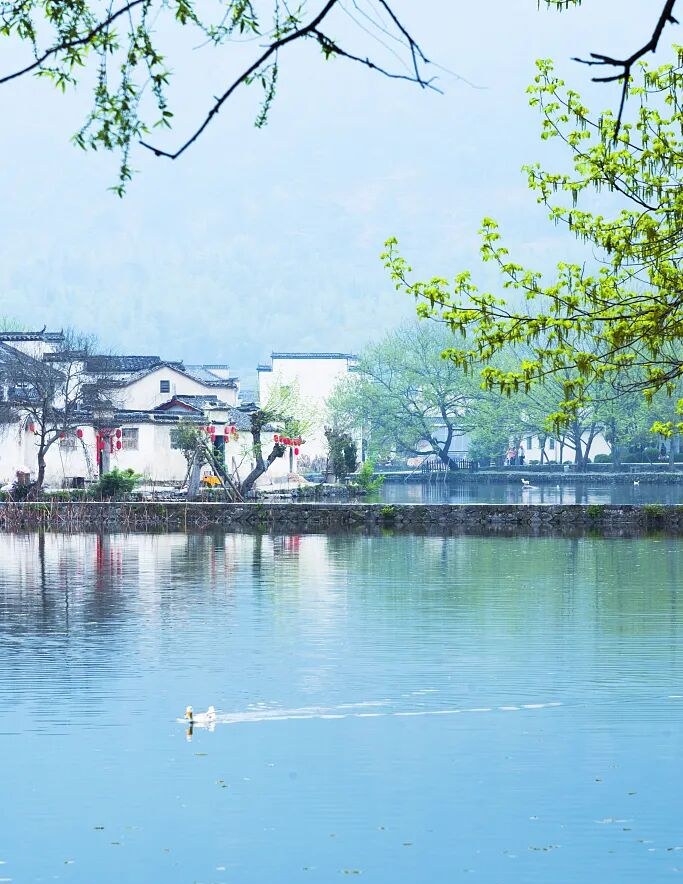
Hongcun in Spring
Often, they would decline in a later historical period, no longer engaging in frequent large-scale construction, or due to reduced contact with the outside world, they would form a stable architectural style [3].
This history differs from conventional economic development. For the economic structure of a country or region, the development direction usually transitions gradually from the primary industry to the secondary and tertiary industries.
Ancient towns in China often lack a solid economic foundation and directly transition to the tertiary industry. Unlike developed countries, they cannot rely on economic benefits to preserve cultural heritage; instead, they need to use cultural heritage to create economic value.
To address the funding bottleneck in the early development of ancient towns and quickly achieve economic benefits, many places introduce external companies to manage the entire town. Examples include Heshun Ancient Town and Shuhe Ancient Town in Yunnan, and Wuzhen in Zhejiang [4].
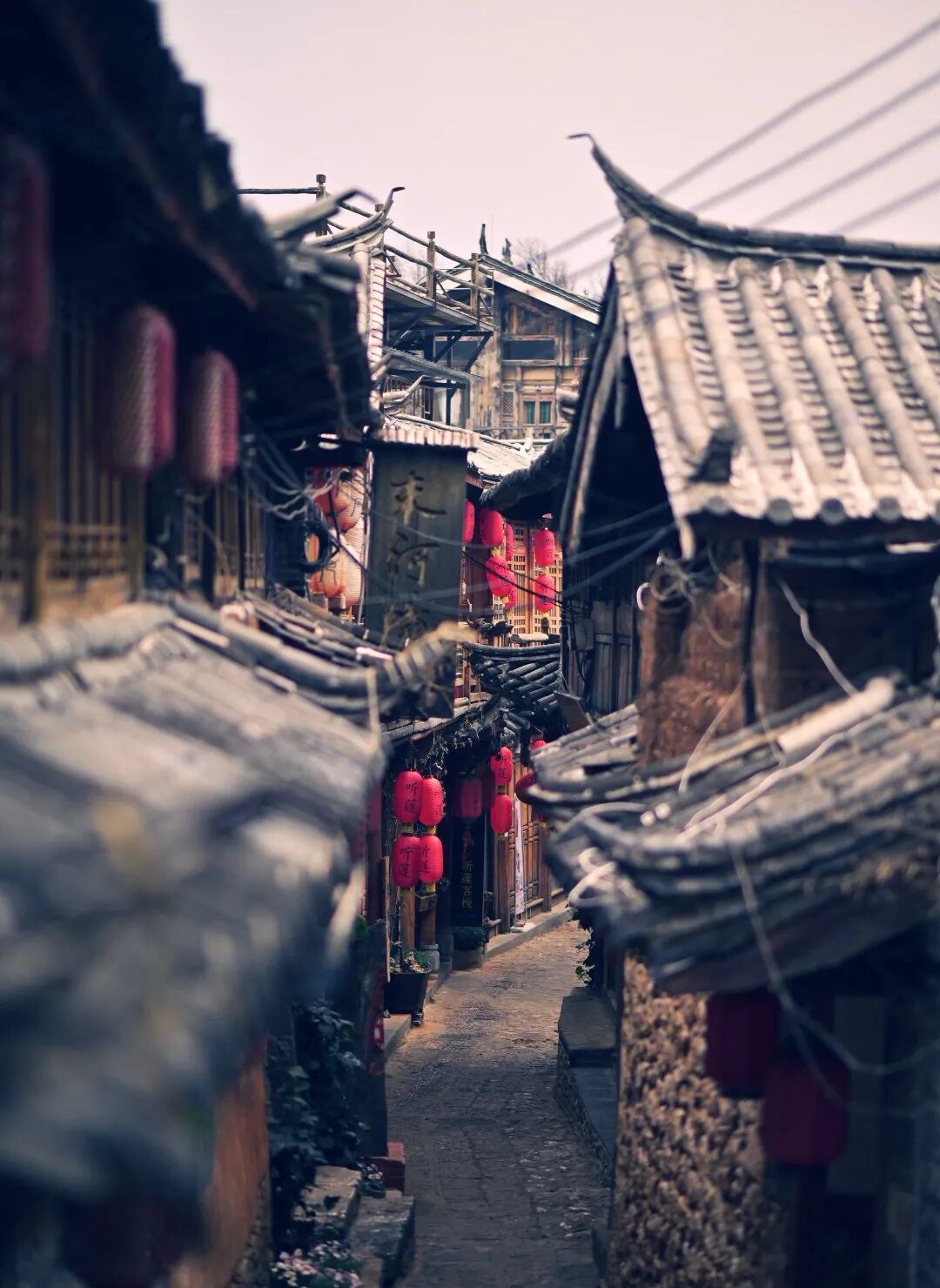
Shuhe Ancient Town
Although outside companies may bring profits, the cost is borne by the local residents. Take Hongcun as an example: in 2000, ticket revenue reached over 1.4 million yuan, but only about 30,000 yuan actually went to the village, averaging just 70 yuan per person per year[11].
In the process of operations, to generate higher profits, large numbers of tourist shops have been opened in ancient towns, too many visitors have been welcomed, and even original residents have been relocated. This has made ancient towns less and less like themselves, and life there increasingly less livable.
As early as 2006, a survey by Tongji University’s School of Architecture found that in Wuzhen, Xitang, and Nanxun, tourist-oriented businesses accounted for over 80% of shops, while those serving local residents made up only about 15%[13].The Snowy Ancient Town of Nanxun
This has become the most contradictory aspect of the ancient town itself. In its promotional materials, the town always claims to be a place you won’t want to leave, a dream hometown. Yet the reality is that even the generations of residents who have lived there no longer wish to stay.
An Ancient Town Without Residents, Only Goods
When cultural display is solely aimed at achieving higher economic returns, rather than cultural preservation and inheritance itself, culture becomes just a symbol in the tourist experience.
As long as there are bridges and water, it can be called “small bridges and flowing water”; with bricks and tiles, it can pass for a leisurely dwelling.
Digging into a town’s unique culture and developing locally distinctive souvenirs often requires significant investment with unpredictable results, but simply cloning a proven successful model is much easier.
This is most evident in the souvenirs.
For example, at the Leifeng Pagoda scenic spot in Zhejiang, the keychains, pinwheels, porcelain crafts, wood carvings, replica ancient weapons, amulets, horn combs, jade items, zodiac charms, and Chinese knots sold there have little connection to local history and culture, and can often be seen at other tourist attractions.The Full Moon over Leifeng Pagoda
These handicrafts are typically mass-produced at low cost, meeting the demands for portability and affordability as tourist souvenirs. That’s why they can be found everywhere in ancient towns and other tourist areas.
In contrast, souvenirs related to local characteristics are very limited, such as bookmarks of the Ten Scenes of West Lake, small screens depicting the Ten Scenes of West Lake, and wooden models of Leifeng Pagoda. In reality, these products are also easily replicated through simple imitation—like making bookmarks of Huangshan or Datong [12].
If we compare ancient towns in the same region, they become even more similar. In Zhejiang, almost every water town features blue calico, ancient-style clothing, yellow wine, zongzi (sticky rice dumplings), and other goods. Even the dishes in restaurants are alike [5].The Dyeing Workshop, a Must-Have in Water Town Ancient Villages
When Zhouzhuang turned braised pig trotters into a local specialty and named them “Wanshan Trotters,” the ancient town of Tongli got “Zhuangyuan Trotters,” and Luzhi Ancient Town got “Puli Trotters.” The prosperous families of Jiangnan weren’t particularly set on eating pig trotters—they were simply the easiest to copy.
And when economic development clashes with cultural preservation, many ancient towns prioritize economic gains over culture.
In 1998, the Suzhou municipal government planned to build a tourist highway connecting the three ancient towns of Zhouzhuang, Tongli, and Luzhi to boost the local economy. However, this plan would have damaged the towns’ landscapes. In response, Ruan Yisan repeatedly wrote to relevant officials, urging them to cancel the project. He even went so far as to threaten, “If you build that road, I’ll lie down on it and let the cars run me over.”[2]
In the end, the road was never built. But blocking one road couldn’t stop the overwhelming tide of overdevelopment in ancient towns.
Fifteen years later, when Fenghuang Ancient Town came under heavy criticism over ticket pricing and the constant relocation of its native residents, Ye Wenzhi, then chairman of Fenghuang Ancient Town Tourism Company, responded, “The media is all covering the ticket issue in Phoenix. This is advertising worth hundreds of millions. Even a bad name is still fame[9].”Night in Fenghuang Ancient Town. It’s not what many people imagined Fenghuang to be anymore.
Back then, Fenghuang Ancient Town’s tourism economy was growing at more than double the rate. The income tourism brought to the area mattered more than the tiles on the stilted houses or whether the locals stayed or left.[1] Compiled by the research group of “Study on the Protection and Tourism Development of Ancient Towns in Jiangsu,” Study on the Protection and Tourism Development of Ancient Towns in Jiangsu, Southeast University Press, 2014.05
[2] Ruan Yisan, Pan Junxiang. A Road That Sparked the Zhouzhuang Protection Controversy—Part Three of “Ruan Yisan’s Oral History”[J]. Century, 2019(02): 17-20.
[3] Zhao Yong, Zhang Jie, & Qin Zhong. (2005). Research Progress on Historic and Cultural Towns and Villages in China. Urban Planning Forum, 2, 59-64. Page 59
[4] Research on the Development of Small Tourism Towns in China
[5] Wang Yuncai. (2006). A Comparison of Tourism Development Models of Six Towns in Jiangnan and Sustainable Utilization Strategies. Journal of Central China Normal University (Natural Sciences Edition), 1, 104-109.
[6] Li Qian, Wu Xiaogen, & Tang Shu. (2006). A Preliminary Study on Tourism Development and Commercialization in Ancient Towns. Tourism Tribune, 21(12), 52-57.
[7] Zhao Hongxi. (2002). Local Governments, Enterprises, and Planners in the Development Process of “Cultural Tourism” in Mainland China: A Case Study of Zhouzhuang in Jiangnan (Doctoral dissertation, National Taiwan University, Department of Building and Planning).
[8] How Far is Modern Civilization from Us: Taking the Pulse of Xiangxi’s Economy and Management. Peng Xueming
[9] Written by Peng Dan, Study on Tourism Myths: A Case Analysis of Phoenix Ancient Town in Xiangxi, Tourism Education Press, 2016.04
[10] Lu Lin, Ling Shanjin, Jiao Huafu, & Yang Xingzhu. (2004). The Evolution Process and Mechanism of Ancient Villages in Huizhou (Doctoral dissertation)
[11] Lu Song, Lu Lin, Ling Shanjin, & Xu Ming. (2003). A Preliminary Study on the Tourism Development of Ancient Villages in Southern Anhui. Land and Natural Resources Research, 4(7).
[12] Yang Congfeng. (2004). Research on the Formation of Regional Cultural Characteristics of Tourist Souvenirs.
[13] Wang Yuncai, Shi Yishao, & Chen Tian. (2007). The Commercialization Tendency of Ancient Towns in Jiangnan and Their Sustainable Development Strategies—A Case Study of Three Towns in Northern Zhejiang (Doctoral dissertation).Recommended Reading
▼
(Click the image to read the full article)
The City Roaming Program is long-term hiring online illustrators with competitive pay. Please send your resume and portfolio to **** citywander2018
Tag navigation
Explore articles that share the same tag and jump to tag pages.



Category navigation
Jump to the article’s category or explore nearby topics.
Freudige Nachricht! Mehrere Tourismusartikel aus Xi'an gewinnen nationale Preise!
Jump to the more recent article in this topic series.
Kirschen reif! Alles, was Sie für einen Ausflug nach Bailuyuan ab Xi'an (1h Fahrt) wissen müssen
Continue to the previous article in this series.
Related stories
More articles from the same category and nearby topics.