Time Breeds Fermentation: What Makes Kaili's Sourness Divine
Read, share, and explore related stories through curated categories and tags.

In the streets of Kaili, whether a meal is satisfying isn’t judged by how many fancy dishes are on the table, but by whether that bowl of sour soup hits the spot.
Look at a topographical map, and southeastern Guizhou is tightly locked in by dense contour lines. Far from the coast and without salt wells, this is a “land short of salt.” Constrained by the rugged terrain, bringing Sichuan salt into Guizhou was incredibly costly, and during the Ming and Qing dynasties, prices were so extreme that a peck of rice could only buy a pound of salt. Salt became a luxury that mountain folks only dared to use during festivals.
But without salt to maintain their strength, the ancestors couldn’t handle the heavy labor. To survive, the people of Kaili had to find a substitute for salt. They discovered that the strong sourness from natural microbial fermentation not only preserved food but also miraculously replaced salt, forcefully stimulating saliva production and easing muscle fatigue. This gave rise to the saying, rooted in street-smart survival wisdom: “Go three days without sour, and you’ll walk all skew-whiff.”
In Kaili, sour isn’t just one flavor. It’s divided into white sour, red sour, fermented chili sour, pickled sour, and more, forming the foundation of the locals’ three daily meals.
1
The Gentle Cultivation in Old Clay Jars
When salt became a luxury, rice became the earliest fermentation experiment for the Kaili people. Among the large family of sour soups, white sour appeared first and has the mildest temperament. Its predecessor is nothing more than the rice water drained from daily cooking.
In the past, the Miao people collected their daily rice water in coarse clay jars placed in cool, shaded spots. The warm, humid climate of southeastern Guizhou is a natural breeding ground for lactic acid bacteria. Just wait two or three days, and the starch and protein from the rice water would ferment, with fine white foam rising to the surface and a faint sour smell like rice wine—this is the original white sour. Nowadays, to make it richer, locals often cook high-quality glutinous rice into a thick congee, let it cool, and then put it into jars to ferment.
The key to making white sour lies in “keeping the starter.” After each use of white sour, some aged sour soup must remain at the bottom of the jar. Locals call it “old sour mother” or “sour starter.” It’s the same principle as saving a piece of starter dough to make old-fashioned steamed buns. The old sour mother is packed with active, stable lactic acid bacteria. When new thick rice water enters the jar, the strong bacteria from the old sour mother quickly dominate, becoming the superior strains and nipping any spoilage-causing bacteria in the bud.
It’s this ruthlessness in the microscopic world that ensures each household’s jar of sour soup maintains a consistent flavor for decades on end. A family’s sour jar often goes unwashed for years or even decades, with the old sour mother passed down through generations, creating subtle yet distinct taste differences in every home.
The flavor of white sour is reserved and kind. When white sour soup slides down your throat, you definitely won’t feel the sharp sting of aged vinegar. The first thing your tongue meets is a hint of sweet, like fermented rice wine. Then, a soft, rounded mild sourness slowly spreads across the tongue. After swallowing, a warm, grain-based sweetness lingers in the throat.
Back in the lean years when meat was scarce, the Kaili people often ate “plain white sour.” They’d pick a handful of greens with morning dew from the field, or cut up a few pieces of tender old tofu, and toss them directly into the bubbling white sour soup, without even a drop of oil. The tough fibers of the vegetables quickly softened as they cooked in the hot sour soup, with the earthy bitterness perfectly neutralized by the lactic acid. The white soup in the pot bubbled with steam, and biting into a leaf soaked with white sour released a hot, tangy liquid that warmed and comforted tired stomachs after a day’s work.
2
The Spicy Burst of Wild Mountain Fruit
White sour is gentle and can relieve everyday fatigue. But as living conditions improved, the single note of rice sour couldn’t fully satisfy the locals’ tastes. They needed something more visually intense and with a more impactful kick of flavor. Thus, red sour soup was born.
The color and core ingredient of red sour soup come from a wild tomato that grows in the mountainous areas of the Yunnan-Guizhou Plateau. Locals call it “mao la guo.” Unlike the commonly available, artificially bred tomatoes that are big and sweet, wild mao la guo are very small, usually only the size of a thumb. Their skin is thicker, and they don’t hold much juice. Eaten raw, they’re extremely sour with a noticeable astringency. This makes them uncompetitive in the fruit or vegetable market, but their high acid content makes them the perfect raw material for red sour soup.
Every autumn, the mao la guo ripen. Farmers wash the harvested tomatoes, spread them out on bamboo mats to dry off surface moisture, then put them in large wooden basins or stone mortars and pound them repeatedly with wooden pestles. To enhance the flavor of the red sour soup and boost its preservative power, they add another local ferment—zhao la jiao (fermented chili)—in a certain ratio during the pounding.
Making zhao la jiao is also a skill. Choose fresh red chilies, wash and dry them, then chop them together with peeled garlic and ginger in a large wooden basin, using a cleaver. Pack it into jars with salt to ferment.
The crushed mao la guo is mixed with the zhao la jiao, along with salt and high-proof liquor. After mixing evenly, everything goes into large earthenware jars. The jar mouth is covered with a lid, and the groove around the rim is filled with water. This water seal design lets carbon dioxide from fermentation escape while completely blocking outside air, similar to what’s used for everyday pickling.
Over three long months, the fruit acid from mao la guo and the lactic acid from zhao la jiao quietly clash and blend in the dark, anaerobic environment. When the jar is opened again, the red sour soup is ready. It’s thick and viscous, a bright red color, with a strong, slightly fermented wine-like sour and spicy aroma.
The popularity of red sour soup directly gave rise to Kaili’s most representative dish—sour fish soup.
In Kaili’s dining scene, sour fish soup shops are everywhere. The methods are pretty similar, all relying on the boost of red sour. The most traditional fish for cooking is the local “rice flower carp” from southeastern Guizhou. These carp are raised in rice paddies, feeding on fallen rice flowers and plankton. They’re not big, but the meat is firm. With increased demand, sour fish soup shops now often use yellow辣丁 (yellow catfish), Jiangtuan (long-snout catfish), or snakehead fish.
The fish is killed and cut fresh, cleaned, and then thrown directly into the boiling red sour soup base. The earthy smell often found in fish is quickly neutralized and eliminated by the combined force of high heat and strong acid. The sour soup not only removes the fishy smell but also acts as a natural meat firming agent, forcing the protein on the fish’s surface to quickly coagulate and contract.
Pick up a piece with chopsticks. The cooked fish stays intact, holding its firm, garlic-clove shape, while the skin becomes soft and sticky from simmering in the sour soup. Take a bite of the fish, and you first taste the straightforward sour and spicy of the broth, followed by the natural sweetness of the fish itself.
Beyond sour fish soup, red sour has also found its way into beef dishes. Kaili sour beef soup has become a “star” in the food industry in recent years. Local yellow beef is sliced thin, and the fatty brisket and cleaned offal are plated separately.
Diners usually sit around a steaming hot pot. First, they ladle a small bowl of the bright red broth to whet their appetite. Once their foreheads start to sweat, they push the thinly sliced fatty beef into the rolling soup to blanch quickly. As soon as the red meat changes color, it’s scooped up, its surface glistening with the red broth. It’s tangy and has a satisfying chew.
3
The Long-Aged Flavor Pressed Under Stones
In Kaili’s fermentation system, besides liquid sour soups, there’s also solid “pickled sour.” Pickled fish and pickled meat are the oldest, most traditional methods for the Miao and Dong people of southeastern Guizhou to preserve meat protein, and they represent the ultimate expression of using sour to replace salt in meat processing.
Making pickled fish takes an extremely long time and involves a very tedious process. It’s usually done after the autumn harvest. Farmers catch the fish from their rice paddies, cut open their backs, remove the innards, but don’t scrape off the scales. They wash the prepared fish, rub them evenly with salt, and hang them in a ventilated place to dry until the surface moisture is completely gone. Up to this point, it’s not much different from ordinary salted fish.
The key step is making the “pickle mash.” They steam local glutinous rice until cooked, let it cool, and then mix it with large amounts of chili powder, Sichuan peppercorn powder, minced ginger, and an appropriate amount of salt. In some places, they also add high-proof rice wine or yeast starter to speed up fermentation.
The container used for fermentation is a special straight wooden bucket. Farmers first spread a thick layer of pickle mash on the bottom of the bucket. Then they lay the dried fish flat on top of the mash, stuffing the fish’s belly cavity full of mash too. After one layer of fish, they cover it with another layer of mash, stacking layer upon layer until the bucket is full. The top layer must be pickle mash, and it’s pressed down firmly. Finally, a heavy stone, weighing several tens of catties, is placed on top of the lid.
The stone mercilessly squeezes out the remaining moisture and air from the fish, ensuring the bucket is completely anaerobic inside. Over a long, sealed period, the glutinous rice gradually sugars and acidifies under microbial catalysis, with the acidic liquid slowly seeping deep into the fish’s fibers. The calcium in the scales and the fish bones also gradually soften under the long acidic soak.
The fermentation time for a bucket of pickled fish is at least six months, sometimes even years. The older the pickled fish, the darker its color and the stronger its flavor. The ideal is when the fish meat turns dark red and the texture is firm and elastic. By then, the pickle mash becomes a sticky paste, tightly coating the fish.
There are a few ways to eat pickled fish. The most primitive is raw. Cut open the pickled fish and put it directly into your mouth. It tastes similar to fermented sashimi, with a strong sourness, saltiness, and a unique ester aroma from fermentation. The meat is chewy, and the bones can be swallowed straight down.
In everyday life, the more common ways are pan-frying or grilling. Put the pickled fish, along with the pickle mash on its surface, into a flat-bottomed pan and fry slowly over low heat. As the pan gradually heats up…
The warm oil wraps around the glutinous rice marinade coating the fish, emitting a soft sizzle as it gradually forms a golden, crispy crust. Under the tempering of high heat, the sharp sourness begins to mellow and recede, while the deep meaty aroma and the spicy kick of chili peppers are fully unleashed.
4
The Soul Dipping Sauce from Plant Ash
Whether eating vegetable sour soup, sour fish soup, or various stews, on Kaili’s dining tables, every person will have a small bowl of dipping sauce in front of them. Dipping sauce is the final seasoning for Kaili dishes, refining the already rich sourness further while adding charred, spicy, and unique herbal notes.
The soul ingredient of Kaili dipping sauce is “burnt chili,” also known as burnt chili shells. Unlike other regions where chili is splashed with oil to make red oil or simply dry-fried, Kaili’s method of making burnt chili carries a rugged, mountain-style roughness: directly bury sun-dried red chilies in the warm plant ash deep inside a wood-burning stove. Without the interference of open flames, relying solely on the gentle heat of the ash to slow-roast them. Once a distinct burnt fragrance emerges, they are quickly dug out, dusted off, and thrown into a wooden mortar to be crushed.
The resulting burnt chili is dark red-black in color, oil-free, and not only retains the chili’s spiciness but also develops a caramel-like aroma and a slight bitterness, reminiscent of roasted coffee. In the dipping sauce bowl, the charred fragrance of the burnt chili beautifully balances any monotony the sour soup might bring.
Beyond burnt chili, Litsea cubeba is another key spice. Litsea cubeba is the fruit of a plant in the Lauraceae family, each piece the size of a mung bean. It contains abundant volatile oils, with an extremely assertive aroma—initially a strong mix of lemon and lemongrass, and when chewed, leaving a slight numbing sensation on the tongue akin to Sichuan pepper.
In Kaili’s markets, both fresh Litsea cubeba and processed Litsea cubeba oil are available. When eating sour fish soup, locals usually drip two or three drops of Litsea cubeba oil into their dipping sauce bowl, or directly into the bubbling pot just before it’s done.
The cool, fresh scent of Litsea cubeba quickly cuts through the rich red sour soup, adding a bright, elevated herbal freshness to the entire dish. This aroma is very unique, and first-time visitors from elsewhere often need an adjustment period. Once accepted, they realize sour soup without Litsea cubeba lacks a soul.
The third plant commonly found in the dipping sauce bowl is houttuynia cordata, also known as fish mint. Fish mint carries a strong earthy scent and a faint fishy note. Place chopped fish mint, burnt chili, a pinch of salt, soy sauce, and chopped green onions in the bowl. When eating, scoop a ladle of hot soup from the bubbling sour soup pot and pour it into the bowl to mix well.
Pick up a piece of hot fish with chopsticks and roll it through the bowl. The richness of the red sourness, the charred bitterness of burnt chili, the boldness of Litsea cubeba, and the earthiness of fish mint collide in the mouth. This is more than just a bite of dipping sauce—it’s the vast flavor maze that Kaili people, on this salt-poor land, have built with their ingenuity.
END
This article was published in the April 2026 issue of City Geography
Text by Ji Liu
Photos by Tian Junkai, Feng Ziting, Wu Yuanyuan, Zeng Jing, Chen KK, Huang Ying, Four Foods Without Doubt, Xinxin
Layout by Tang Yixin
-
Subscribe at local postal outlets
-
Call 11185 to transfer to a staff member for home subscription
City Geography postal distribution code: 78-138
Subscription Info
Publication frequency: Published on the 1st of each month, 12 issues annually
Single issue price: 16 yuan
Annual subscription price: 192 yuan
Subscription hotline: 023-63659745
Tag navigation
Explore articles that share the same tag and jump to tag pages.

Geografie zum Genießen: Wenn Chinas Landschaften als Tee und Kaffee im Glas landen
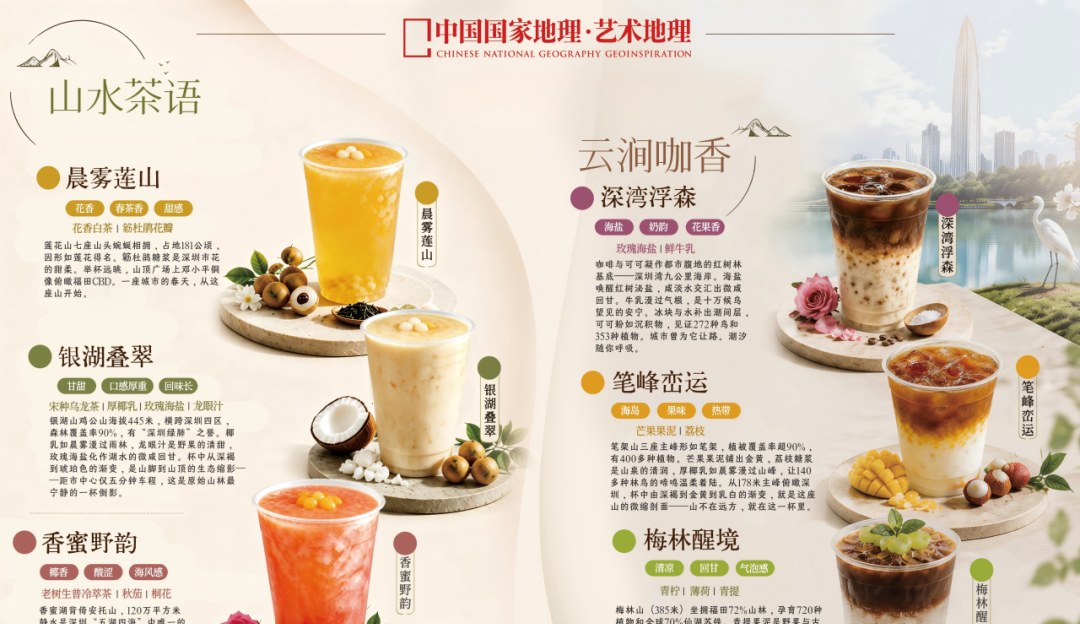
Geographieunterricht für die Geschmacksknospen | Wie lässt der „Berg-und-Fluss-Genuss-Mikroraum“ Berge und Flüsse schmecken?

Achtseitige Sonderbeilage der China Tourism News! Wenn die Schätze Shandongs zu einer langen Rolle der Qi- und Lu-Kultur werden
Category navigation
Jump to the article’s category or explore nearby topics.
Zwischen Genuss und Lektüre: Berge und Flüsse entdecken – Der immersive Genuss- und Ausstellungsbereich „China National Geographic · Kunstgeographie“ auf der 22. Shenzhener Kulturmesse
Jump to the more recent article in this topic series.
Gute Preise bei Disney! 19 Tage Countdown zur Feier, verpassen Sie es, müssen Sie 20 Jahre warten
Continue to the previous article in this series.
Related stories
More articles from the same category and nearby topics.